
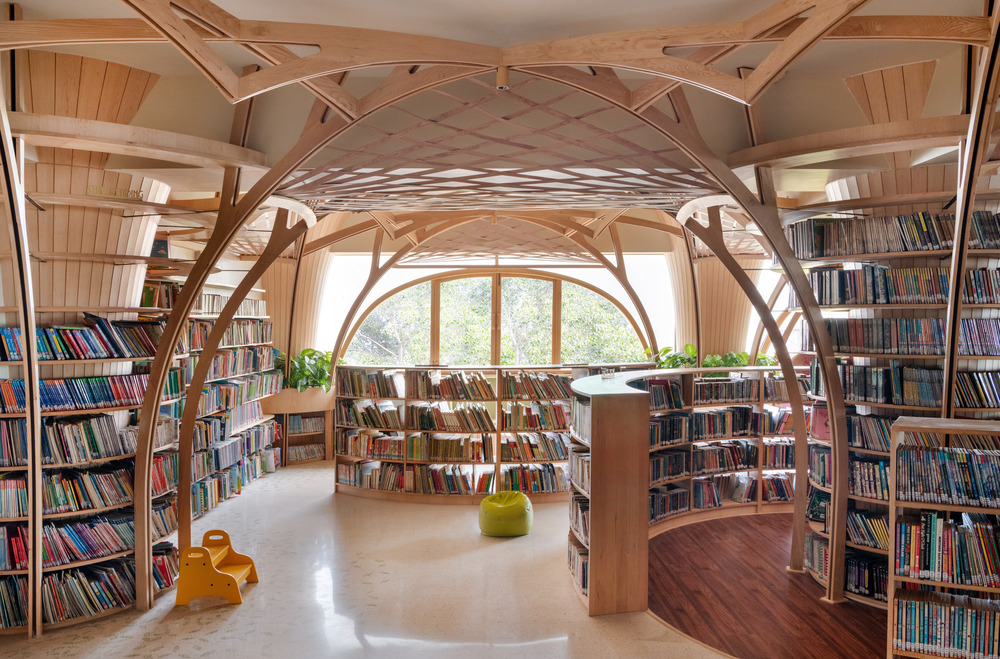
The design for the renovation of the library at the Cricket Club of India, Mumbai, is informed by research into what a library in our digital times can be. Conceived during the Covid lockdown, and opened to members in January 2023, it goes beyond books to propose the library as a house of knowledge, providing opportunity for people to come together and learn from each other. On a formal level, the design draws from nature, in particular the notion of sitting under a tree with a book, and borrows from the beautiful tree canopy over the adjacent street.
-
- Photo credit: Suryan//Dang
Background
The Cricket Club of India is an exclusive members club from Bombay’s colonial past, with an understated Art Deco building from 1938 as its main pavilion overlooking a historic cricket stadium.
Studio HINGE was originally invited to design the library at a different location within the club in a standalone building fronted by a storage yard. The earlier scheme featured a permeable façade of books in glass revolving doors, envisioning the yard converted to landscaped gardens with semi-covered reading areas. However, this design was never realized, and the library was relocated to the fourth floor of the administrative building. Despite this challenging location, the new design seeks to retain some of the original ideas.
India experienced one of the harshest and most sudden Covid lockdowns in the world. A lot of the design of the library was developed during this time, when people were yearning to meet and share ideas in person again more than ever.
The temporary library had no washroom facilities or separate admin area. It had long lightless corridors and bookshelves stacked high in front of windows, creating claustrophobic spaces with natural light blocked out. This, coupled with shrinking attention spans and the fact that people increasingly read on digital devices rather than books, meant that fewer people than ever visited the space. Those that did came to collect or return books and rarely stayed to read.
-
- Photo credit: Suryan//Dang
Design Intent
The plan of the library is laid out like a formal garden, led primarily by considerations of natural light and structural grid. A “boulevard” references the foliage-canopied street outside.
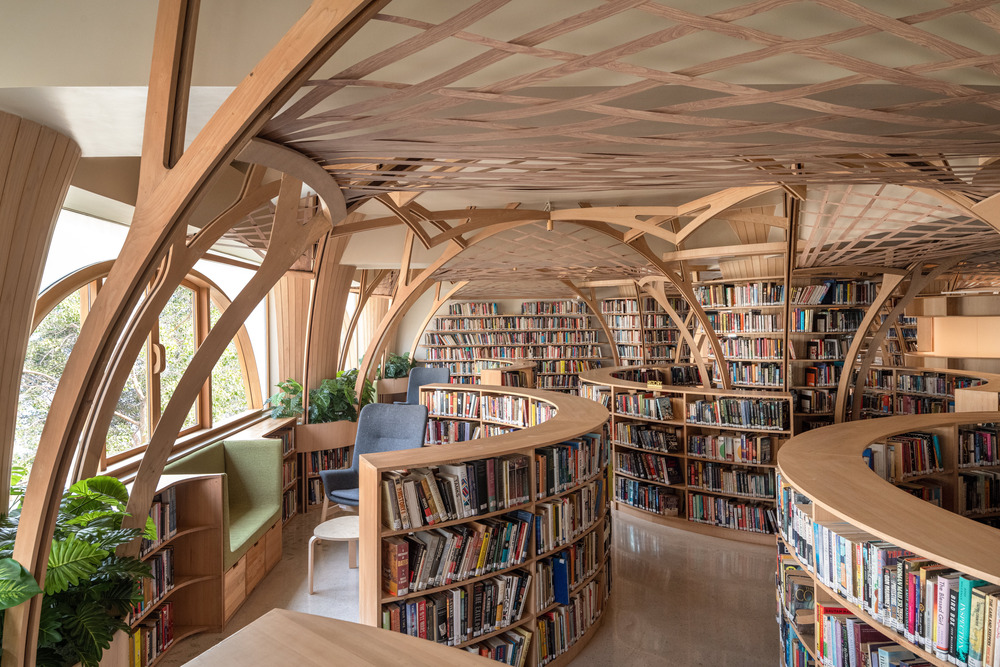
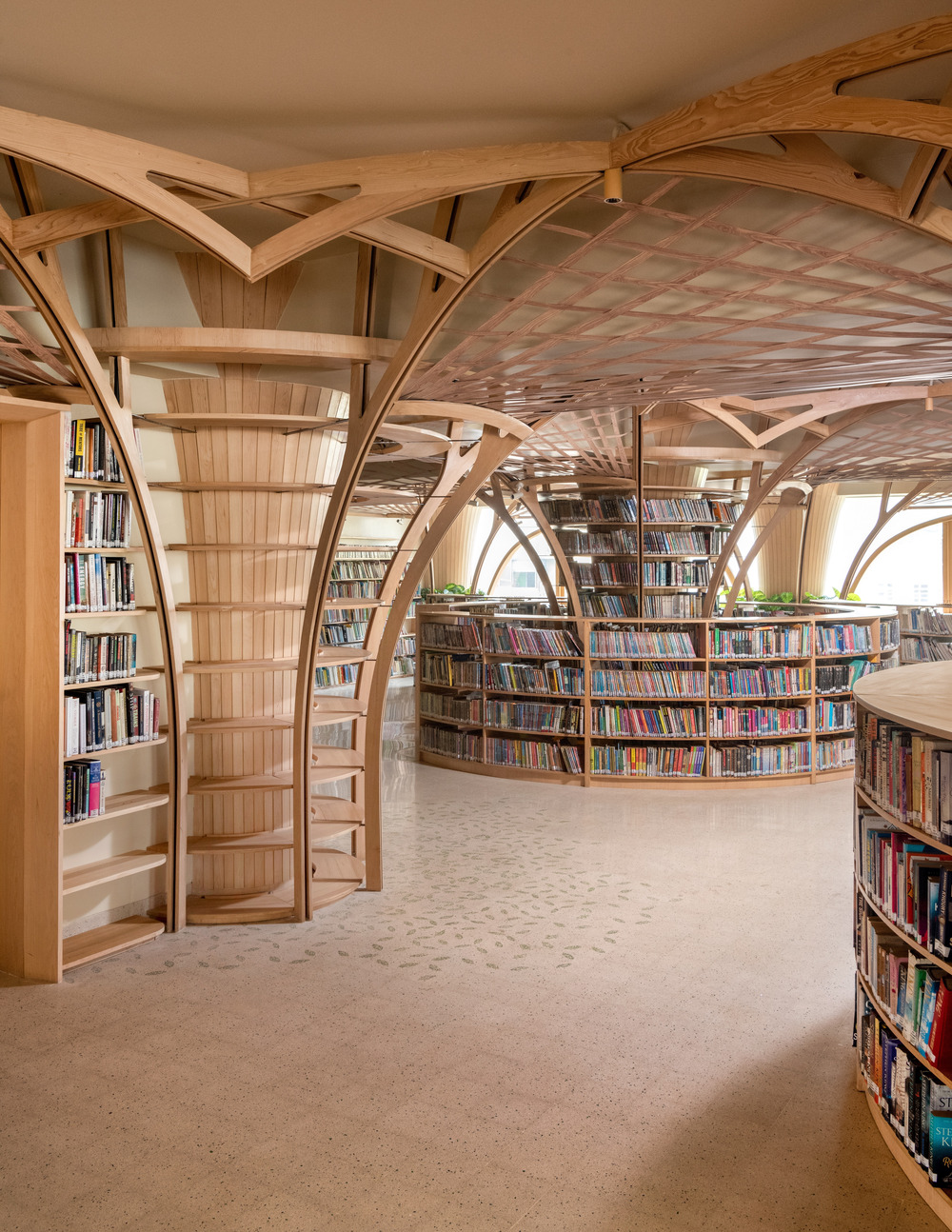
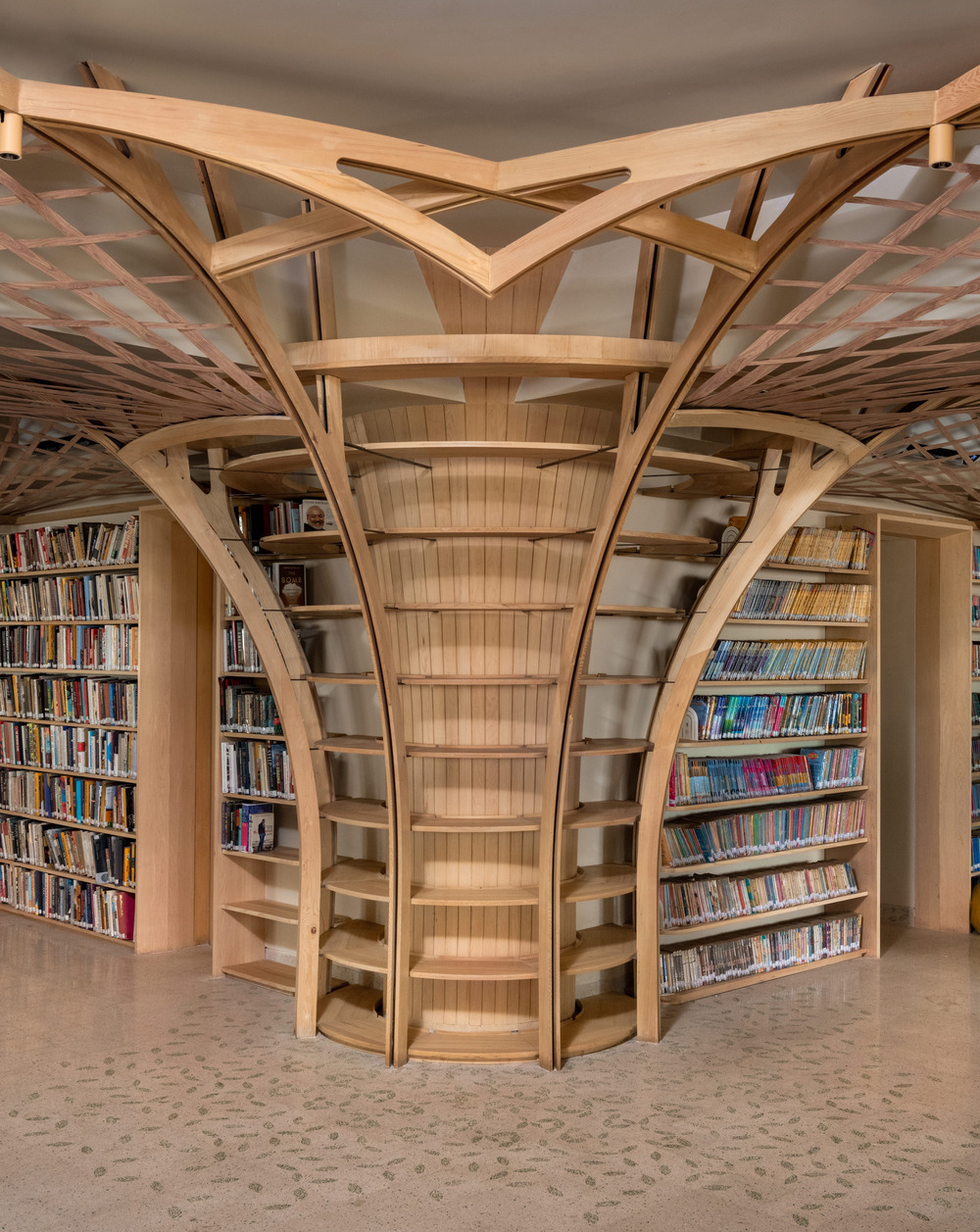
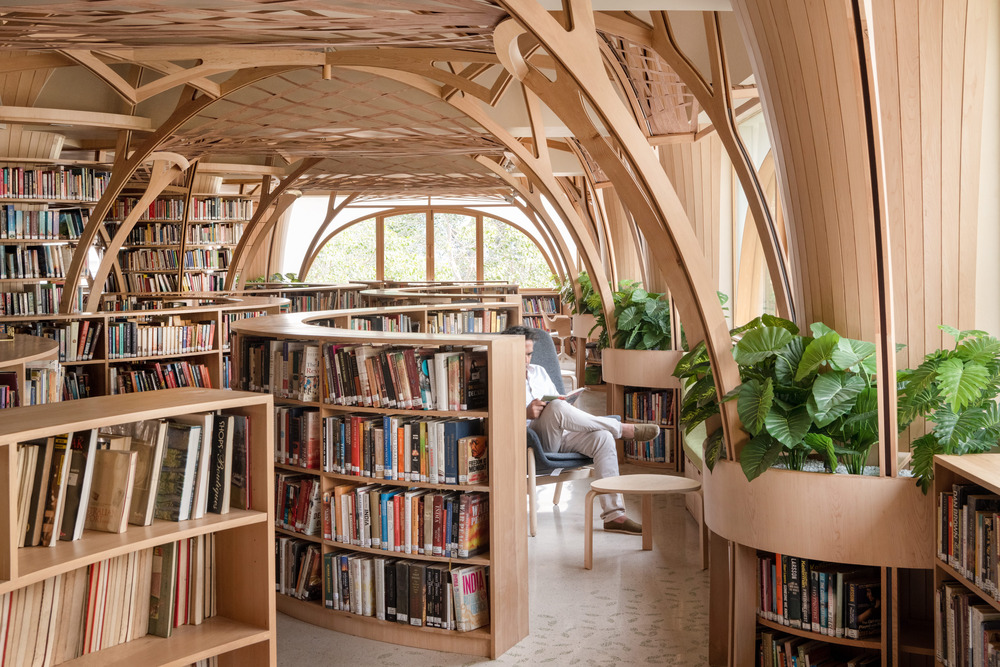
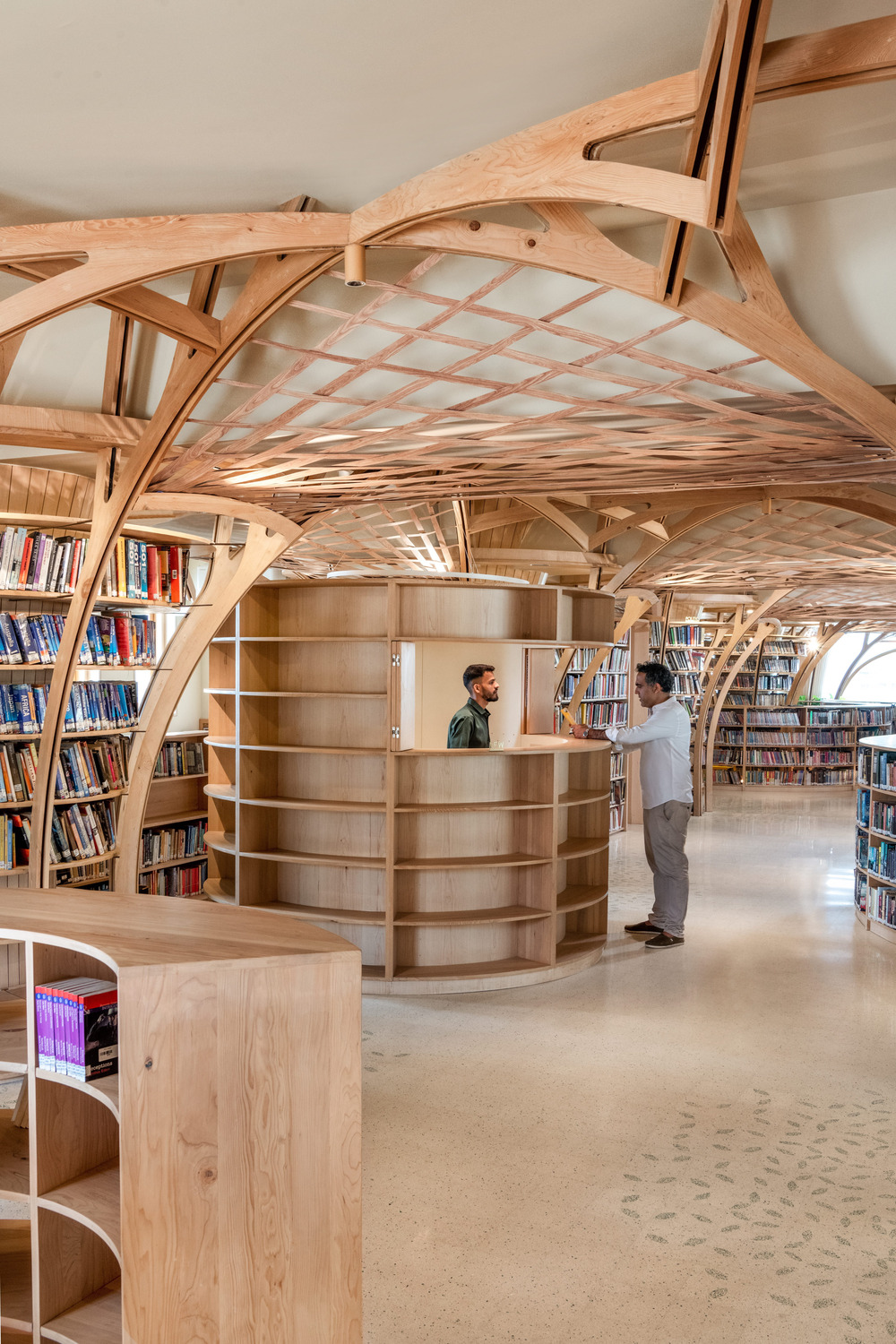
Existing concrete columns are reimagined as trees, with circular bookshelves in Western Hemlock, supported on arching branches which reference the geometry of the pavilion’s colonnade along the cricket ground. The branches are of 16mm thick timber clad over 20mm square hollow box sections in steel (these also serve as conduits, avoiding the need for a suspended ceiling). The branches intertwine overhead, forming intricately woven meshes below the beams, recreating the sense of walking under trees with dappled light filtering through canopies above. Custom terrazzo flooring tiles with chips of marble and green glass create abstract patterns of scattered leaves.
Around the central trees are freestanding bookshelves in circular hedge-like arrangements. Bibliophiles browse within the hedges, before heading to the lounge chairs and sofa benches by the windows for longer reads.
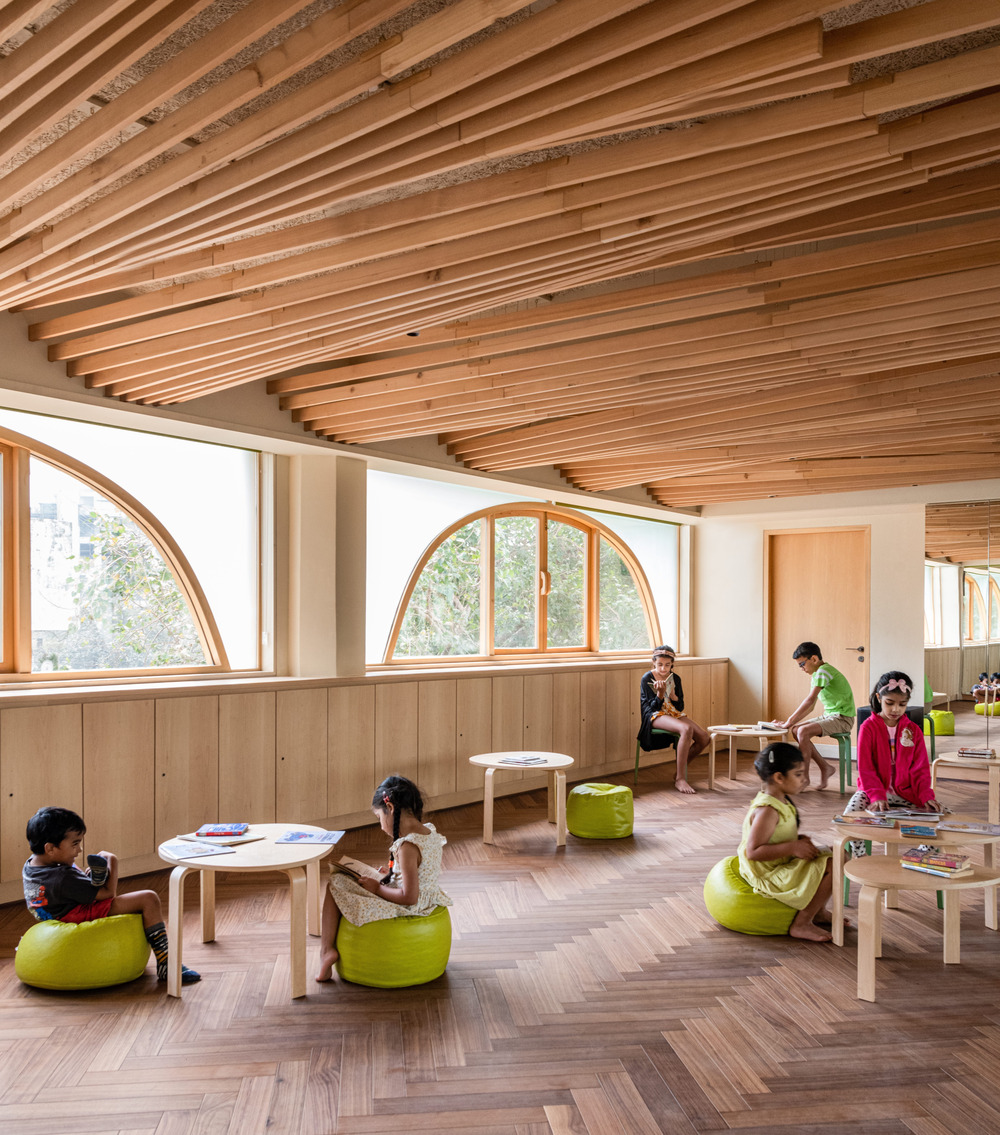
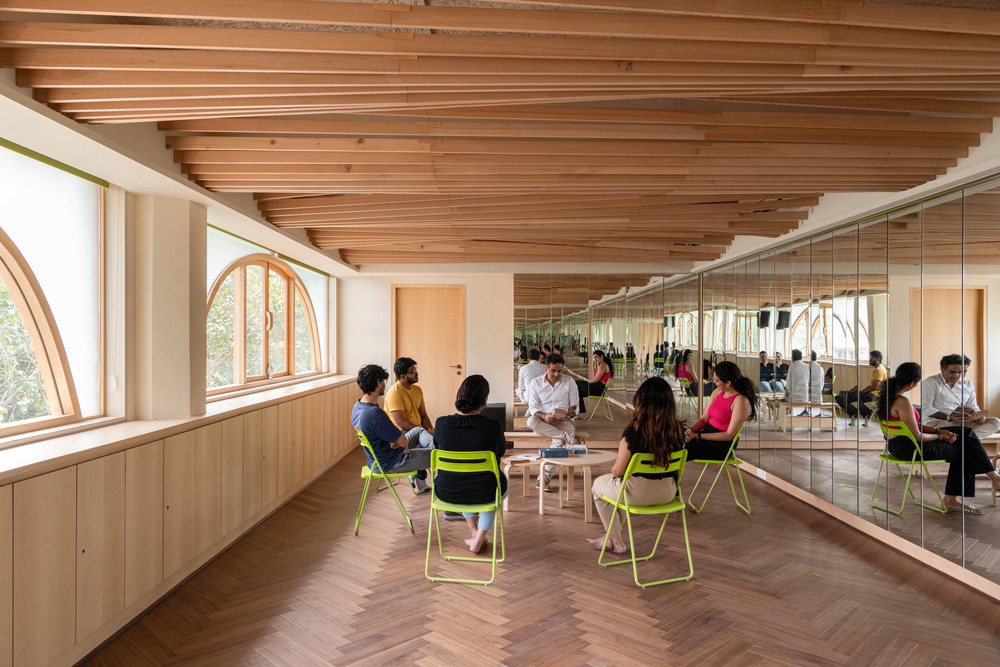
The architects proposed the addition of a multipurpose space by refurbishing an adjacent underutilized Zumba studio for programming related to reading and learning. This includes film screenings, book clubs, new book launches, author readings, and workshops for children and adults. The redesign allows the space to revert back to a dance studio when needed. Engineered oak flooring, mirrored storage cabinets for non-display books and stacking furniture, and a large screen hidden behind folding doors allow the space to used flexibly between disparate functions. A ceiling of undulating timber slats speaks of movement and dance, whilst concealing MEP overhead.
By providing a platform for community activities that bring people together, this additional space has proven the key to activating and revitalizing the library. Post-occupancy surveys have shown significant increase in footfall, particularly amongst children.
-
- Photo credit: Suryan//Dang
Sustainable & Inclusive Design
All bookshelves not along walls are lower than 1.2m in height. This allows maximum natural light to permeate and for adults to have an unobstructed view whilst standing, while creating semi-private nooks to sit and read within. For children, the design provides a very different perception, as from their vantage the space between the circular bookshelves is playful, almost labyrinthine. The entire space is accessible by elevator and is step-free.
The principal material used for the library is timber, with the windows in yellow cedar and the furniture in western hemlock. In India, it is very difficult to find native species which are sustainably harvested, so Canadian timber from FSC sources was used.
studio HINGE enlarged the windows and decluttered the space in front of them, besides keeping a large proportion of them openable. This achieves an increase in both natural light and ventilation across two facades, reducing the reliance of the library upon artificial light and mechanical ventilation. The enlarged windows face east and north, avoiding the harsh glare of the south west.
-
- Photo credit: Suryan//Dang
Conclusion
The Cricket Club of India’s new library emerges as a contemporary, inclusive, and environmentally conscious space. Merging nature-inspired design, people-centric programming, and sustainable practices, the library transcends its traditional role, becoming a vibrant hub for learning, interaction, and community engagement.


