
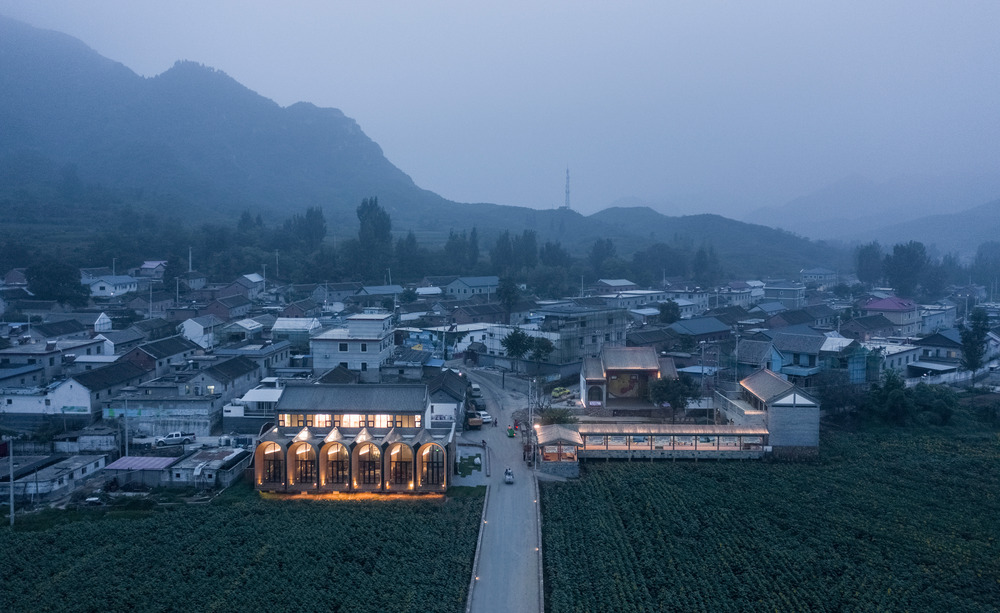
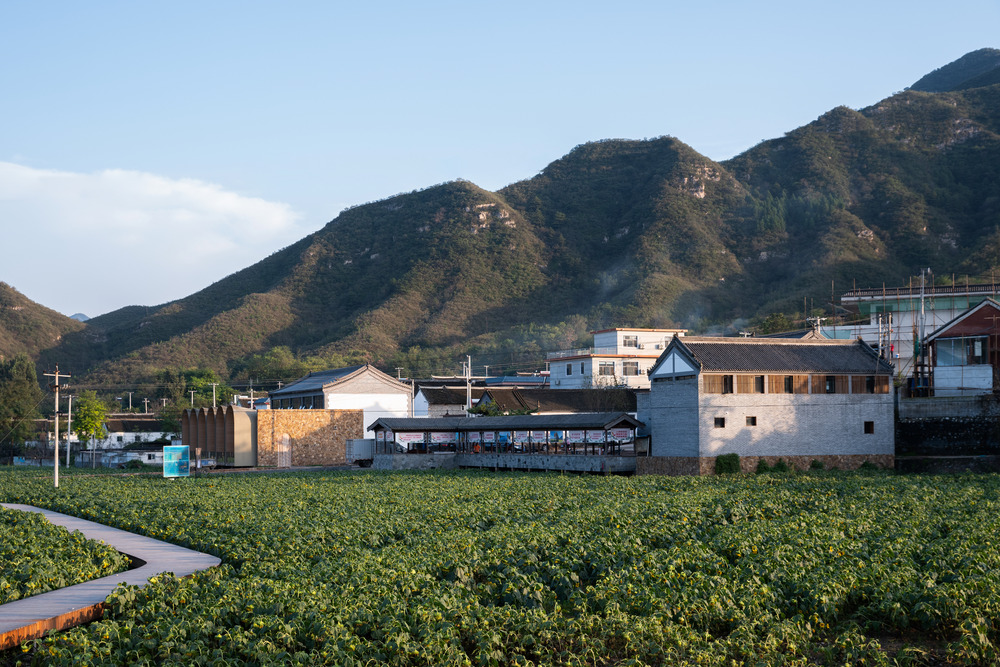
For architects working on rural projects, balancing practicality with creativity can be a challenge. SYN Architects tackled this issue while designing several buildings in Tiangang Zhixing Village, Zhejiang, China, particularly the “Living Room” complex. This group of structures, which includes the former village committee building, health clinic, and communal stage, was revitalised through careful analysis and respectful preservation of their original rural aesthetic. The addition of new construction also breathed new life into these buildings.
-
- Photo credit: ArchiTranslator
-
- Photo credit: ArchiTranslator
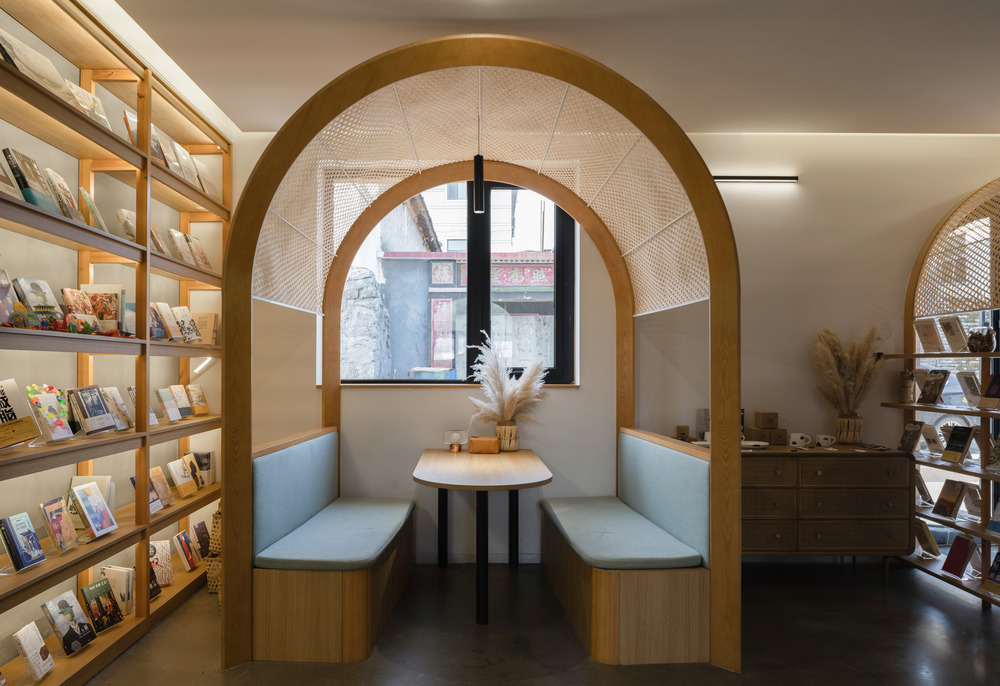
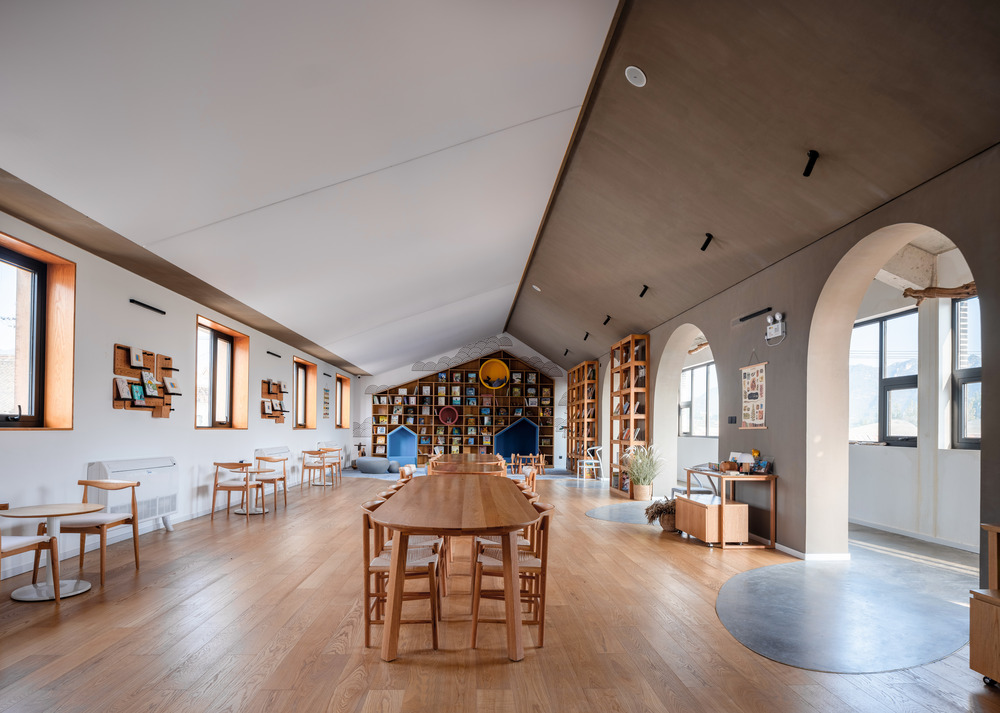
SYN Architects set out to transform rural living with their mission to revitalise Tiangang Zhixing Village. The village’s “Living Room” was the centrepiece of their architectural cluster, facing the Tiangang Art Center and an art installation called the “Big Straw Hat.” The renovation of the “Living Room” preserved the original structure of the village committee building while adding a café and children’s activity area on the upper and lower floors. The building’s functions were combined in a unique way, including the introduction of a local coffee shop employing villagers as baristas and the use of the second floor as a space for preschool and non-preschool children to learn.
-
- Photo credit: ArchiTranslator
-
- Photo credit: ArchiTranslator
-
- Photo credit: ArchiTranslator
To further connect the villagers with their community, the architect added family portraits and snapshots of local life throughout the building and created a journal called the “Tiangang Zhixing Village Chronicle” to showcase local events and culture. The “Living Room” serves as a link between the villagers and the outside world, providing a space for ideas and connections to be made. Through this project, SYN Architects hopes to activate the inherent energy of the countryside and elevate Tiangang Zhixing’s “Village Light” to new heights.
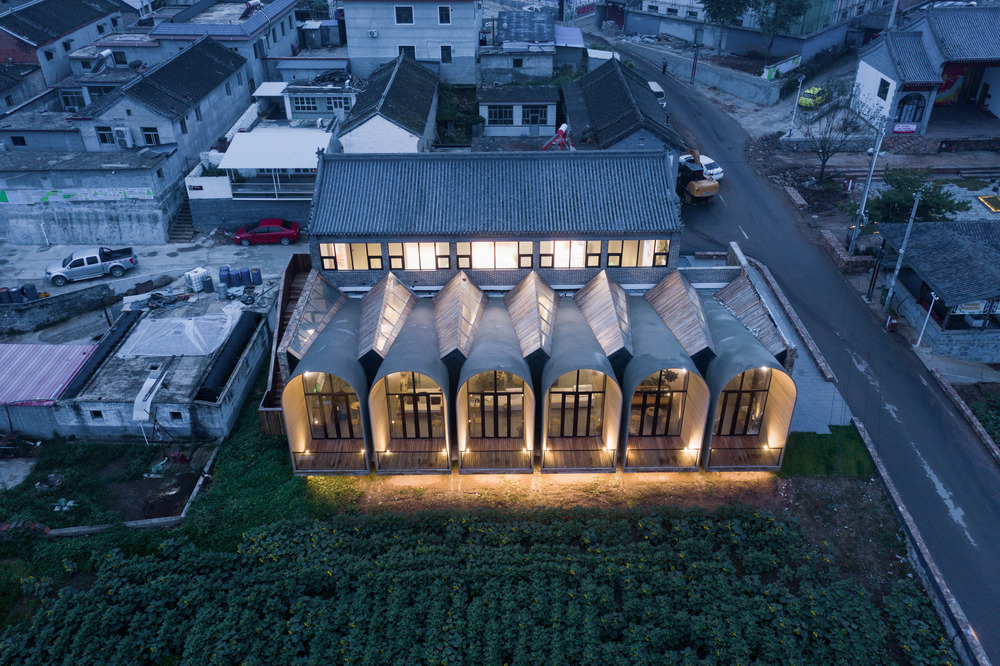
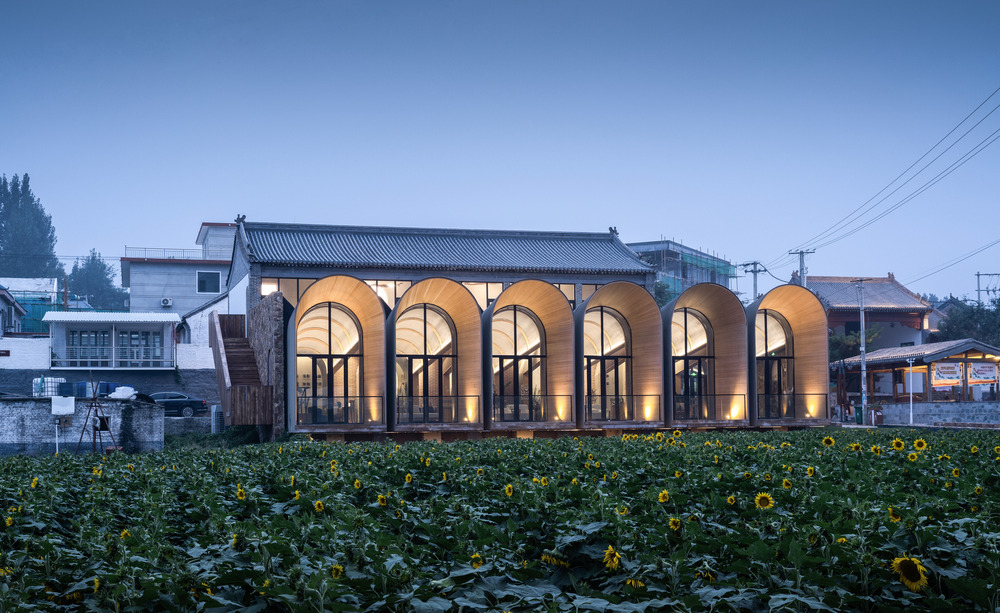
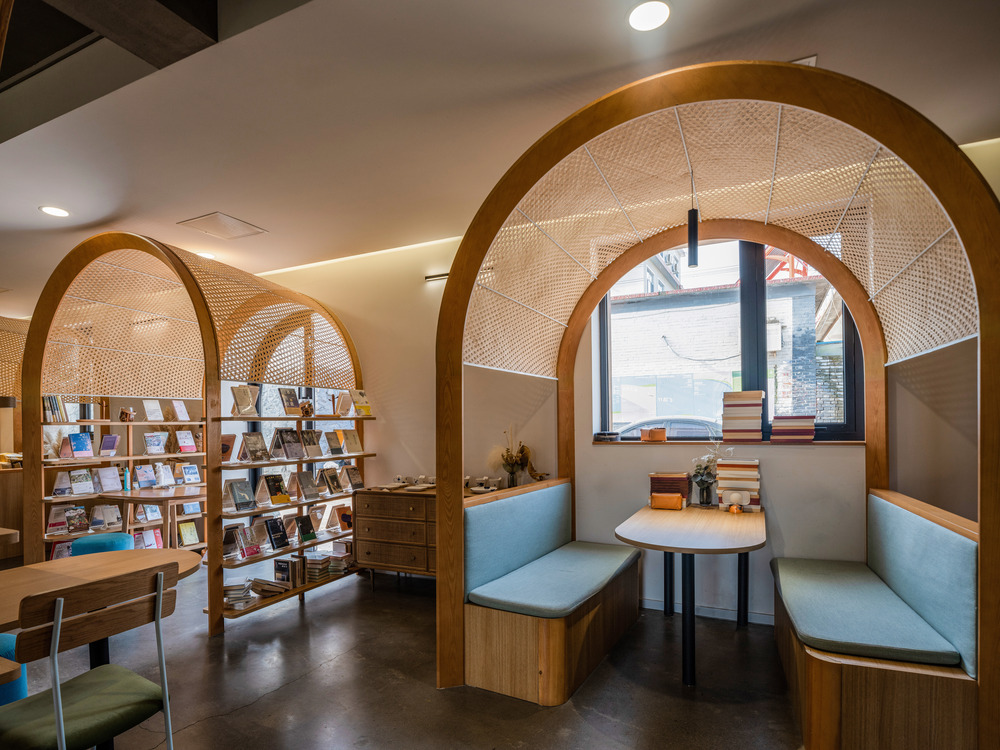
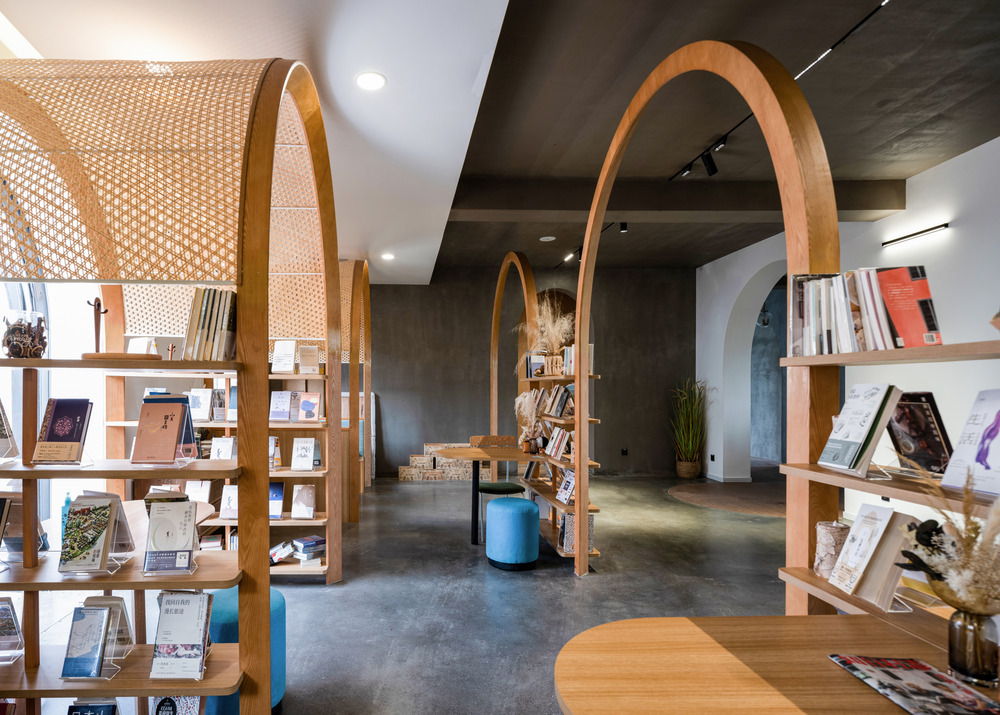
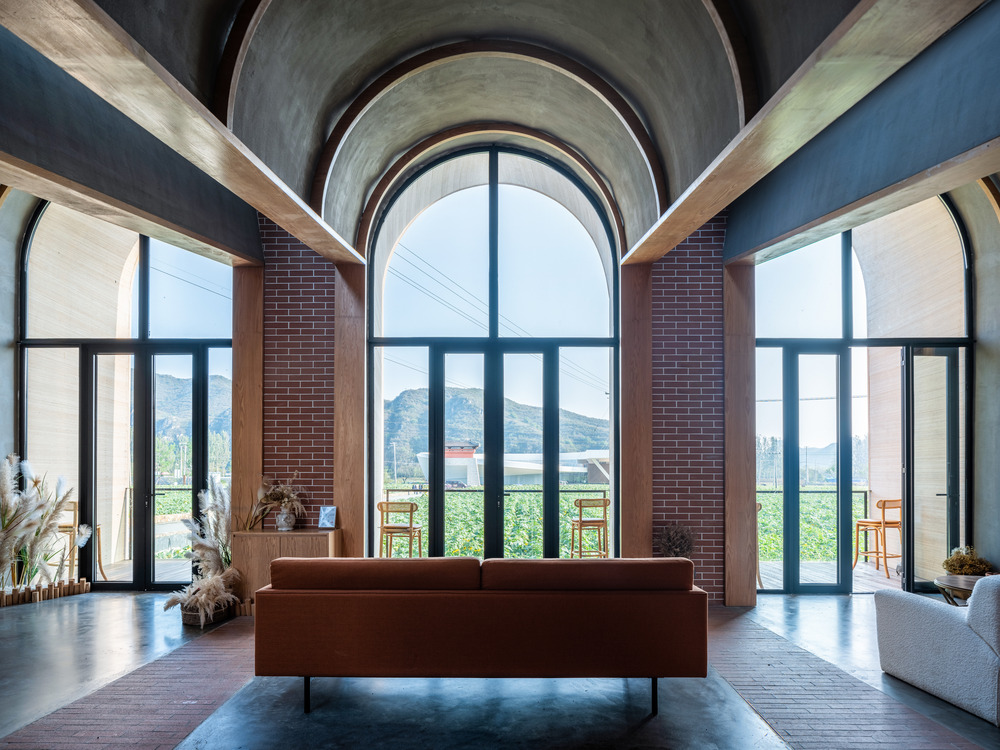
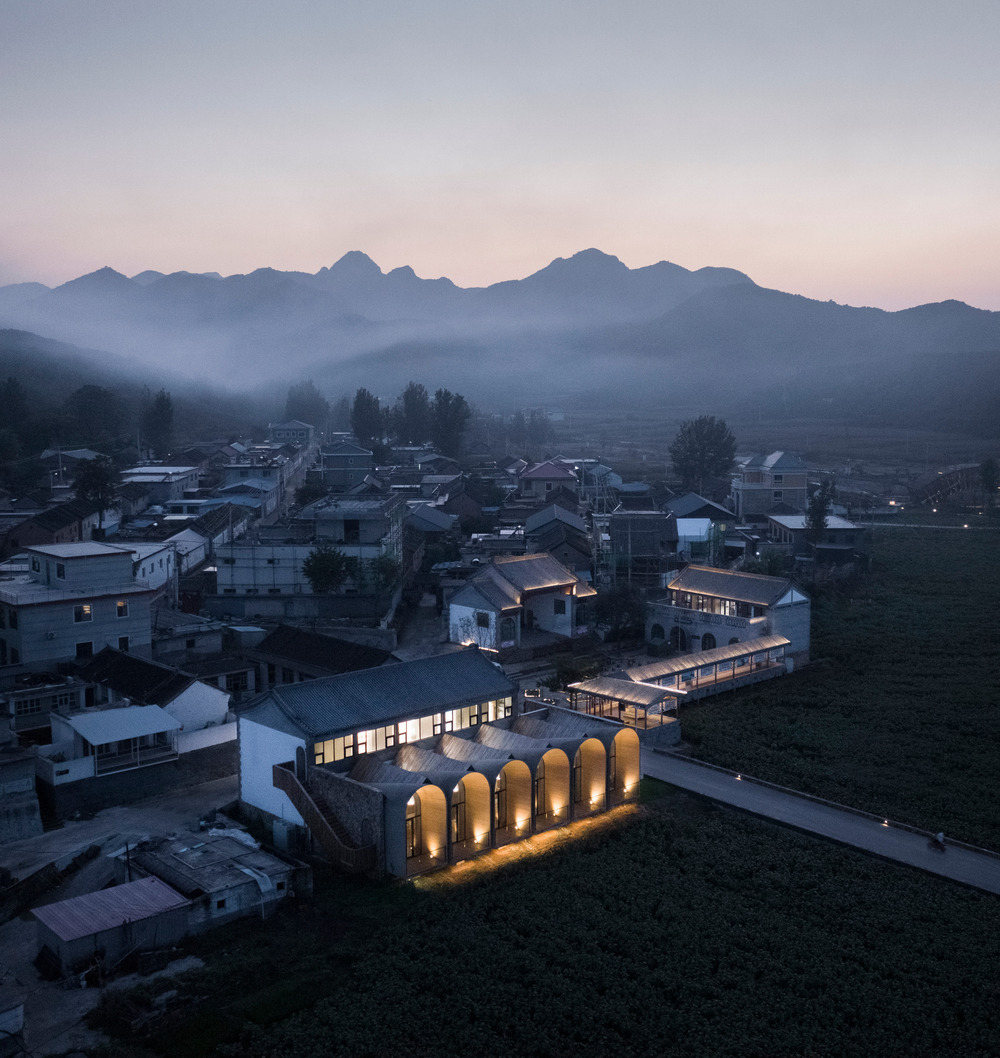
The project aimed to create the “Village Light” by designing brilliant new communal spaces from the inside out. SYN Architects took inspiration from the rhythm created by the five arches of the original village committee building, which were previously hidden from view, and expanded their scale to form a series of trumpet-shaped volumes connected by a thin, curving concrete shell structure. The architect also created an arched volume facing the street, which serves as a welcoming entrance for visitors.
-
- Photo credit: ArchiTranslator
-
- Photo credit: ArchiTranslator
-
- Photo credit: ArchiTranslator
To solve the issue of water drainage, flat triangular skylights were installed to re-route the flow of rainwater and introduce natural illumination, emphasising the shape of the arch and creating a play of light and shadow. The new communal spaces in the building, which unite the old and new and merge pragmatism with innovation, radiate energy and activity from the inside out. This project offers an excellent example for architects looking to redefine and reimagine formal features of existing buildings.
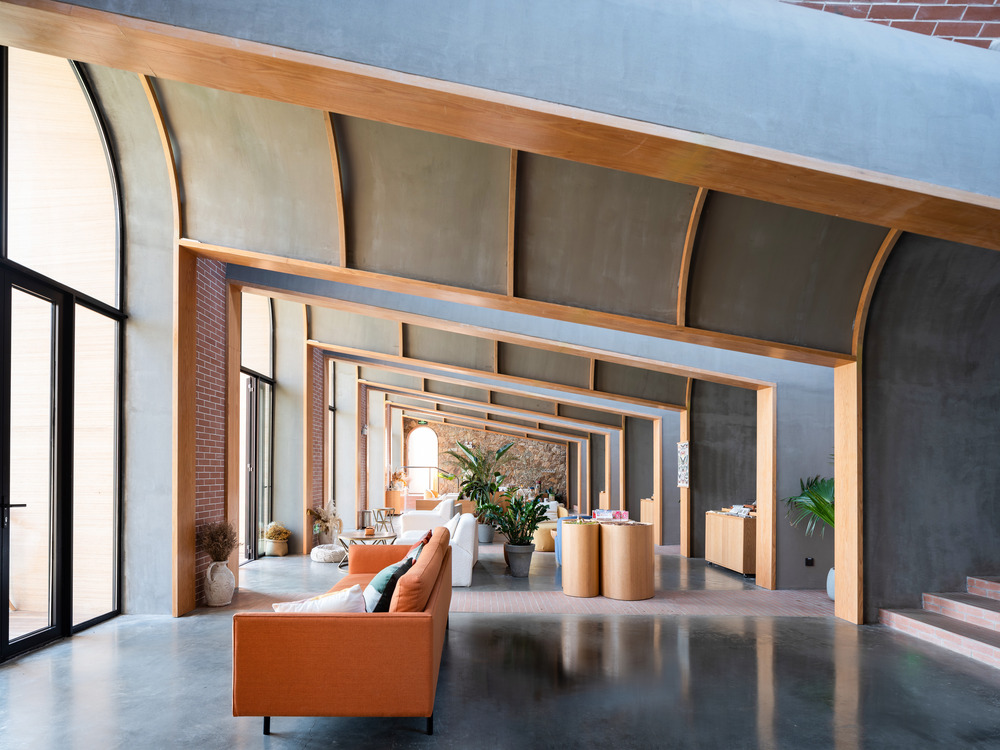
The architectural design of the building reflects the concept of communal countryside and a new mutual regard. The northeast side of the building consists of a large facade of floor-to-ceiling glass, with all seats oriented towards the windows. The reception provides a space for “new farmers” to converse with long-term villagers, while showcasing the beauty of the surrounding landscape. The walls form a forced perspective and appear to “shrink” on the interior.
-
- Photo credit: ArchiTranslator
-
- Photo credit: ArchiTranslator
The “arch” as an architectural motif is taken from the exterior of the building and strengthened and continued indoors. It forms a visually striking rhythm through repetition and is further emphasised through the abstract spaces created by its use. The building is supplemented throughout by timber, red brick, pressed grass panels, and other architectural materials that evoke associations with countryside living. The red brick floor at ground level is placed solely on the projected surface between the arches, while a luminous film has been used to create a uniform light environment.
-
- Photo credit: ArchiTranslator
-
- Photo credit: ArchiTranslator
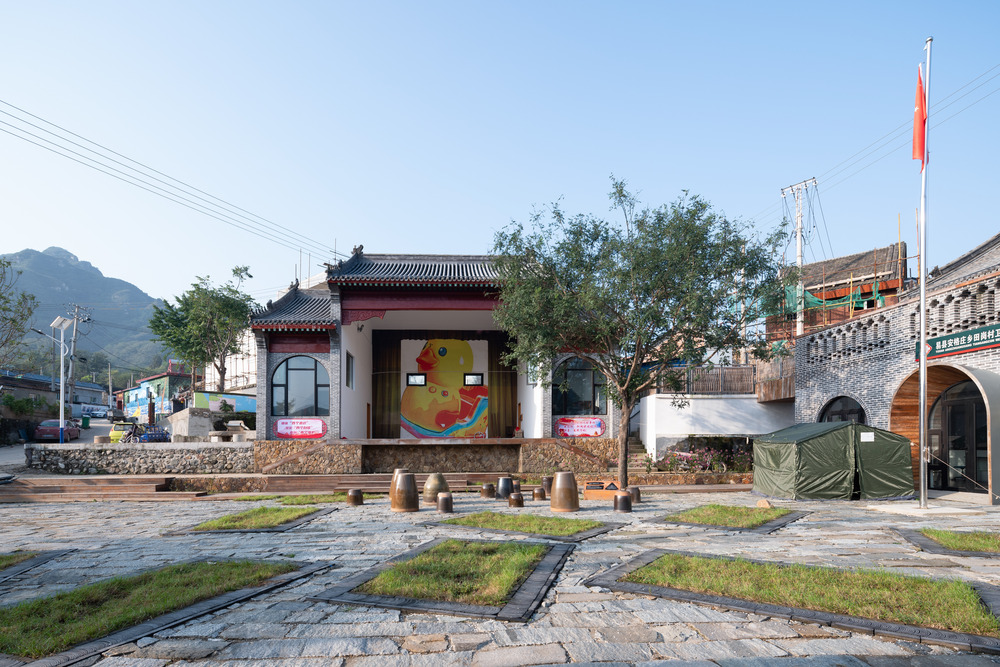
The “Living Room” project involves more than just the main building, as the original stage, health clinic, and public square have also been given a makeover. The health clinic features a door within an arch to accentuate its significance. The communal stage continues its function as a place for theatre plays and the everyday “theatre of life” in the village. The public square features 12 rectangular patches of grass representing the 12 zodiac signs, with each year a new plant growing on a different patch of grass. SYN Architects hope to accompany Tiangang Village in the subsequent years of regeneration to ensure the design is integrated into the fabric of time and life or many years to come.


