
Located in Shenzhen, China, this project defines space not by function, but through the dissolution of boundaries, creating a canvas where life, personal spirit, and identity can unfold freely. Through the deconstruction of balance and a poetic use of materials, Chen Hongbo, Creative Director of LubanEra·Design, translates multi-dimensional feminine identities into a perceptible spatial experience. Every turn within the space is more than a circulation shift; it hints at the journey ahead. Space, light, and materiality converge to reveal a “multi-faceted feminine universe,” articulated with a strong humanistic sensibility.
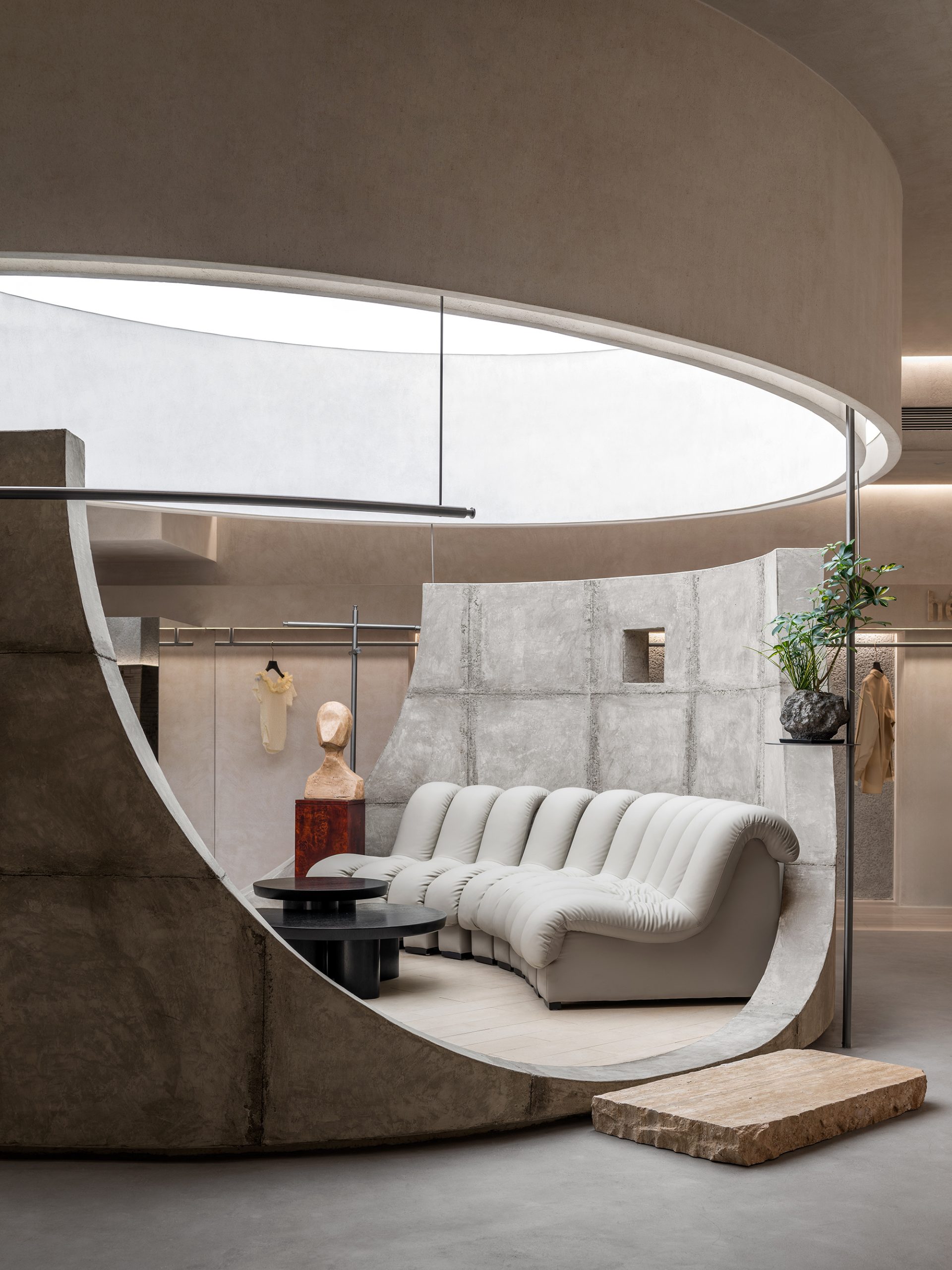
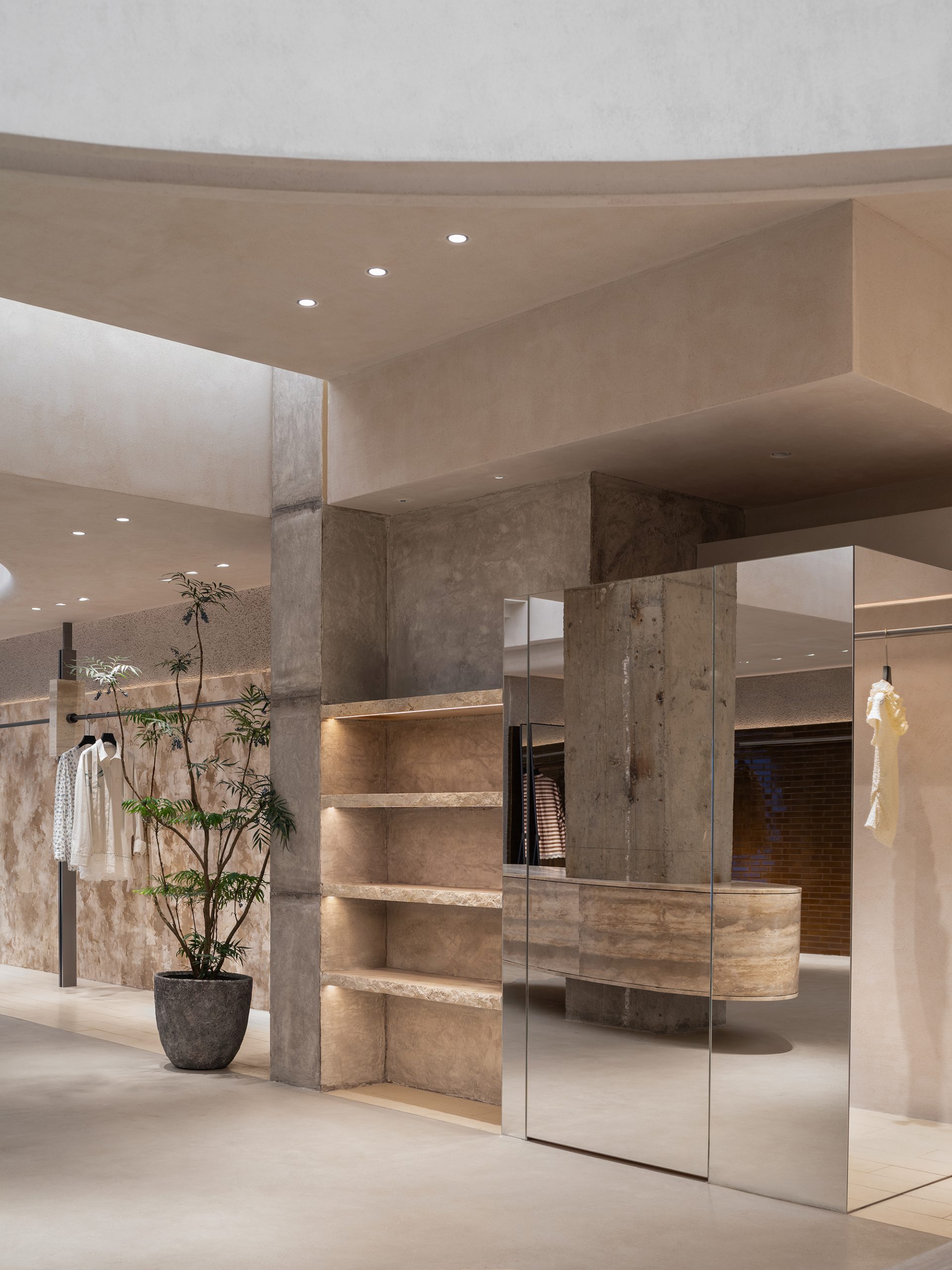
The spatial aesthetic is shaped by the purity of exposed concrete and the organic ease of liquid stone (petrified wood). As the space extends inward, an elliptical central island functions as both a welcoming gesture and the starting point of the retail journey. Entry walls gently peel away from the original structure, converging toward the island to form an enclosure that is visually striking yet quietly restrained.
Rather than pursuing a specific design style, Hongbo seeks to unlock the commercial value of spatial aesthetics. By delving into the identity of the women’s fashion brand hé, the design expresses its ethos of unbounded style and effortless fashion. Rooted in the concept of “contradictory symbiosis,” the brand’s free-spirited character is translated into an artistic spatial language. Reimagined volumes form the spatial skeleton, creating an environment that balances tension and warmth while conveying a sense of ease.
Read others:
Interview with Niwa Hiroyuki
Interview with Alvin Tjitrowirjo
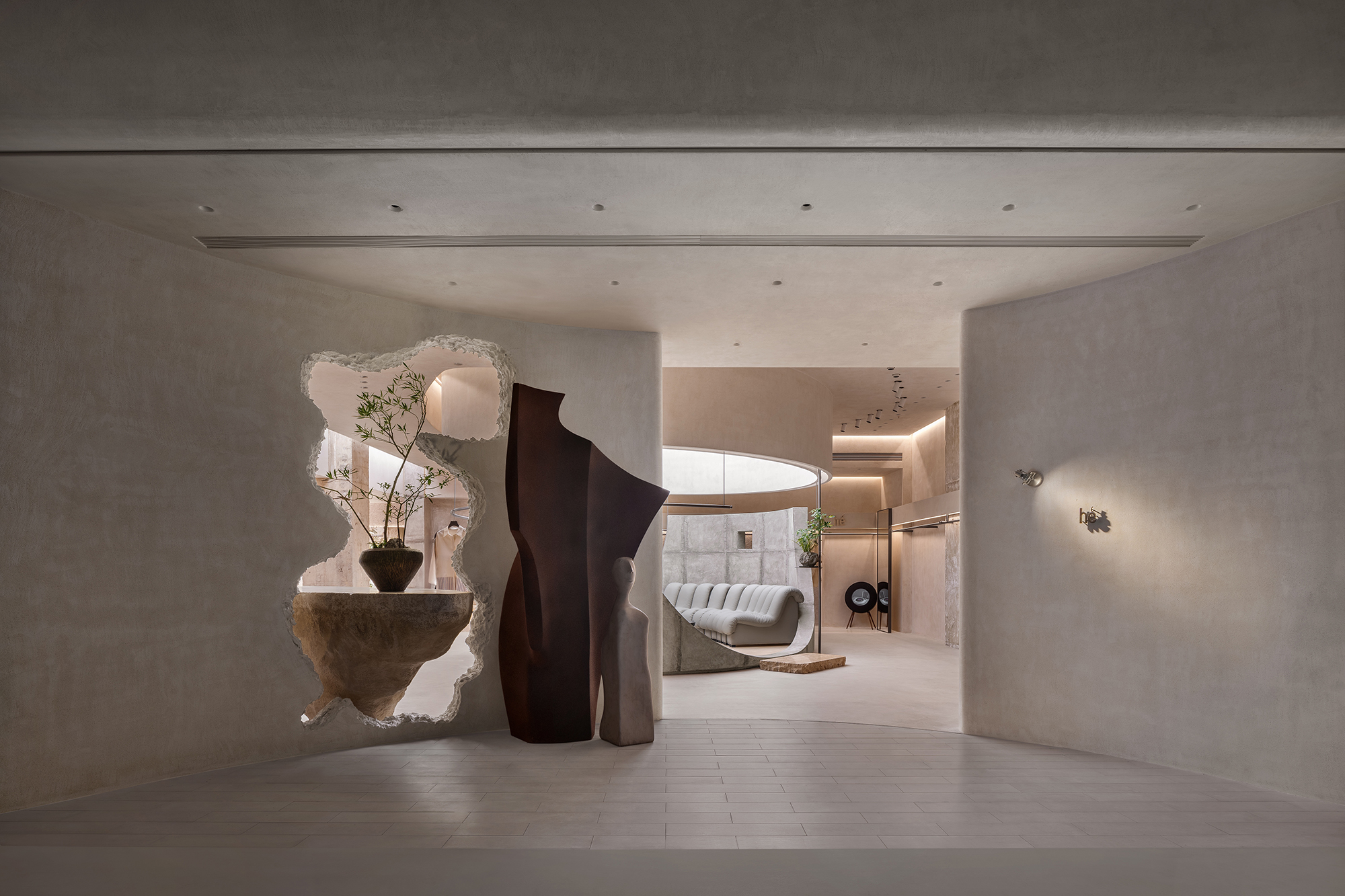
Following a narrative sequence of “breaking boundaries, the entrance façade curves inward, softening the threshold and creating a buffer between the exterior and the interior. A deliberately narrow entryway tightens the field of view, offering only fleeting glimpses inside. Once entered, the space opens up suddenly into an expansive volume, where lighting creates an immersive atmosphere. Subtle and restrained visual cues gently engage the senses, evoking anticipation and encouraging discovery.
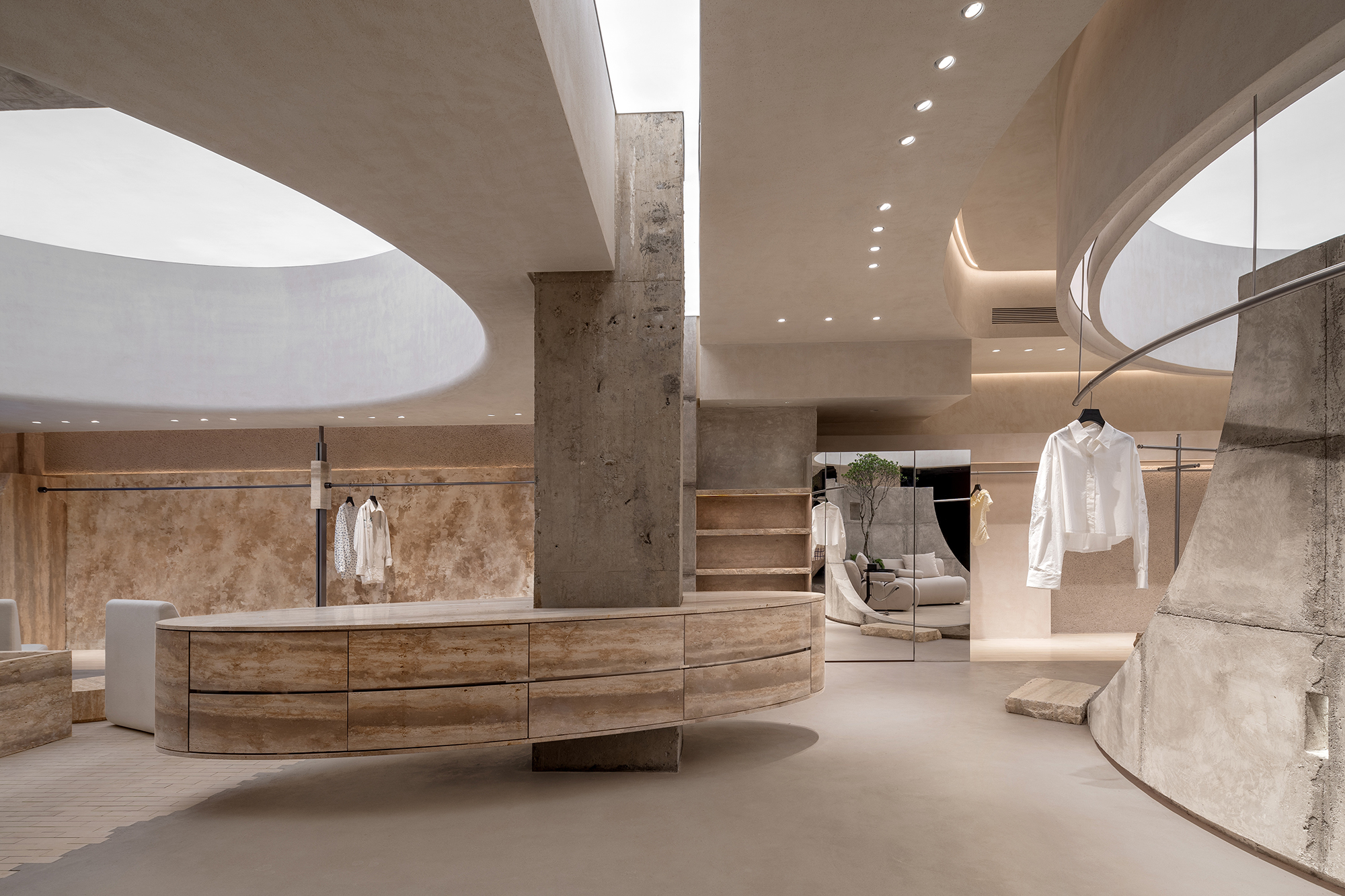
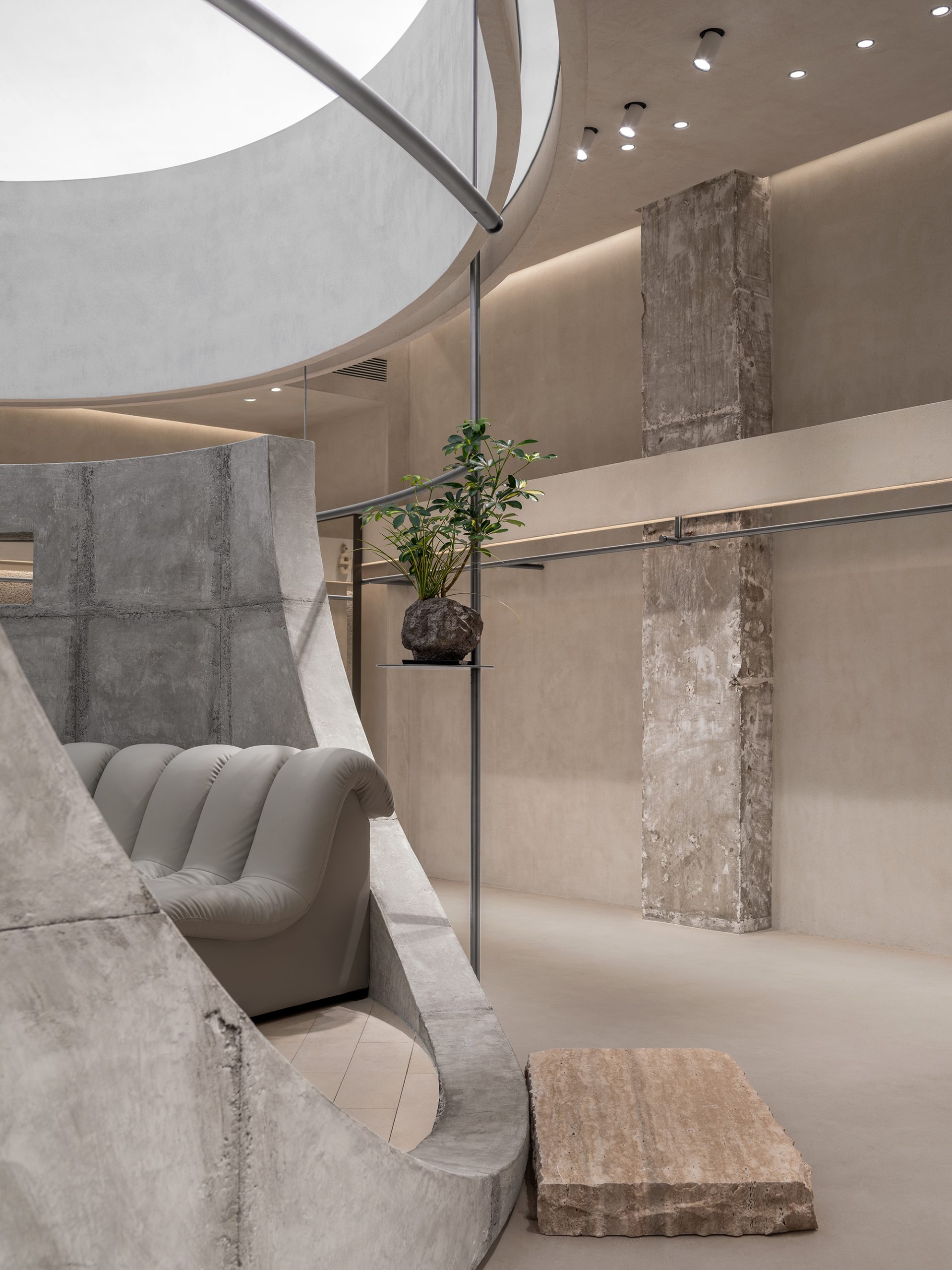
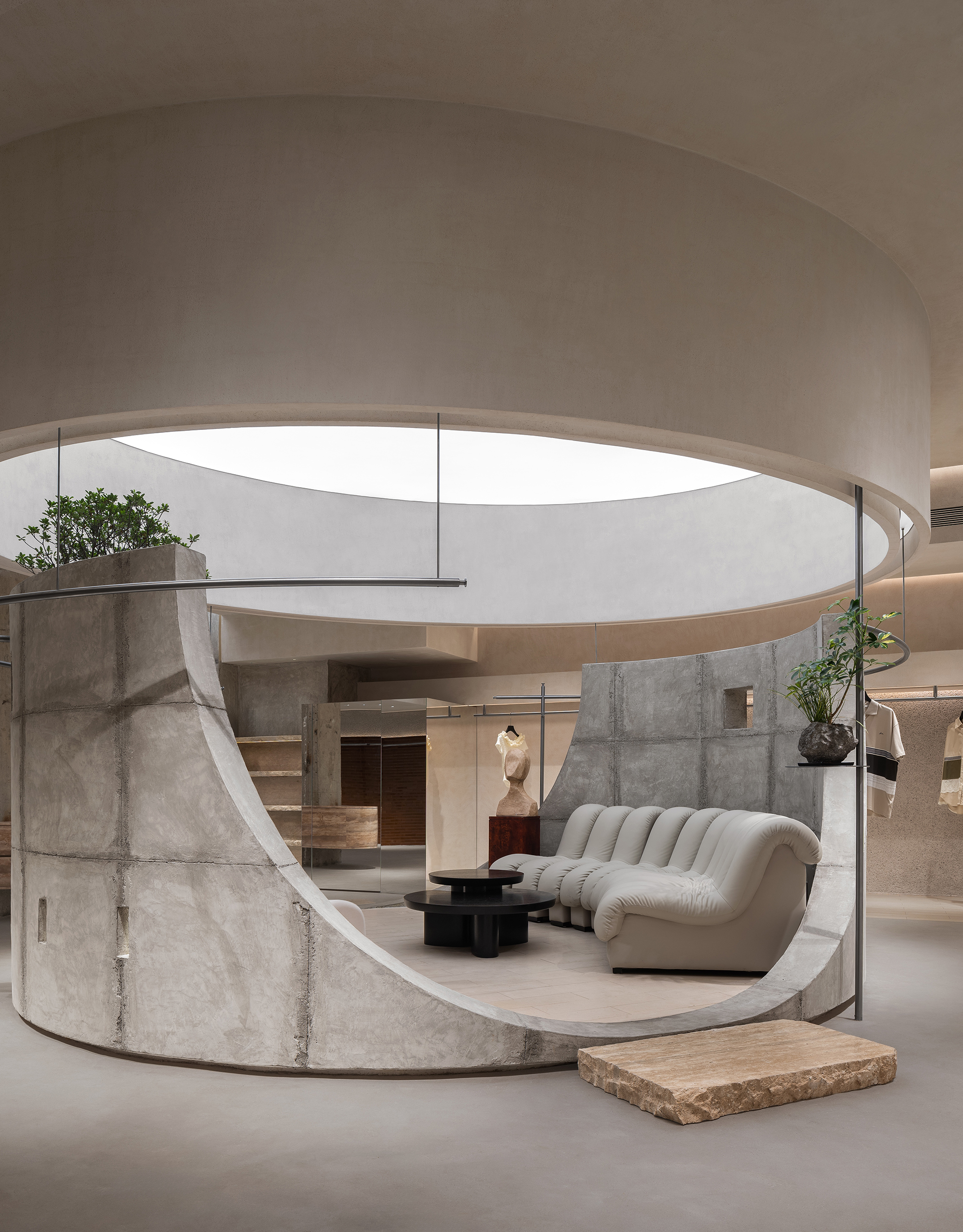
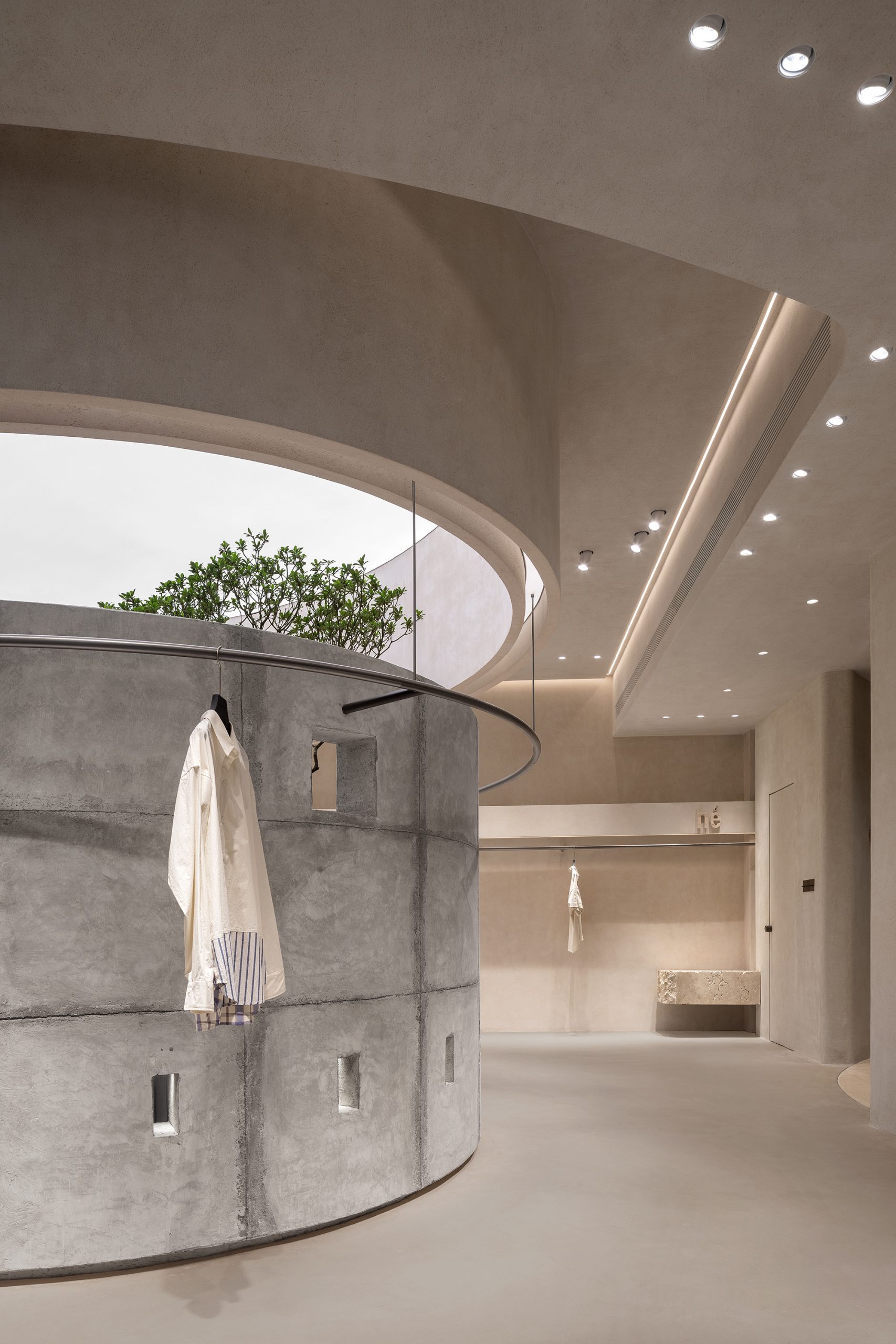
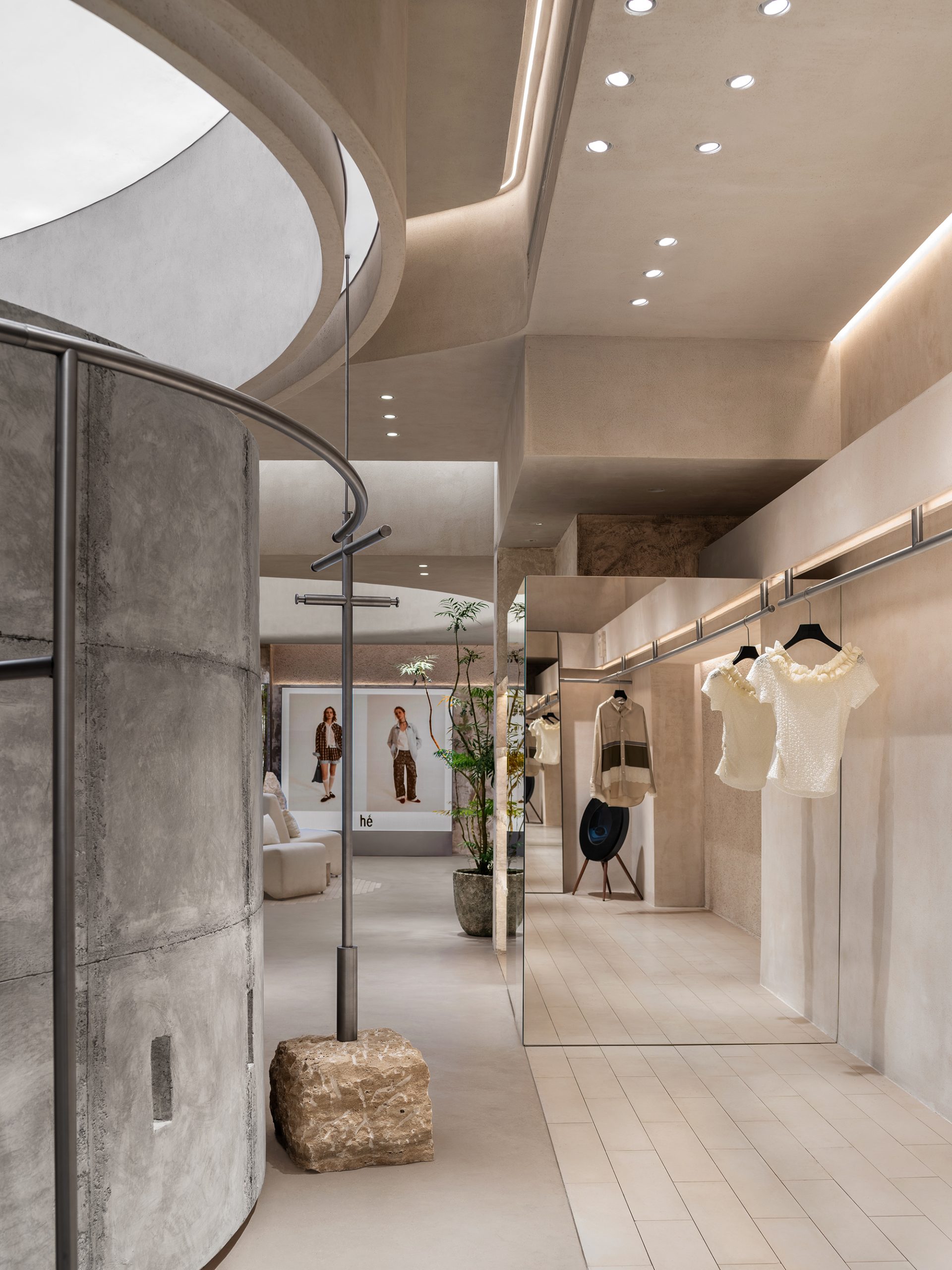
Inside, two large circles define the primary retail zones. Continuous volumes emerge along arcs, standing like quiet islands within the flow of movement. Their curved forms echo the ceiling above, while subtle shifts and openings disrupt any sense of completeness, reflecting the fluid and evolving nature of the space. With a quiet presence, these forms become visual anchors, creating a tension of “separated yet connected.” Within this circular realm, spontaneity and purity unfold, shaping an environment of openness and balance.
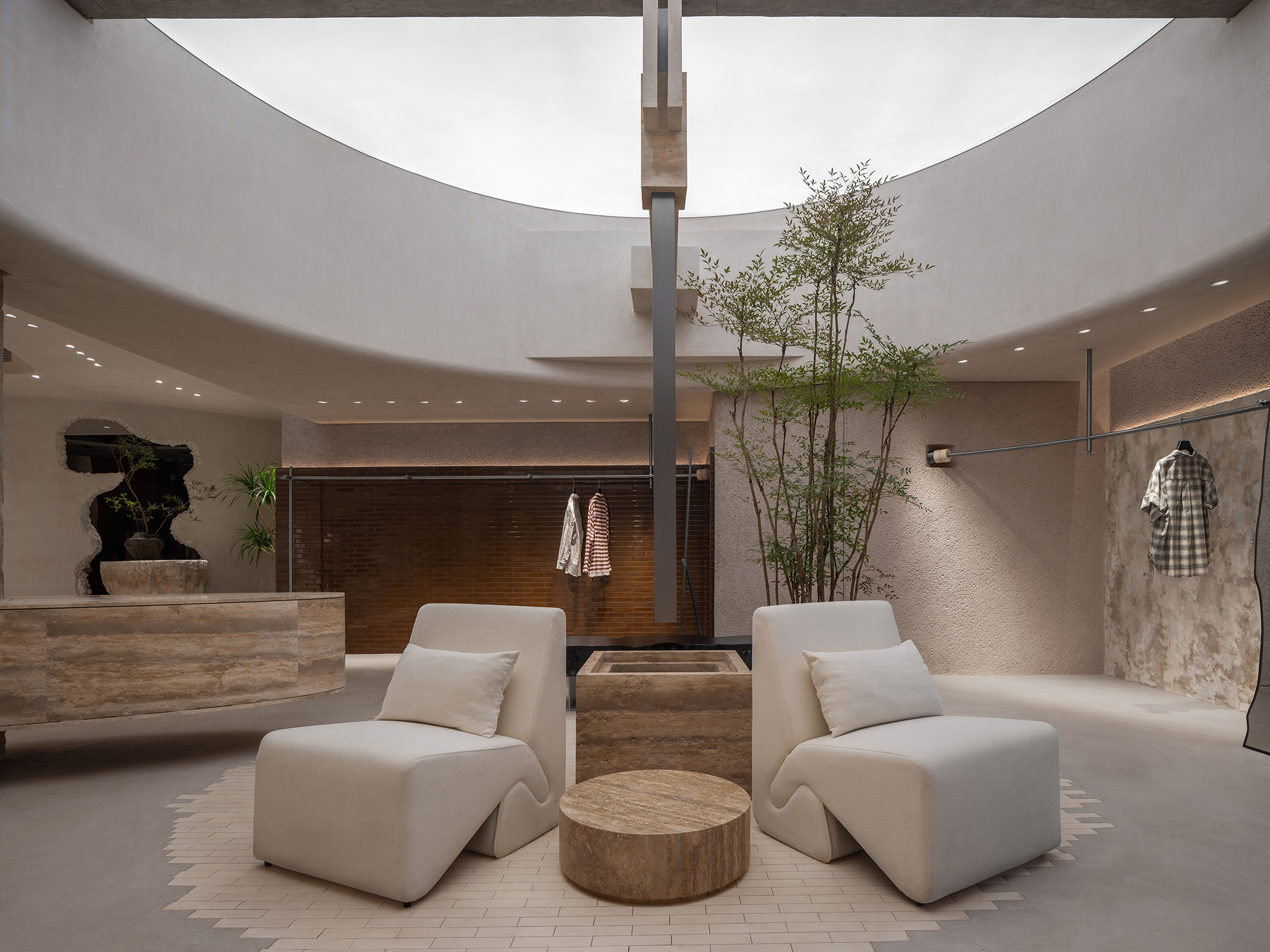
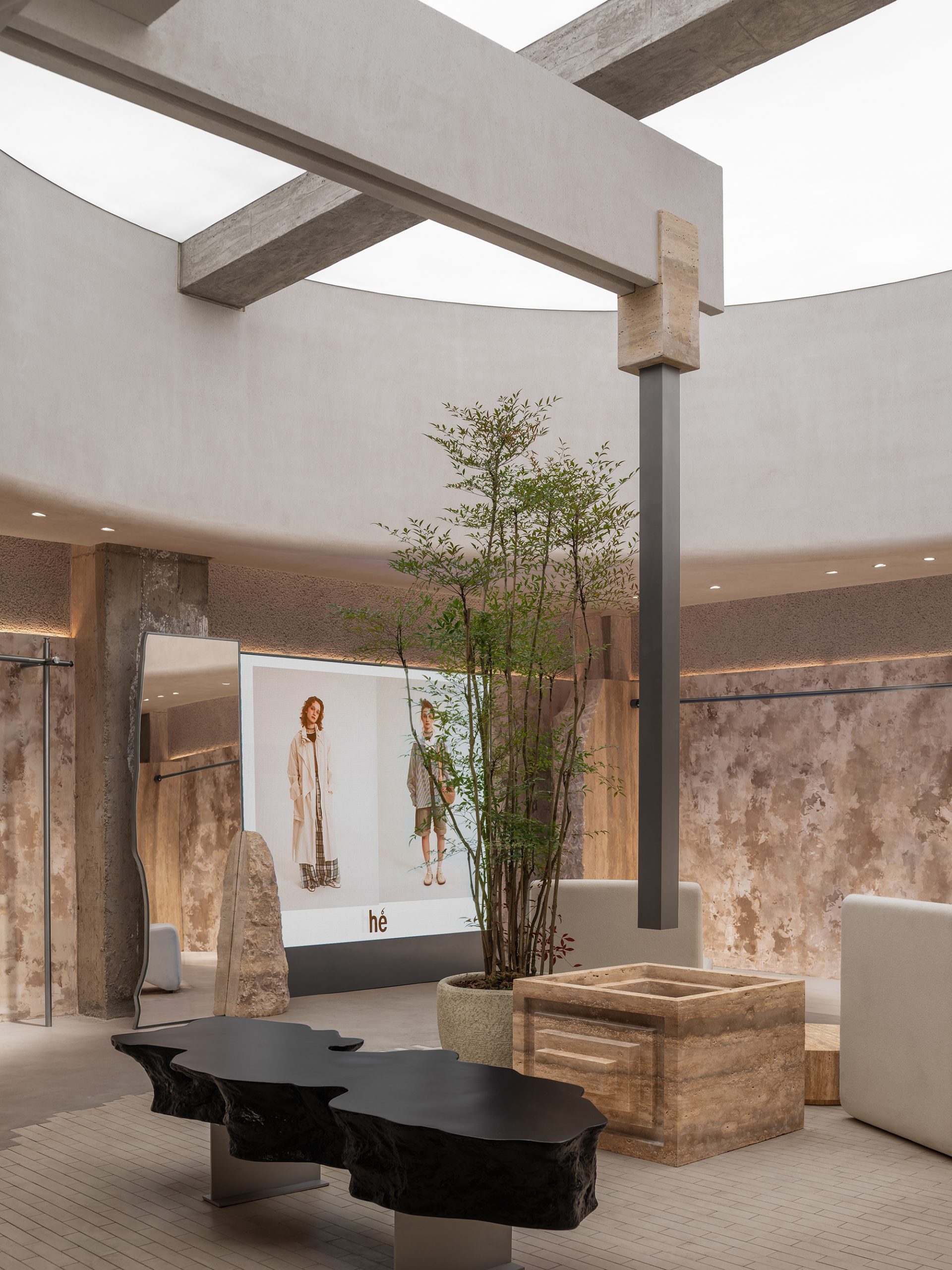
The building’s original exposed exhaust duct system, complex and immovable, became a catalyst for design exploration. Embracing its constraints, the design transforms rigidity into a source of natural resonance. Inspired by the cascading rhythm of classical Chinese water features, modern geometric forms, rectangles interwoven with arcs, extend from the duct, creating a sense of spatial and temporal suspension. Interlocking volumes hover mid-air, descending rhythmically toward a central “pool.” Circular light membranes, floating geometric installations, and irregular limestone flooring together articulate the space’s spontaneous character. They also evoke the poetic imagery of “the Yellow River cascading from the heavens,” forming a powerful focal point.
Two large circular light membranes, adjustable in both colour temperature and brightness, form the spiritual core of the space. Their geometry carries both physical presence and a sense of reverence, imbuing the interior with vitality and transcendence. Light diffuses softly throughout, enveloping visitors in a luminous and naturally comfortable environment.
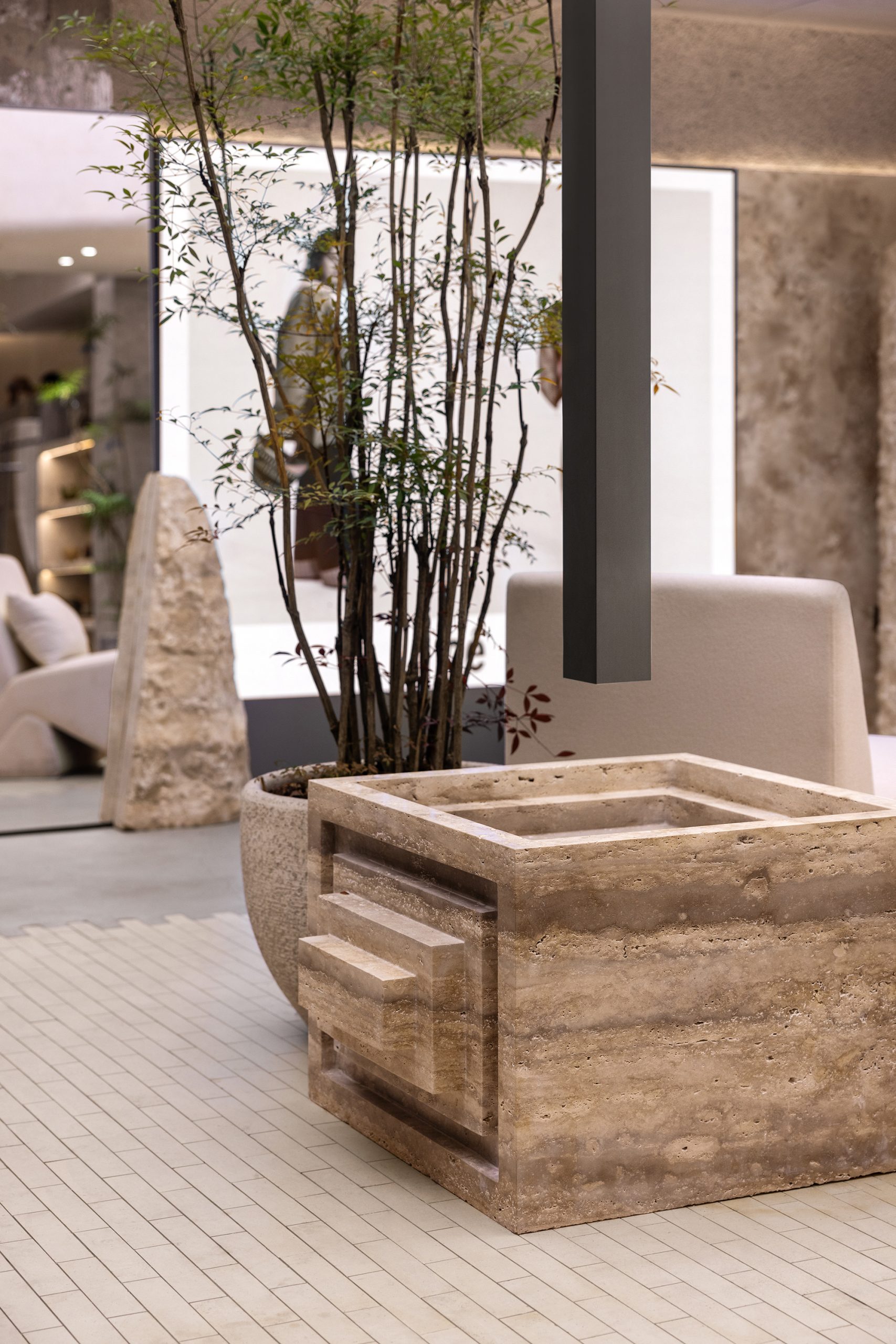
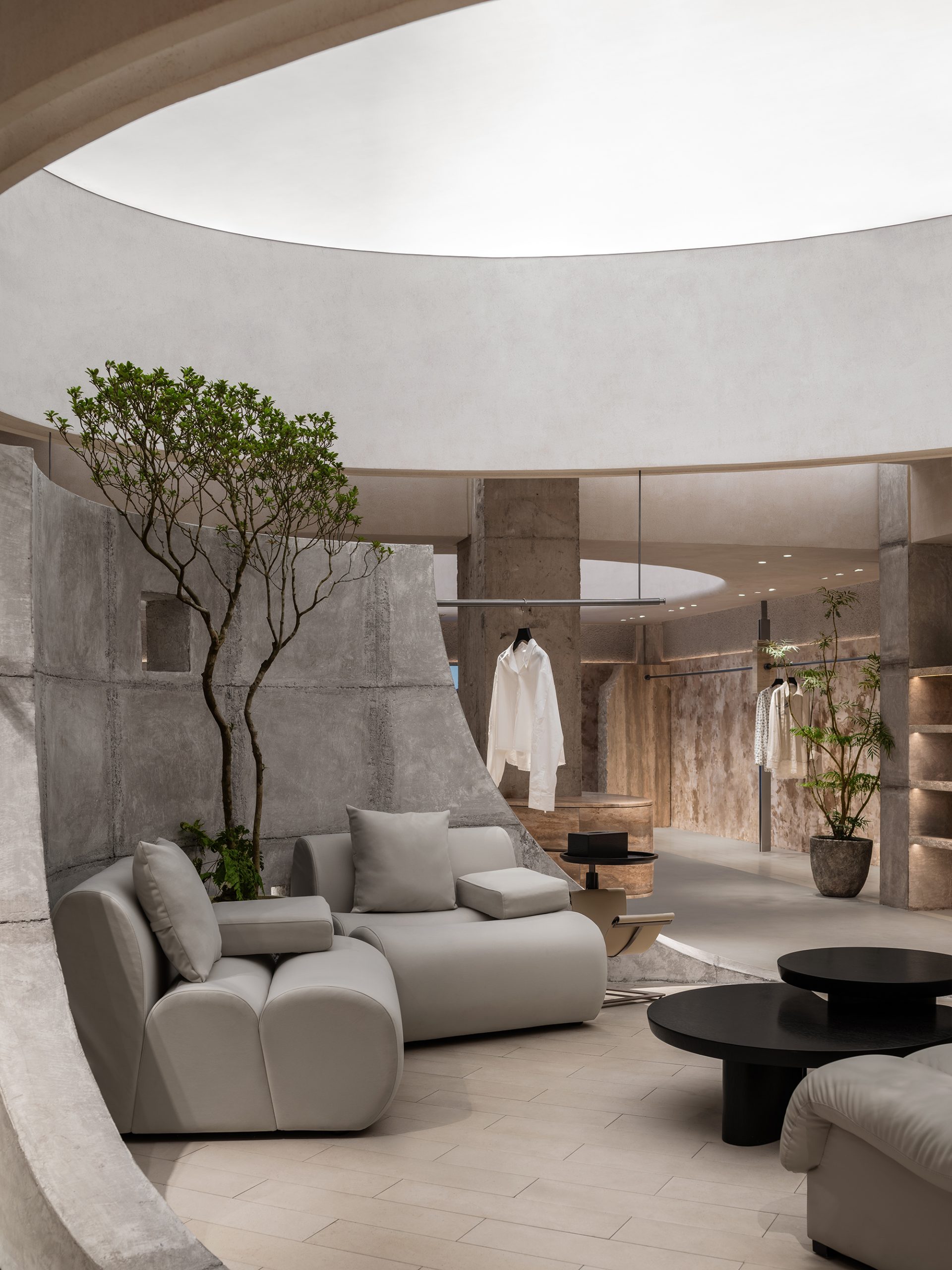
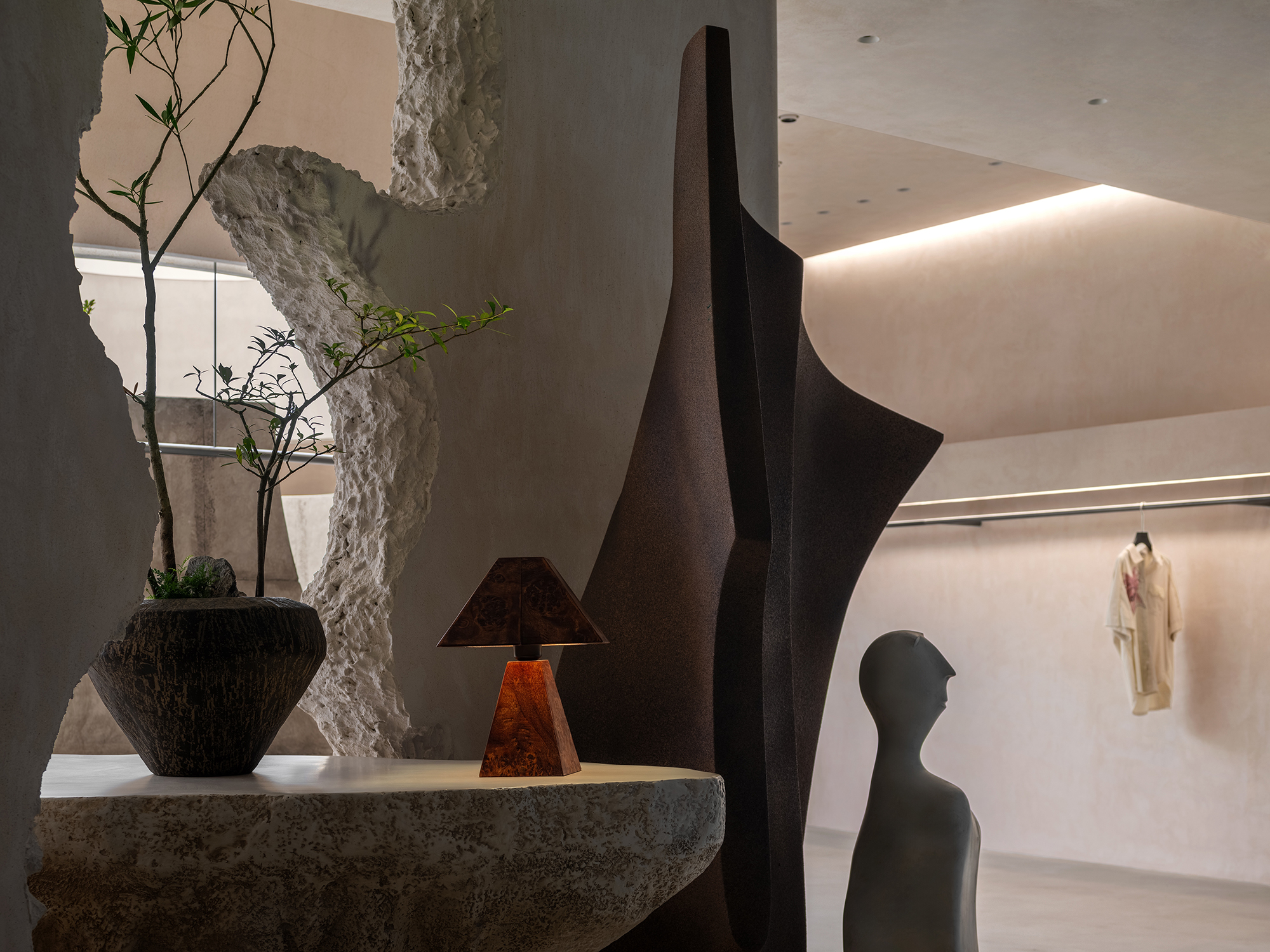
Liquid stone (petrified wood) reveals layered grains across ceilings and walls, echoing geological strata and bearing traces of natural evolution. It becomes a medium for dialogue between space and deep time, creating a refined aesthetic where nature and art converge quietly. Exposed concrete, raw and unfiltered, contrasts with the stone’s warmth. Together, they generate spatial depth and visual tension, capturing the fluid passage of time.
Multiplicity is expressed through shifting perspectives and tactile contrasts. Subtle transitions in texture and tone animate the walls, enriching the space’s emotional resonance. Within the retail zones, aged finishes interact with light to create a layered, multi-dimensional effect. Handmade kiln-glazed bricks, each with unique chromatic and textural variations, offer moments of visual interest. Through these diverse materials and perspectives, the design bridges fashion and lifestyle, inviting visitors to explore art, taste, and individuality, and ultimately shaping a space that is distinctive and resonant.
Read others:
Ryuichi Sasaki Designs Escenario Hanabusayama Where Architecture Meets Landscape
Urbanjobs Refines Contemporary Mediterranean Dining in Istanbul


