
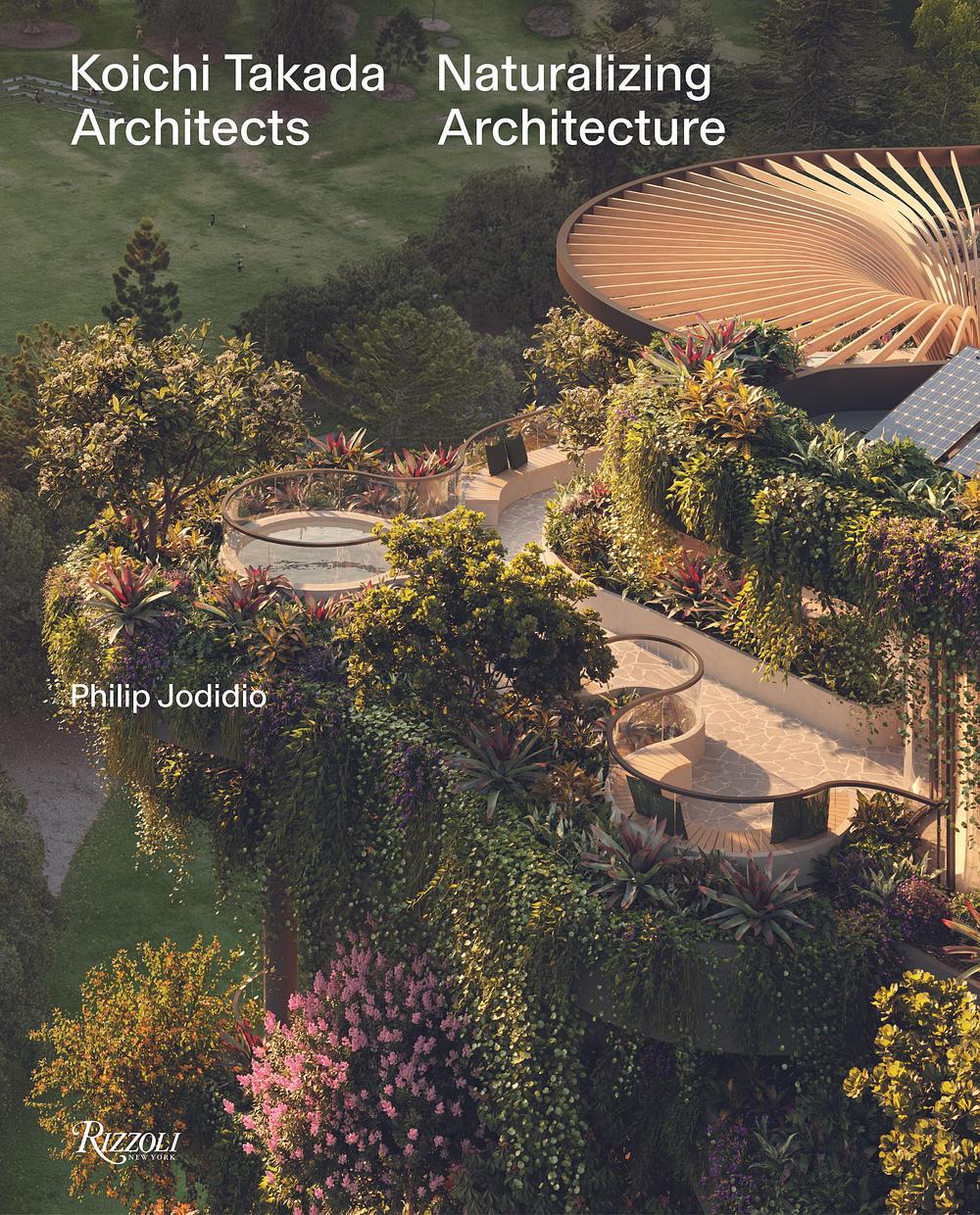
Architect Koichi Takada has released his second book, “Naturalizing Architecture”, published by Rizzoli New York. The volume captures his commitment to transform city landscapes by integrating the regenerative qualities of nature into urban architecture.
Approaching two decades in business as Principal and Founder of Koichi Takada Architects (Sydney, Australia), Takada has become known globally for buildings that blend natural inspiration with contemporary form. His work draws on organic lines and natural materials to create spaces that recreate the wellbeing effects of being in nature. The book features Takada’s innovative and sustainable designs, showcasing his vision for the future of architecture. It is a curated collection of Takada’s recent projects, pushing further his reflections on the role architecture must play in connecting us with each other and with nature in an increasingly disconnected era.
Featuring breathtaking photography of his buildings and interiors, along with diagrams and photography of the nature from which he draws inspiration, the book guides readers through Takada’s global ventures, including: Upper House in Brisbane, the Palm Frond Retreat at Balmoral Beach in Australia, the award-winning Solar Trees Marketplace in Shanghai, and Mamsha Palm on Saadiyat Island, Abu Dhabi.
-
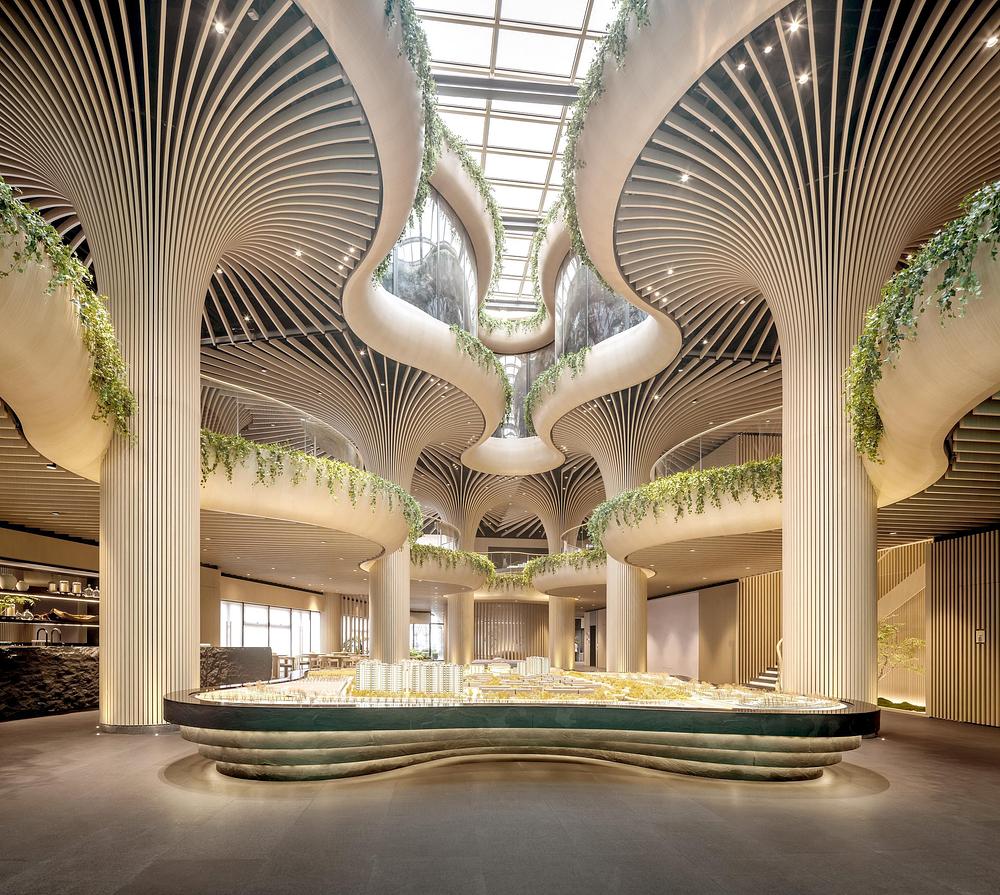
- Solar Trees Marketplace interiors (Photo credit: ZY Architecture Photography)
-
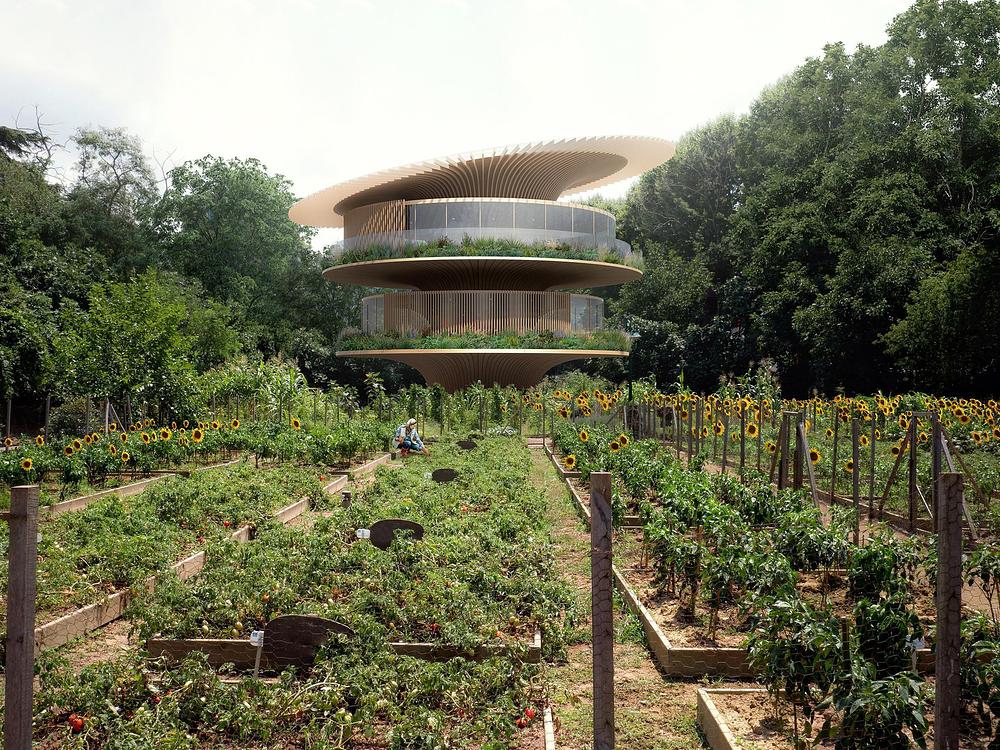
- Sunflower House (Le Marche, Italy) (Photo credit: CGI by Doug and Wolf)
-
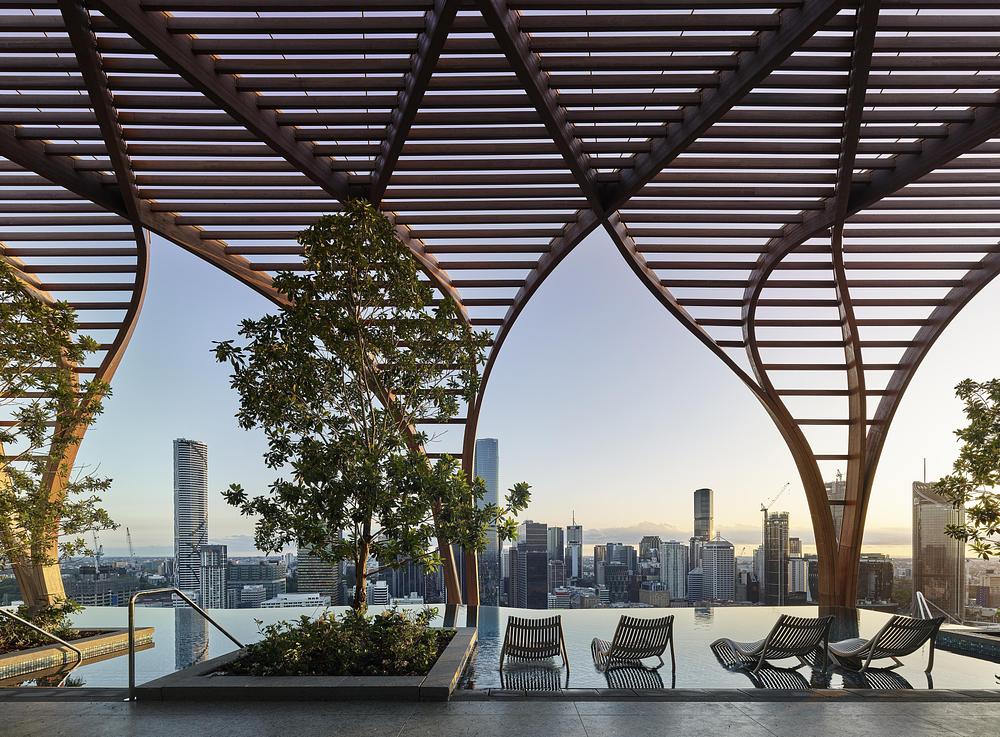
- Upper House (Brisbane, Australia) rooftop amenities shaded by a timber canopy. (Photo credit: Scott Burrows)
Each project illustrates Takada’s unique perspective. His work embodies a fusion of Japanese restraint coupled with an almost contradictory propensity to break the rules; which invites us, as the onlooker, to stop and consider nature’s role in contemporary cities.
“Architecture today must respond to ecological constraints, but also offer more than utility,” says Koichi. “It should inspire, connect, and restore balance with nature.”
Naturalizing Architecture presents this philosophy through 240 pages of photography, diagrams, and reflections, with text by architecture writer, Philip Jodidio, a foreword by author and Director of Curatorial Affairs at Fondation Cartier, Béatrice Grenier, and an afterword by Takada himself.
“Koichi Takada’s projects propose new principles of mutuality and inclusion between nature, architecture, and culture,” writes Grenier.
This second book marks a new stage in Takada’s work, reinforcing his reputation as one of architecture’s most original voices.
Read Others:
Ryuichi Sasaki Designs Escenario Hanabusayama Where Architecture Meets Landscape
InterContinental Yining: A Modern Sanctuary by Cheng Chung Design


