
N*thing is Possible, initiated by hospitality brand Potato Head and co-curated by OMA’s David Gianotten, has opened at the National Design Centre during Singapore Design Week. This exhibition showcases regenerative designs that embrace the concept of reusing, recycling, upcycling, and reliving in a quest to attain a zero-waste lifestyle. Asia Designers Directory interviewed David Gianotten, OMA Managing Partner – Architect, to learn more about this exhibition.
OMA partners Potato Head in curating N*thing is Possible at the National Design Centre. Can you tell us more about this collaboration?
OMA and Potato Head have been working together for 12 years now. We have various projects in Southeast Asia related to tourism and hospitality. Through these different projects, we have collaborated with numerous artists, and explored together the meaning of zero waste and sustainability.
-
- Potato Head x OMA – Nothing is Possible Exhibition © Studio Periphery, courtesy of Potato Head and OMA
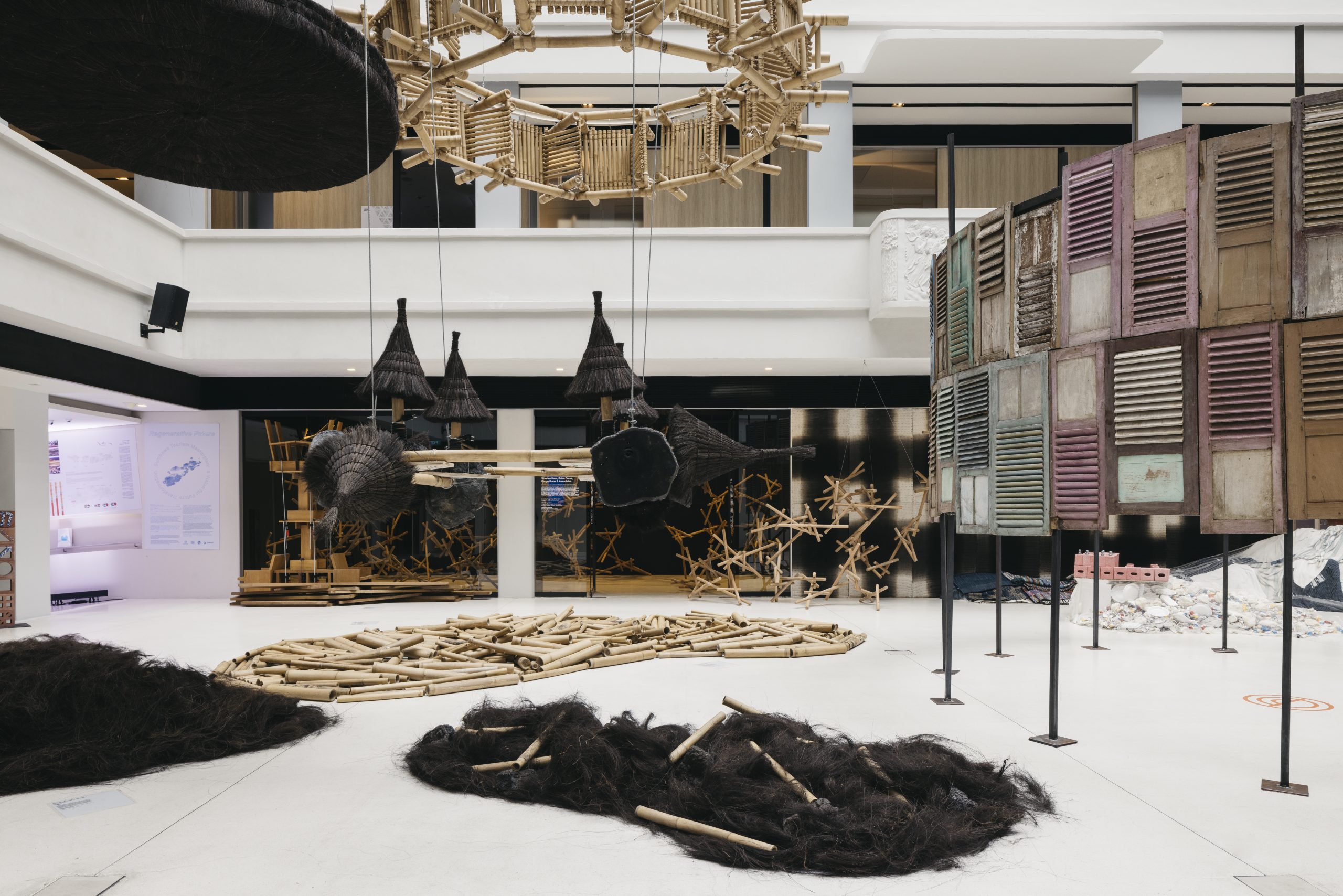
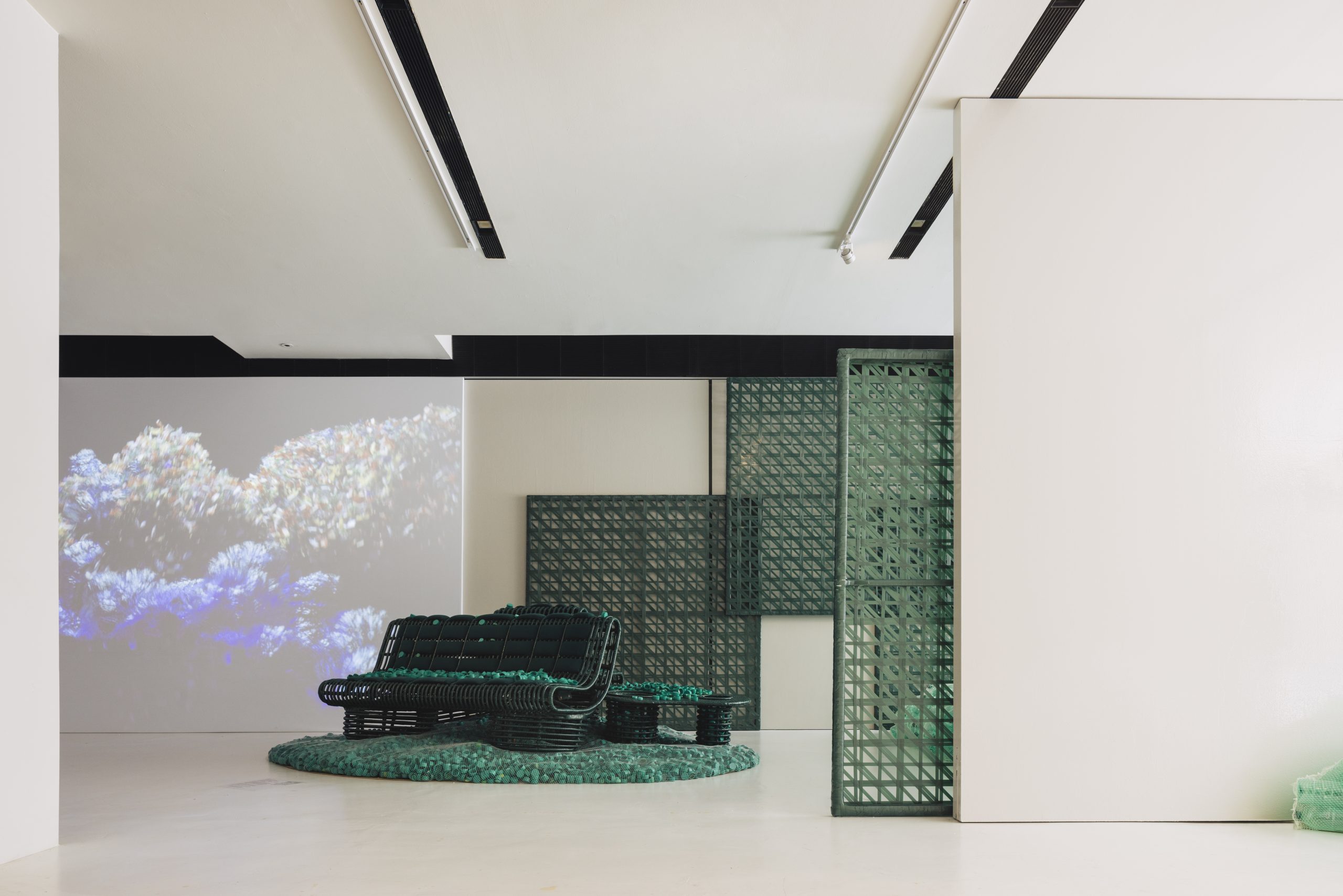
Earlier this year, Ronald Akili, the founder of Potato Head and a good friend, came to us and asked that we design an exhibition together, to showcase how this kind of creative collaboration across disciplines can help us achieve zero waste. In the exhibition, you will see the works created by our collaborators for use in Potato Head’s facilities, displayed above a landscape of natural materials and waste. For example, you will discover what kind of waste Max Lamb has used to create amenities for the Potato Head Studios in Bali. This exhibition is all about fruits from collaboration.
This three-month long exhibition spans design, art, architecture, music, food and fashion, involving many designers and industry stakeholders. Can you share with us some highlights of the exhibit and what you think are some of the biggest takeaways?
The showcase of products made with waste in the atrium is inspiring. Andreu Carulla’s experiment with Styrofoam is worthy of note. He also hosted workshops for the public to try out how Styrofoam waste can be transformed into materials for product design.
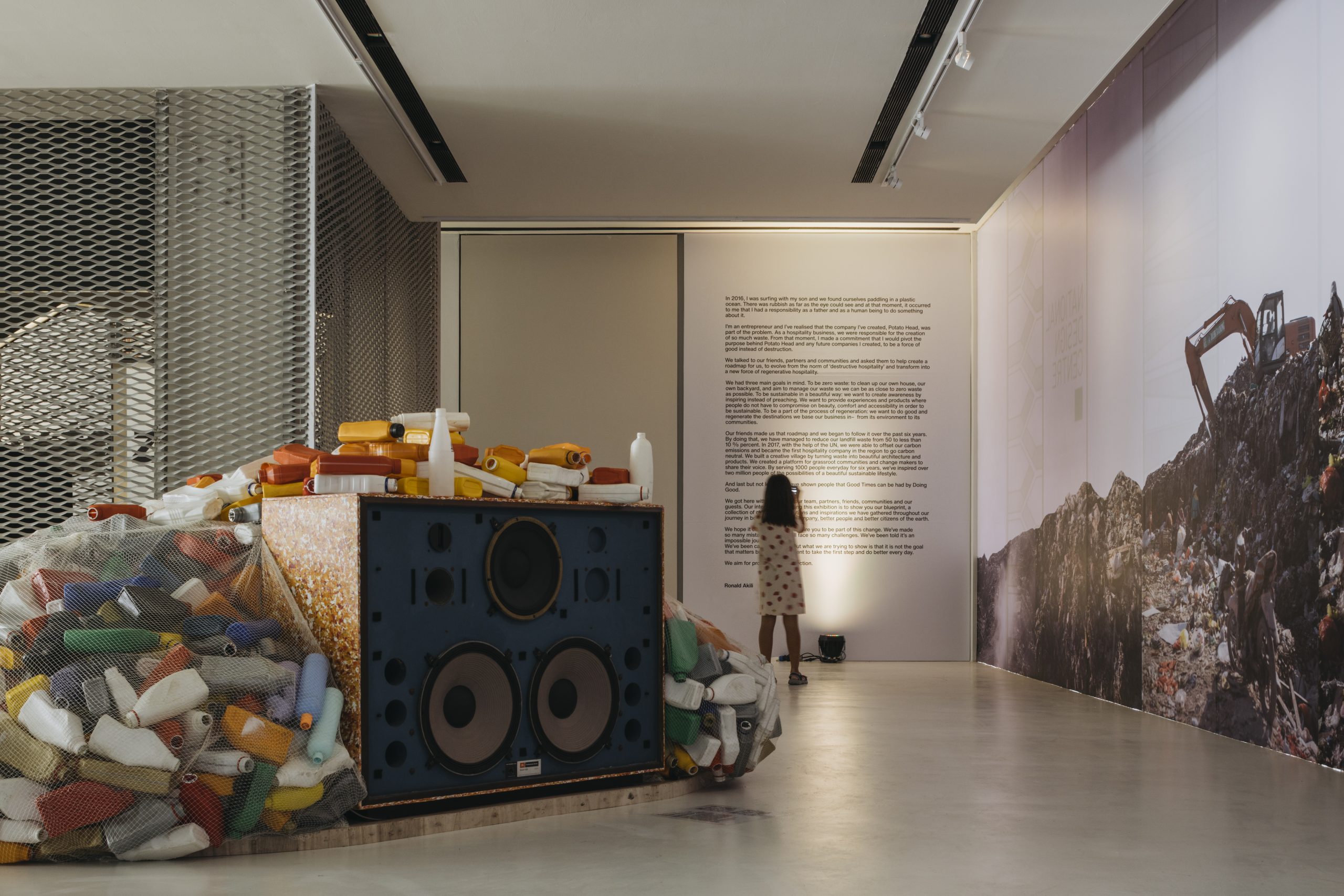
The Blueprint section is a highlight for us. It is the result of research that we conducted together with Bali-based environmental engineering consultancy Eco Mantra and the National University of Singapore. In this research, we looked at the ongoing waste management program at Desa Potato Head and its results. We compared it against Bali and Singapore’s top-down, government-driven zero-waste incentives, the public responses, and landfill capacity. We have observed that fundamental changes in the general public’s waste management practices hinge not only on government-level directions, and private sectors such as Potato Head can initiate small-scale, yet progressive measures with potential long-term effects. This finding for us is both interesting and encouraging.
-
- Potato Head x OMA – Nothing is Possible Exhibition © Studio Periphery, courtesy of Potato Head and OMA
-
- Potato Head x OMA – Nothing is Possible Exhibition © Studio Periphery, courtesy of Potato Head and OMA
-
- Courtesy of Potato Head and OMA
Your career spans extensively across Asia and the Netherlands. Can you share with us the differences in the architectural design scenes in these markets?
I was based in Hong Kong for seven years, between 2008 and 2015. From there I was leading the design and construction of the Taipei Performing Arts Center, the Potato Head Studios in Bali, the Shenzhen Stock Exchange, among many other projects in the Asia-Pacific. I was most impressed by the vision of the Asian cities to create something different, and their dedication and flexibility to realise something new. This is especially true for public projects.
Taipei Performing Arts Center, which opened in August this year, is a good example. We were able to realise a new type of theatre through many open dialogues with the local government and collaborators. This could have been more challenging outside of Asia. In comparison, Europe has a much more established structure for delivering public projects. There is a smaller appetite for risks, and you need to be more patient in negotiations to push for changes. For us, it is interesting to work in both markets. Working in different contexts inspires us to work in a much more flexible way.
Do you feel that designers in these countries are doing enough to advance sustainable living and how is zero-waste a consideration in your projects?
I think when we start to ask whether we are doing enough, we are putting limitations on ourselves. For us, what drives creativity is curiosity. We are curious about the meaning of sustainability, and many designers in different countries are interested in the same question. For example, our collaborators that are featured in N*thing is Possible are all exploring what they can do in their fields to achieve zero waste, through experimentations on materiality. I think once you are engaging in a creative process, you stop thinking whether you are doing enough. You just keep going.
At OMA, we have been preoccupied with the topic of using local materials, and reusing building materials. In the Bajes Kwartier project in Amsterdam, we are renovating an old prison complex into a mixed-use area. The project reuses 98% of the materials from the original buildings on site. In Potato Head Studios, we use sand that we found on the local beach to create cement. This minimizes waste from transportation. To reduce waste in construction, we also used reclaimed wooden boards for concrete formworks. These are just some examples of how we consider zero waste in our projects.
(Photo credit: David Gianotten’s Portrait Photography by Vincent van den Hoogen for OMA)


