
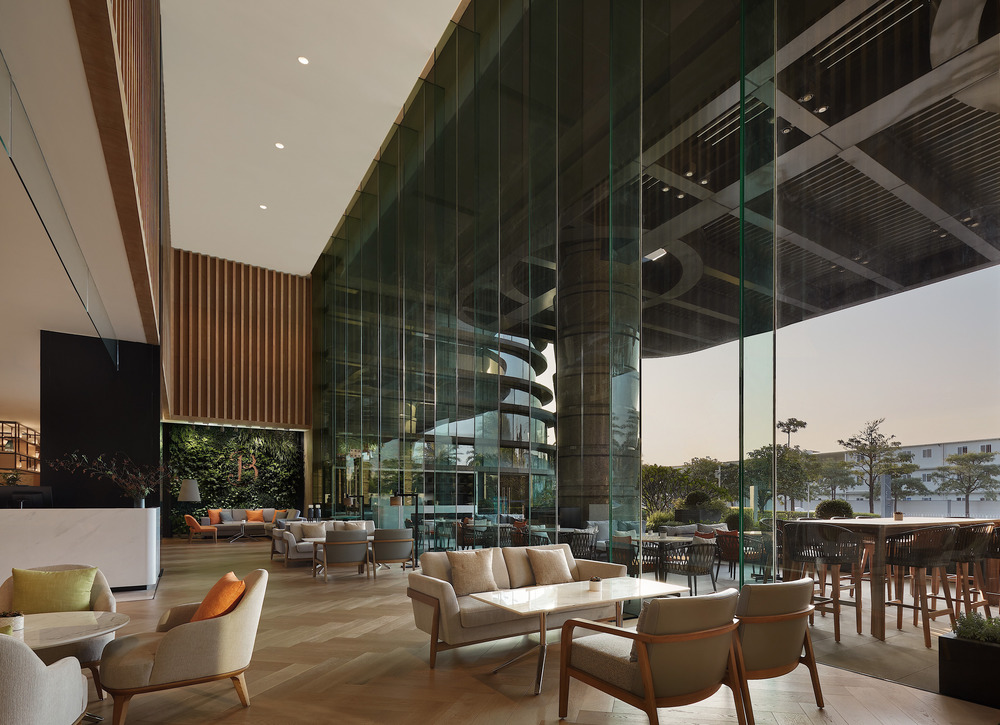
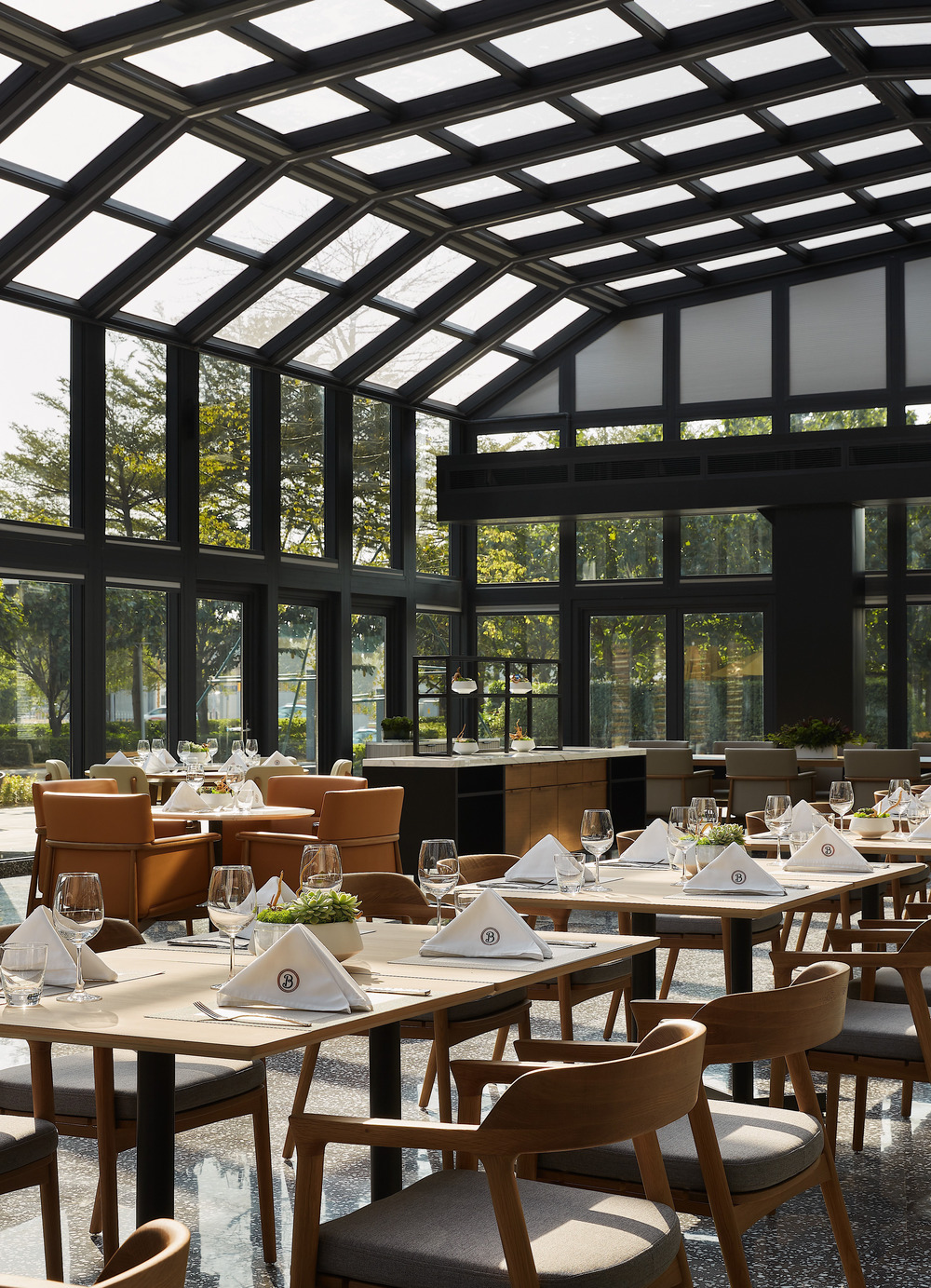
The Westin Pazhou Hotel (Guangzhou) was jointly built by China Foreign Trade Center (Group) and Starwood Hotels and Resorts International Group. It is located in the center of the world-renowned Guangzhou International Convention & Exhibition Center, with excellent city skyline or Pearl River views. From the hotel, all exhibition halls of the Canton Fair can be reached through a sky corridor. The all-day garden restaurant, lobby bar, and outdoor sunroom, redesigned by MOK Design, are located in the central area of the first floor of the hotel. The well-lit sunroom, with its traditional color mosaic patchwork and textured terrazzo floor, embodies the perfect combination of tradition and modernity.
The outdoor sunroom, a large transparent space fully enclosed in glass, is the highlight of the renovation design. The space can accommodate up to 107 people for simultaneous dining. By day, guests can enjoy the mental and physical benefits of dining within the embrace of warm sunshine. By night, guests can indulge in an evening of delicious food with wine, with sunset and starry sky external views, ideal for a romantic experience.
-
- Photo credit: Zhang Jing, Weng Xiaodong
-
- Photo credit: Zhang Jing, Weng Xiaodong
-
- Photo credit: Zhang Jing, Weng Xiaodong
Canton Bazaar
“Canton Bazaar”, the name of the all-day garden restaurant, references the abundant flavors of a Cantonese food market. The designer adhered to the design concept of “An oasis in the city, a garden full of vitality”, and incorporated elements such as the theme of the Canton Fair, the concept of the One Belt One Road, the historical background of the Maritime Silk Road, and the authentic Lingnan culture of Guangdong. Additionally, the space was redesigned in the form of “The Market”, a division of nine specific DNAs: “The Baker’s Corner”, “The Juicery”, “Farm To Table”, “The Fisherman’s Table”, “Open Kitchen”, “Communal Table”, “Green Sanctuary”, “Partition Wall”, and “Locavore Corner”, collectively contributing to a fashionable, youthful, and diversified gourmet oasis reflective of Guangdong characteristics.
The MOK design team devoted a great deal of time to the brand characteristics of the two groups, as well as to the historical culture of Guangdong. Elements incorporated into the design include some geographic characteristics of Guangdong, which serves as a stop on the Maritime Silk Road. Other elements reflect the main products exported by the Maritime Silk Road – porcelain, bronze, and Cantonese embroidery – as well as the development history of the Canton Fair.
-
- Photo credit: Zhang Jing, Weng Xiaodong
-
- Photo credit: Zhang Jing, Weng Xiaodong
-
- Photo credit: Zhang Jing, Weng Xiaodong
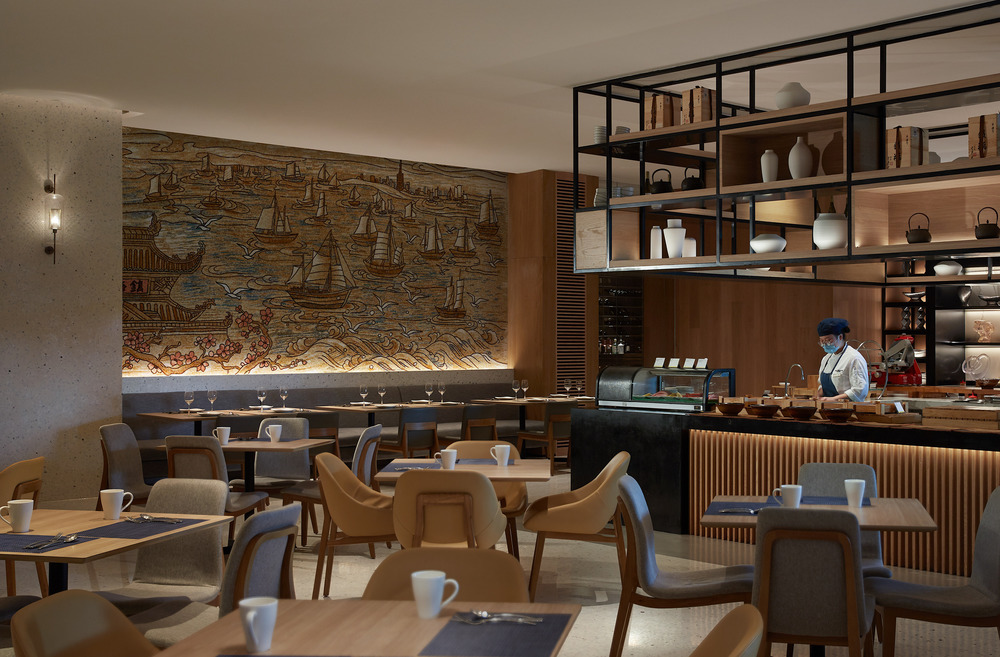
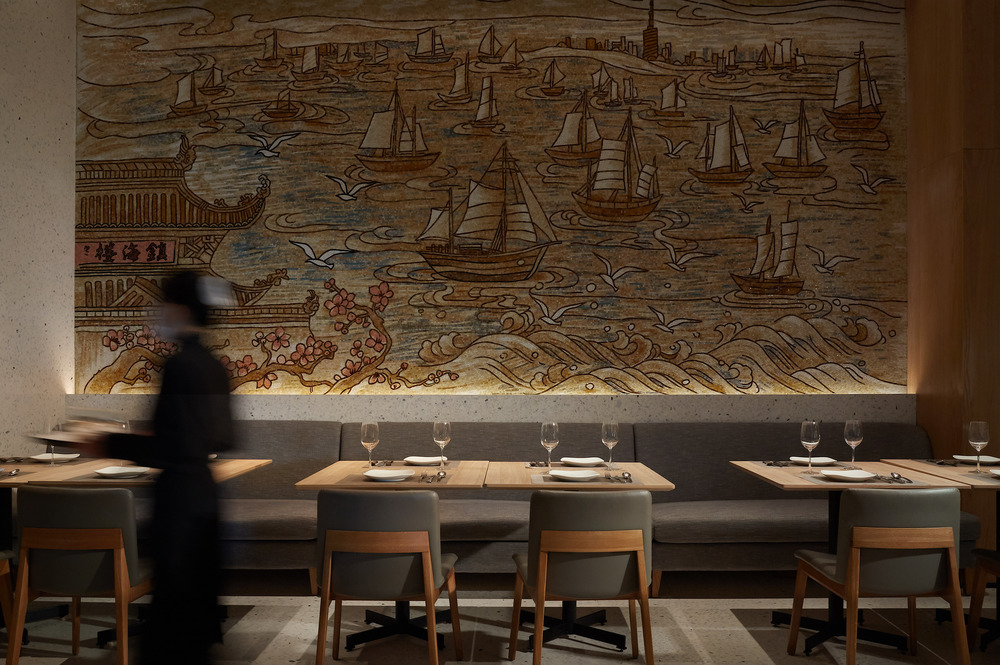
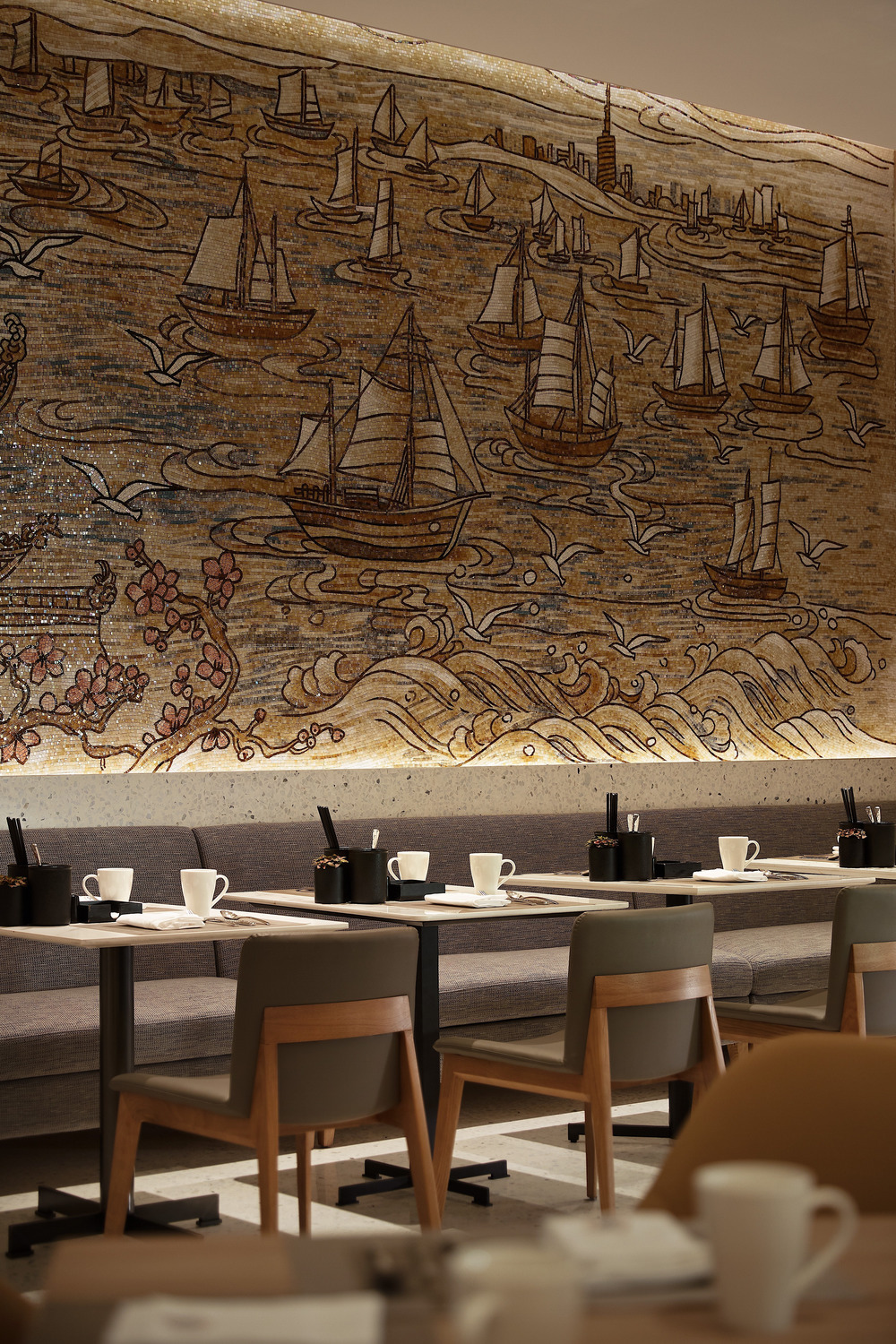
This mosaic mural was originally created by contemporary artist, Ms. Zhang Haiyan, who later drew the manuscript of this mosic mural with colored lead for this program along with designer, Li Yanfang. The manuscript was then sent to an Italian mosaic factory to be used for mural making. The main elements of the screen are: the Zhenhai Tower, bombax ceiba, harbour, Guangzhou Tower, merchant ships, seagulls, and cloud patterns, which vividly reproduce the prosperity scene of “All kinds of goods in the world are imported into China from overseas. Tens of thousands of wine shop owners take care of each other in business”. Servings as the background of the lobby dining area, it subtly contributes to the creation of the atmosphere.
Garden, Sunlight and Gourmet
As the designer said: I hope people feel relaxed when they enter this space, instead of rushing to take pictures.
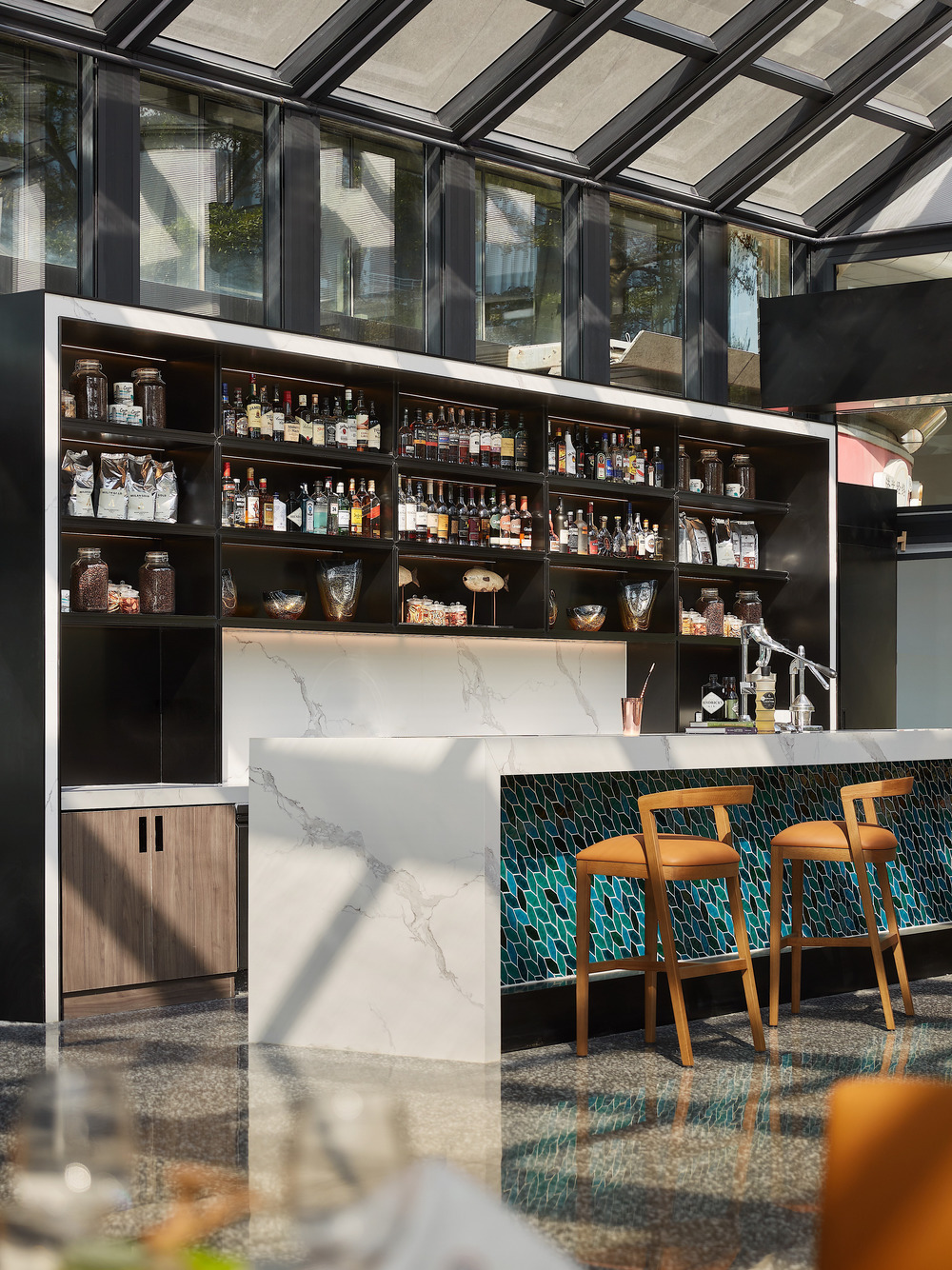
At the junction of indoor and outdoor, in addition to a tea bar in the corner where you can wait or rest, a bigger surprise awaits – the outdoor garden. The scenery and objects of the garden drive all of the senses. A piece of greenfield was “transplanted” to the front hall, where you can breathe the fresh air, hear the crisp birdsong, see the brilliant colors, and touch the textured materials to heighten your mood. The 6-meter-high transparent space is bright and wide. Plenty of daylight contributes to an impressive, dreamy scene. There is also a tea bar where you can drink. The hotel’s unique location, and the transparent, bright, and natural restaurant outdoor sunroom, make it a primary choice for many wedding banquets and conferences.
Market and Open Kitchen
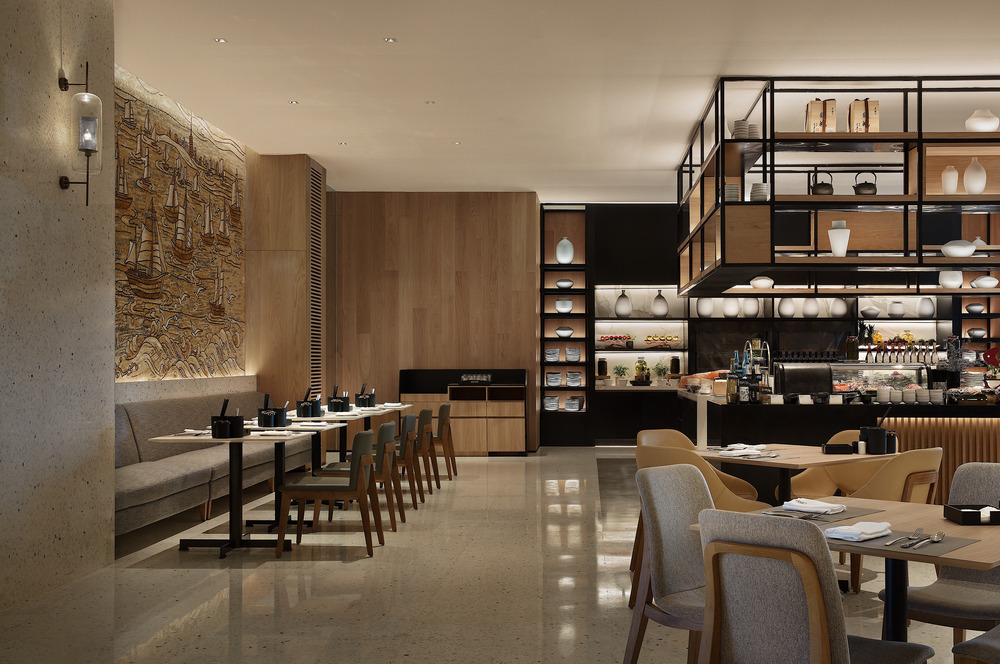
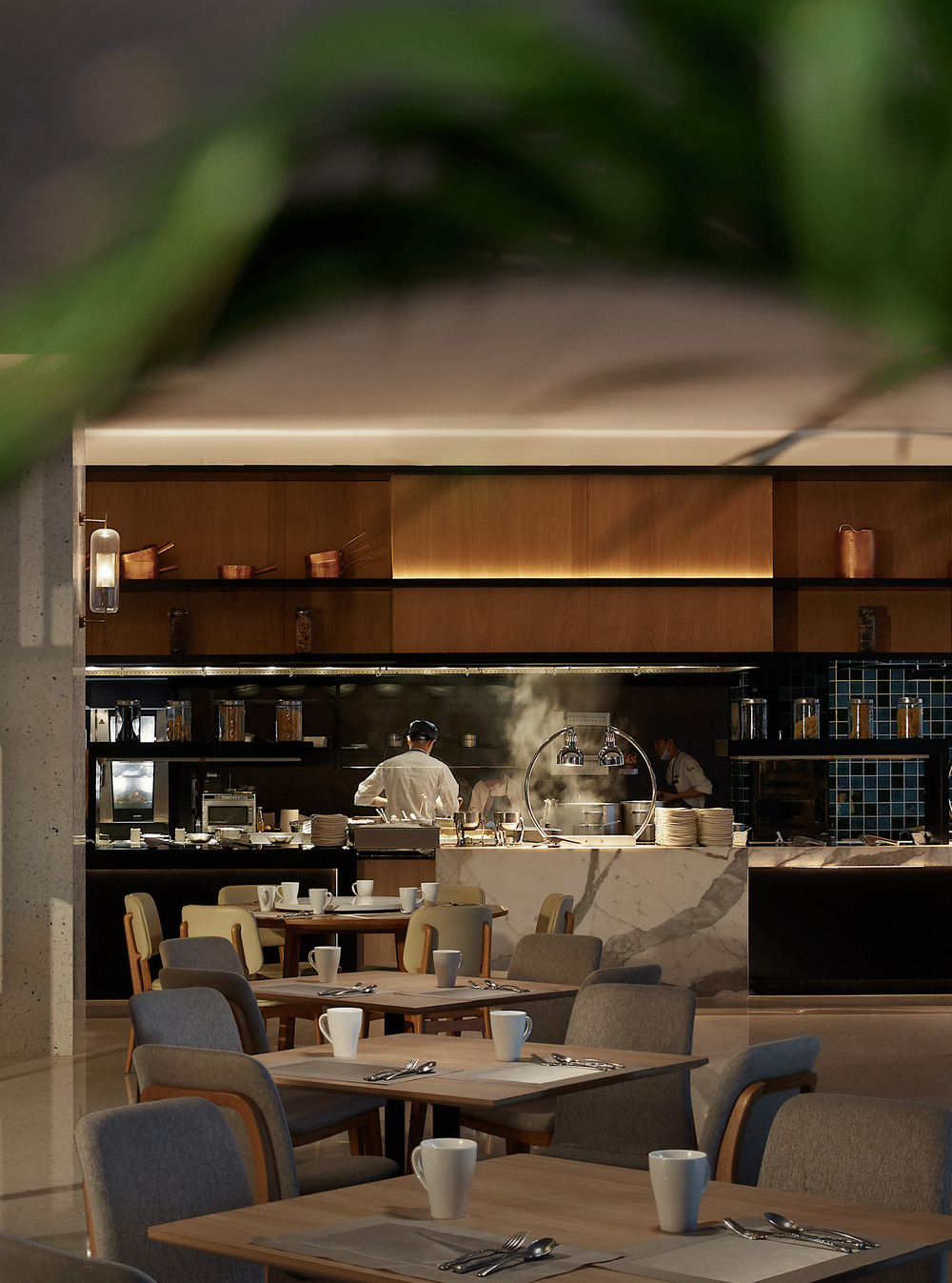
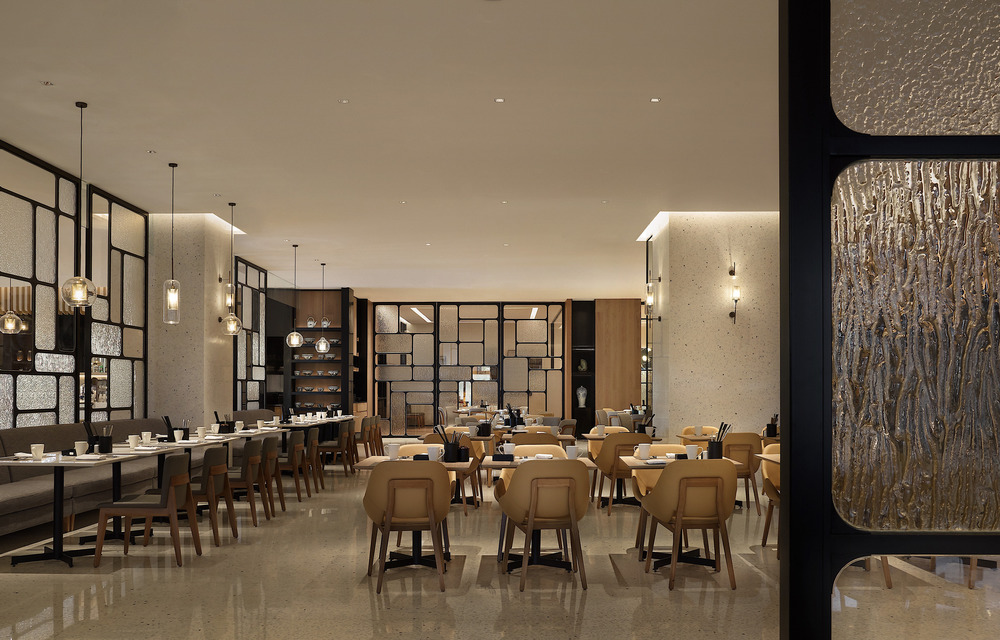
The style of the restaurant is modern and elegant, combined with the form of “The Market”. It has an enclosed, island-style baking “market” and “The Juicery” area, as well as an open kitchen featuring a variety of Cantonese flavors and Asian cuisines.
The high-class, yet simple style of the restaurant includes elegant, light-colored marble textures, grille elements, and warm, light brown tones. The interior can accommodate a total of 219 people. Through an in-depth analysis of the flow of people and business models, the design team aimed to create both a completely independent private space, and a large-scale open area, combining in an independent and integrated market format to meet the various needs of its customers, as well as the needs of its multi-period operations.
Marble and grille elements are used in “The Juicery” area, which is visually connected to the Baker’s Corner. The simple golden chandeliers are like tangible musical notes, jumping into the cups of guests. The diversity of the space allows for communicative group gatherings, or tranquil moments alone.
-
- Photo credit: Zhang Jing, Weng Xiaodong
-
- Photo credit: Zhang Jing, Weng Xiaodong
-
- Photo credit: Zhang Jing, Weng Xiaodong
Artistic Division
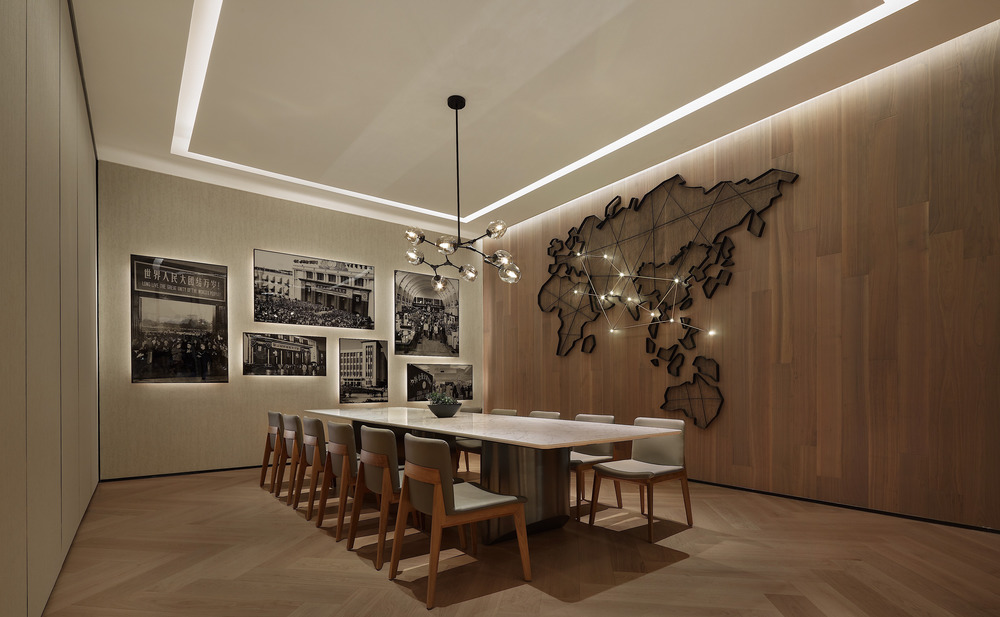
The design of this space has both function and aesthetics, and it also generates economic benefits. In detail, MOK flexibly uses glass screens, grilles, and greenery to separate the open dining area, the private room, and the VIP room in the lobby.
The layout of the open dining area and the VIP room is semi-open and semi-private, and light can flow freely in both spaces. The designers constructed the boundary of the space poetically. On the wall of the VIP room, the designers have ingeniously arranged a world map with a black metal frame, echoing the frame color of the glass screen, the material, and shape of the indoor chandelier, and the black and white photos on the wall. Their appearance differs when viewed from different angles. At the entrance, the designers used green plants to decorate the wall, and also dotted the lobby with green plants. The large-leaf green plants not only ensure the privacy of the space, but also ensure the transparency of light and air circulation.
-
- Photo credit: Zhang Jing, Weng Xiaodong
As the designer said, “I don’t want to create fast fashion designs that will soon become obsolete, but rather use the most simple decoration and design techniques to meet the function, consider the economic benefits, and attach importance to the communication between people. The reconstruction design of the all-day dining restaurant in the Westin Pazhou Hotel not only conforms to the aesthetics, but also reflects the local culture and history. The precise and poetic design and application of well-connected materials with art and design, which inspire guests and enhance their dining experience.”
Source: V2com


