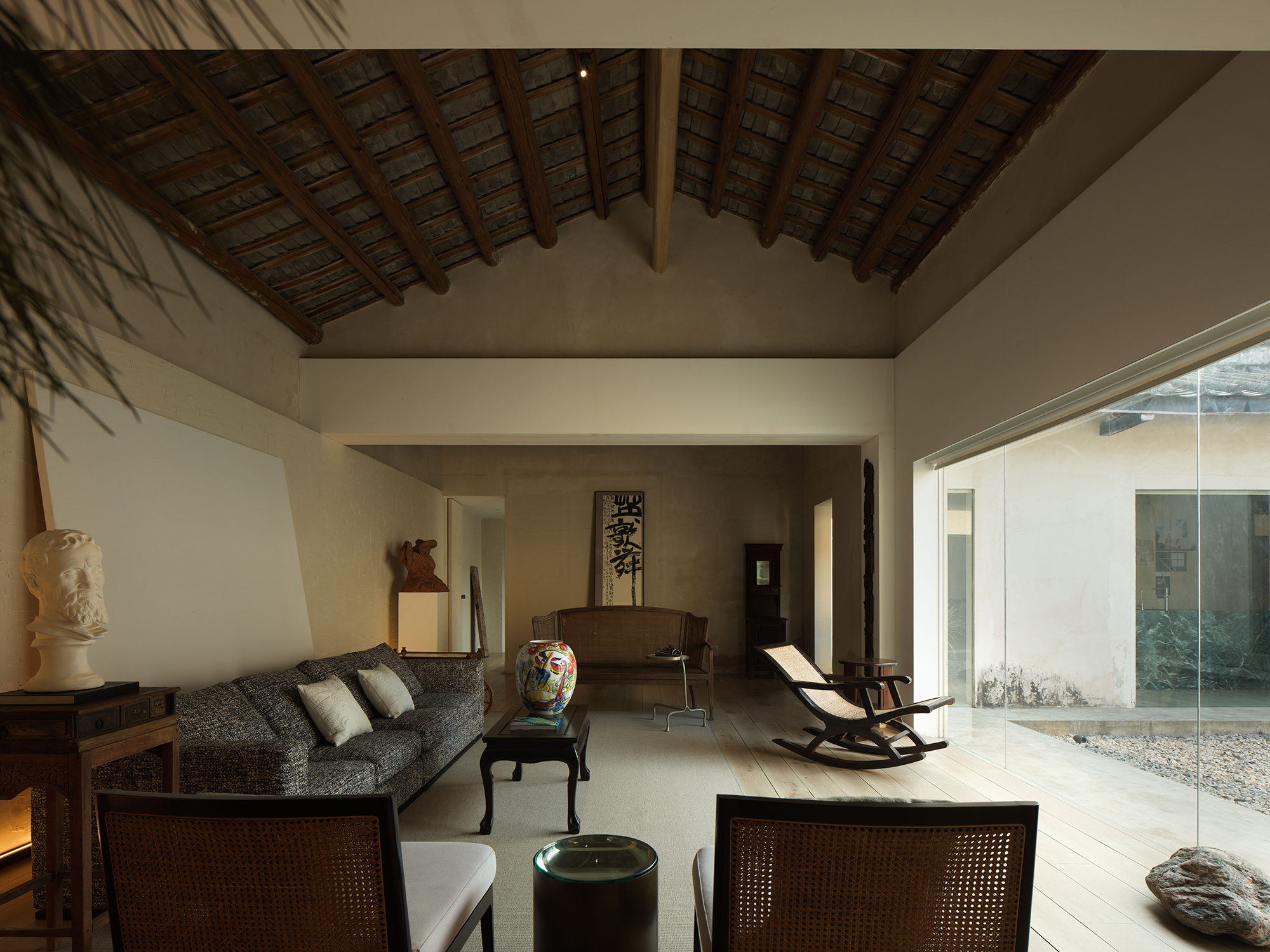
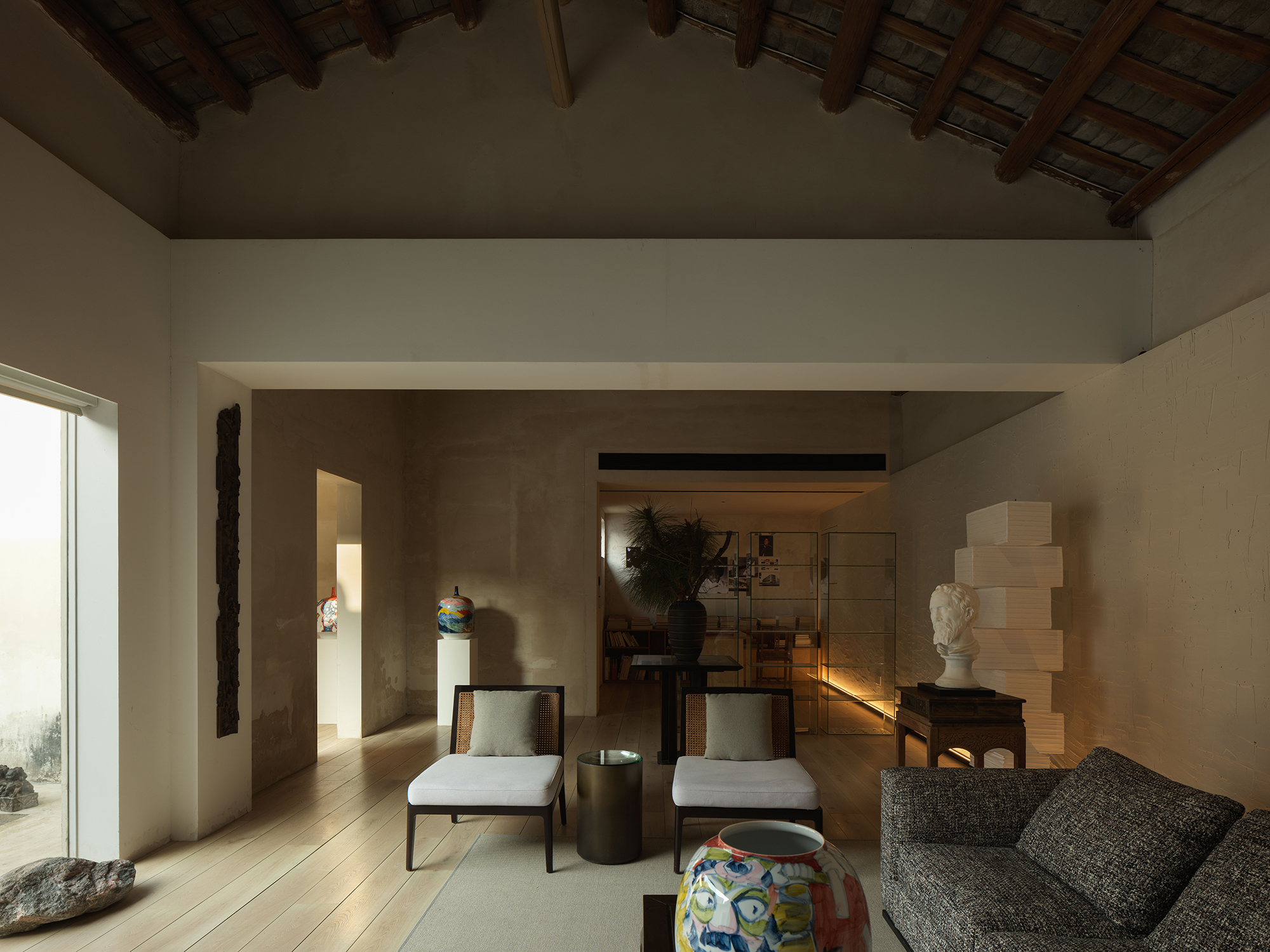
AD FUTURE is a transformative project by AD ARCHITECTURE, located in Shantou, Guangdong, and completed in January 2025. Conceived as a visionary experiment in rural revitalisation, the project breathes new life into a traditional Chaoshan-style house, reimagining it as a contemporary cultural retreat. Bridging past and future, AD FUTURE stands as both a design intervention and a social statement, inviting the next generation to reconnect with heritage through a thoughtfully curated, multi-functional space.
AD FUTURE invites one into a journey through the past, present, and future. It is a vessel for the unknown—a blank canvas ready to inspire any vision. Simultaneously serving as a tea space, café, gallery, aesthetics salon, fashion runway, hotel, and photography venue, it is a place where new social dynamics emerge as the space evolves. As a private, commercially operated retreat, it balances intimacy, comfort, and artistry, offering high-end visitors a haven for solitude, contemplation, and soulful connection.
-
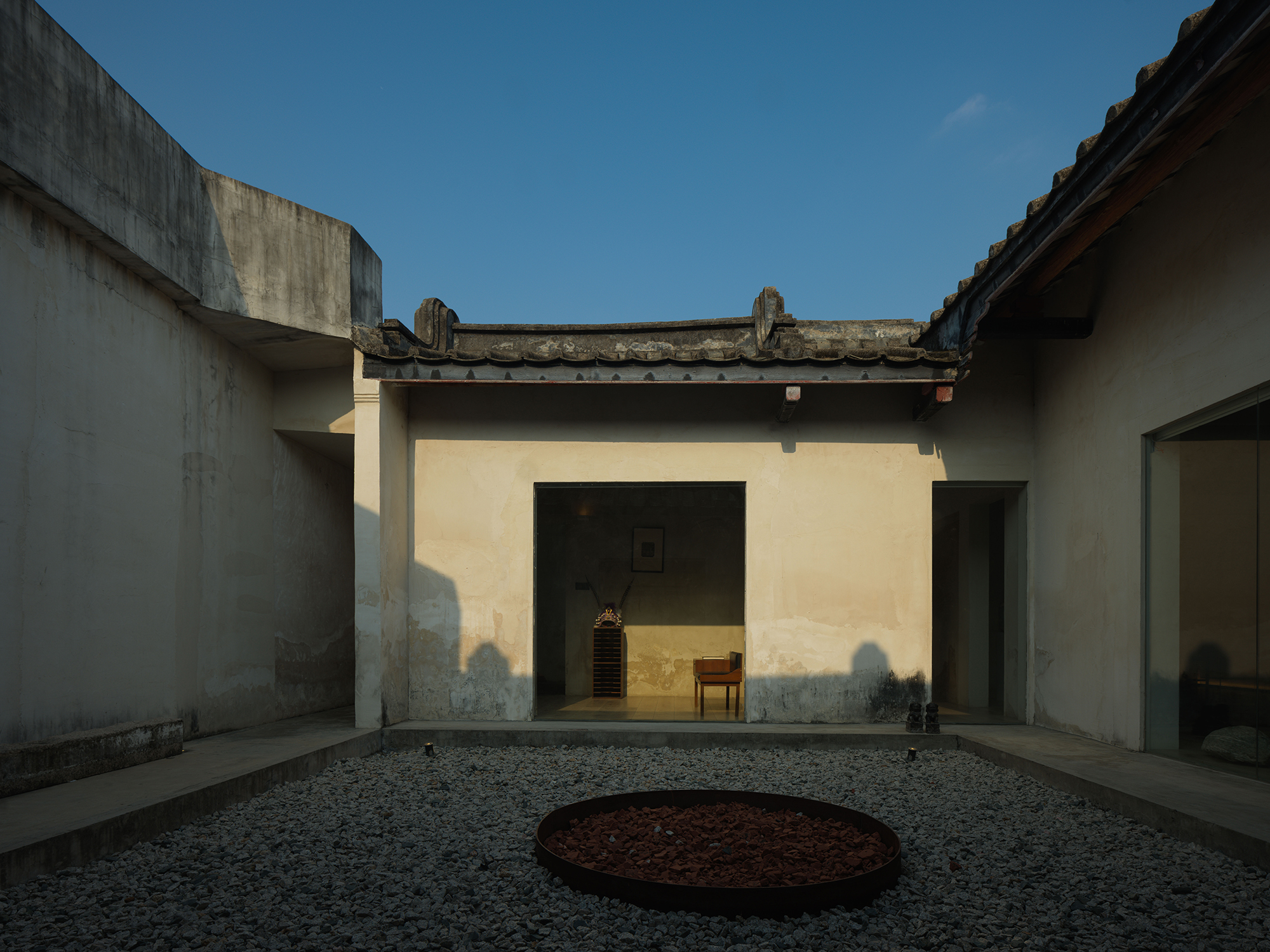
- Photo credit: Ouyang Yun
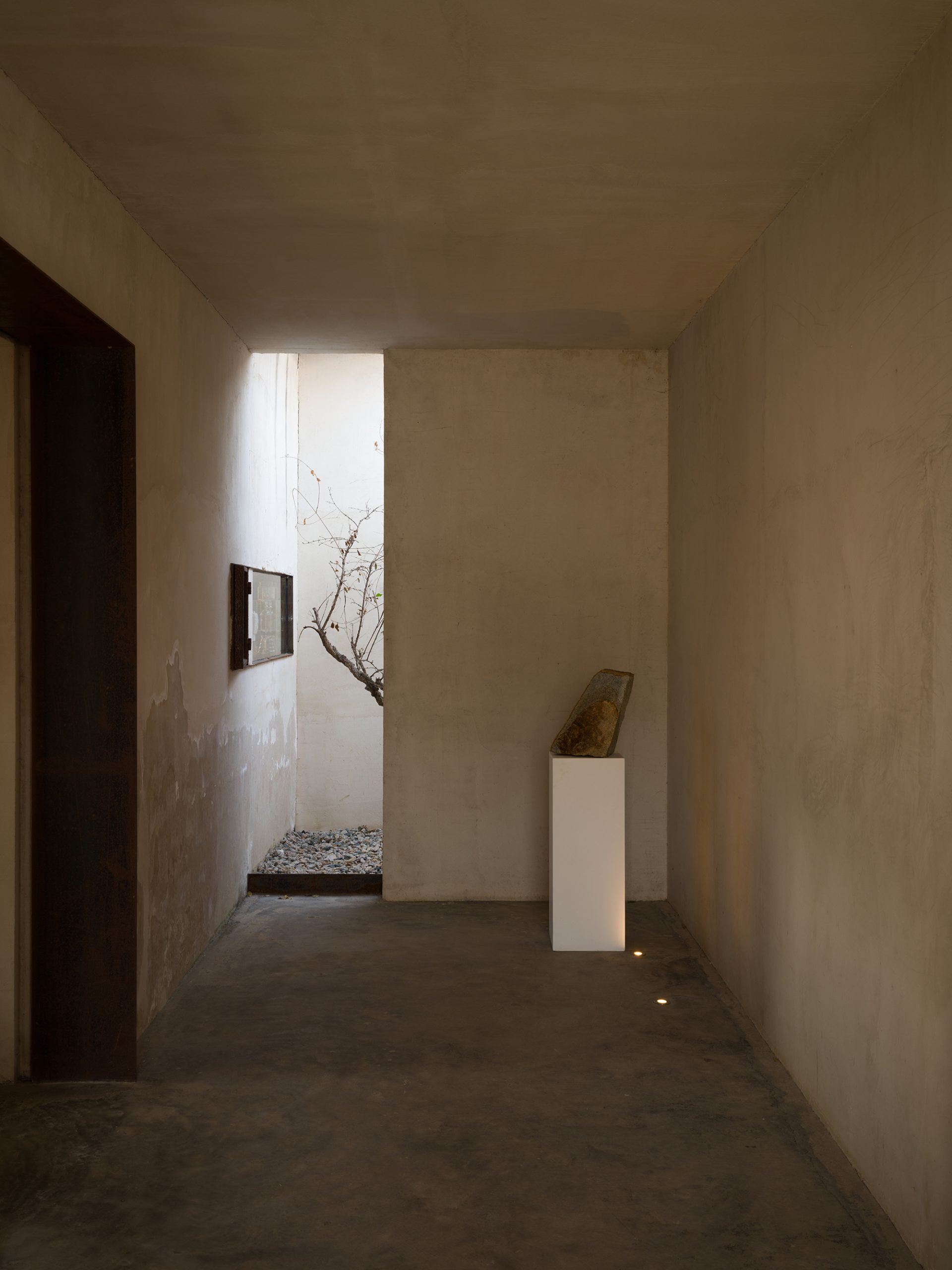
Shuangbeijian, a historic Chaoshan-style house typology, once sheltered generations of villagers in Siwei. Over time, land redistribution prompted most villagers to relocate and build new homes, leaving behind deteriorating old houses and a dwindling population. The migration of younger generations into cities gradually drained the village of its vitality.
The core design challenge of the project was clear: how to revitalise the old village and bring youthful energy back to it. AD ARCHITECTURE began with the revival of a single old house, hoping to spark a ripple effect—like multiplying cells—so that each revitalised house would infuse the entire village with renewed life.
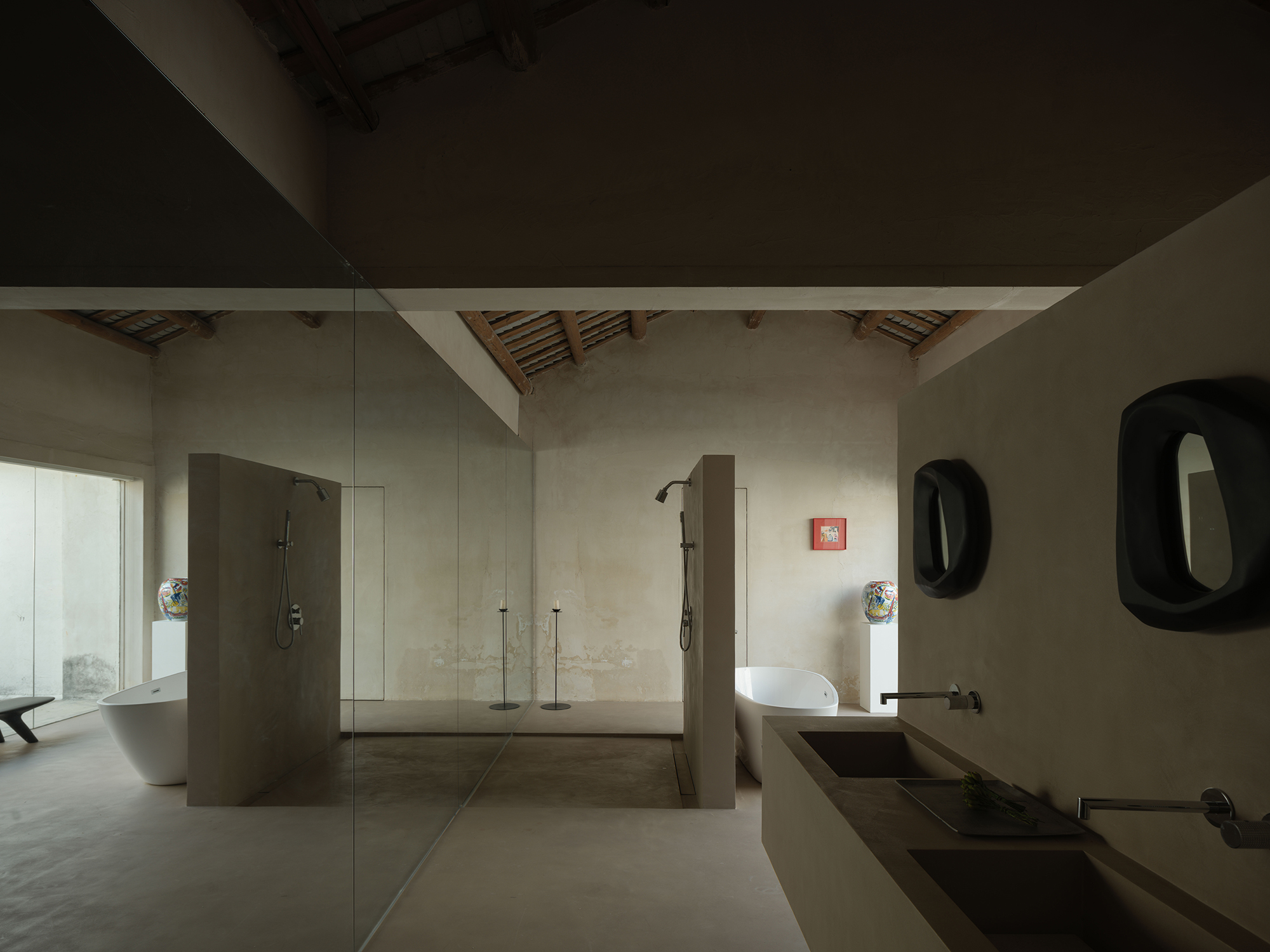
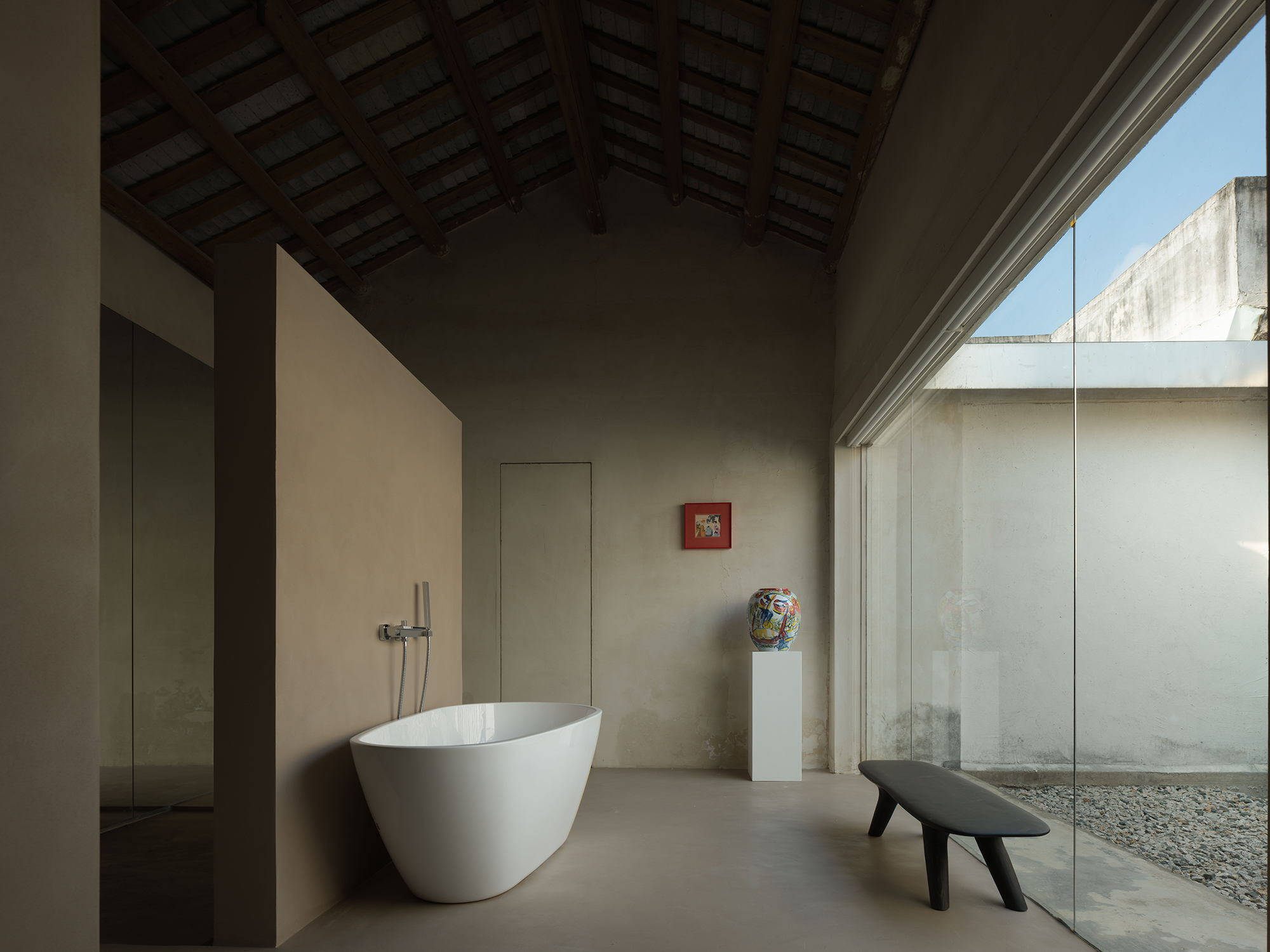
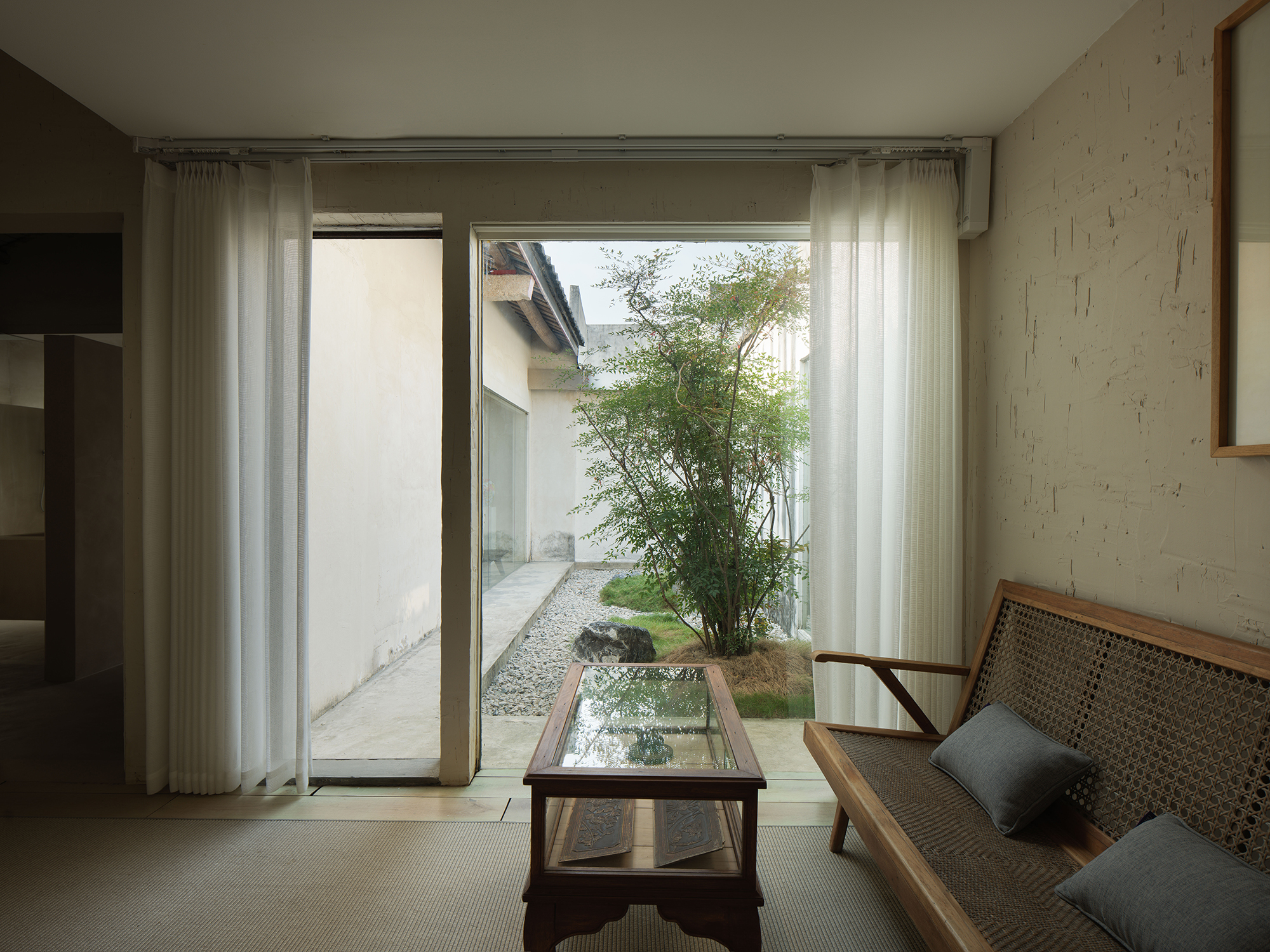
AD FUTURE invites younger generations to reconnect with traditional rural life, offering an escape from urban chaos and a distinctive relaxation and vacation experience. This project is more than a renovation of an old house; it is a practice in rural cultural renewal within a contemporary context. The original interiors were cramped and dim, unsuitable for modern living. The design team preserved the building’s architectural integrity while completely reorganizing its internal layout and window openings to welcome in light and air.
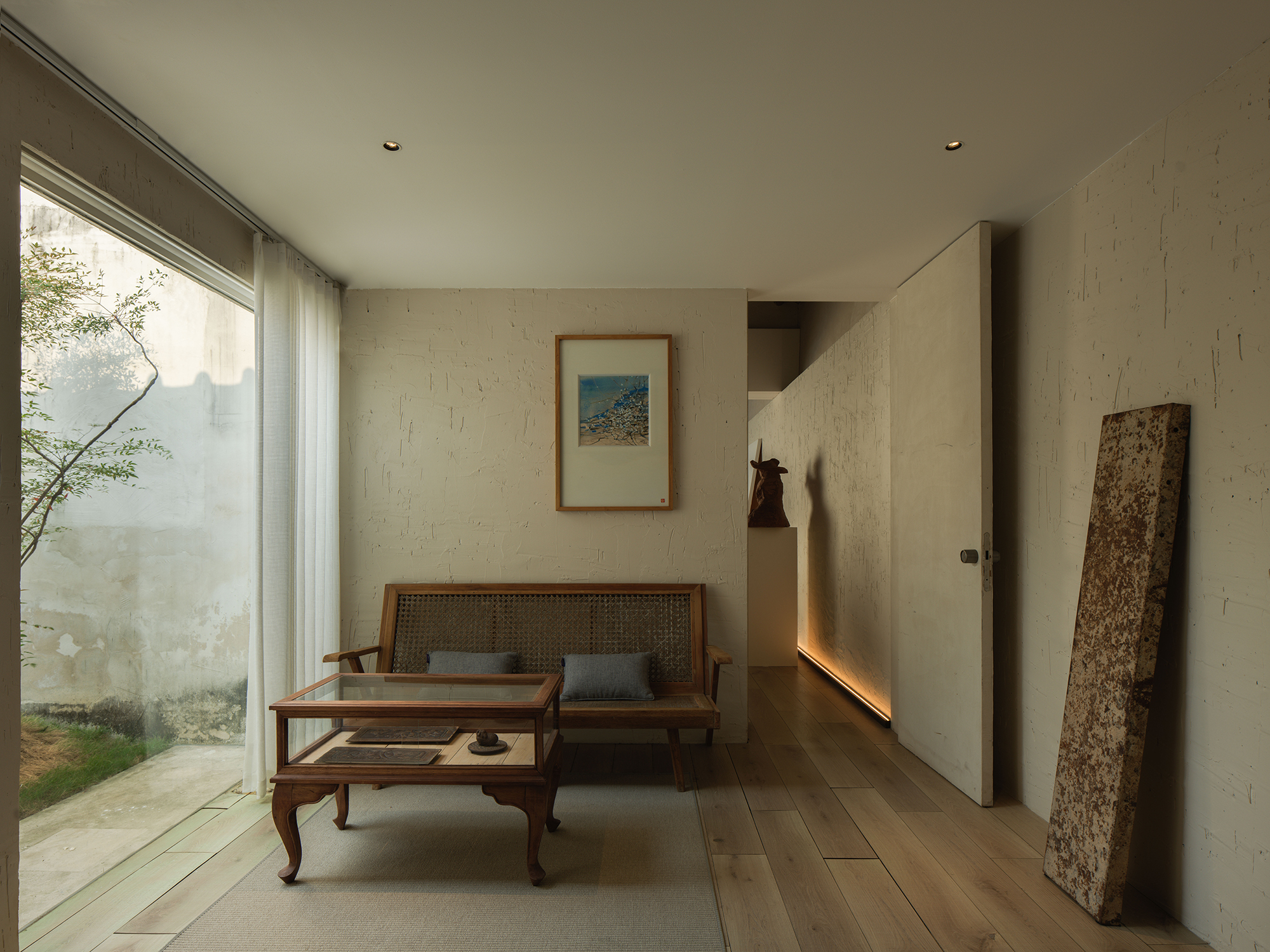
The bold insertion of red geometric blocks into the courtyard sparks a dynamic dialogue between modernity and tradition. Inside, wooden flooring and traditional wall textures preserve the cultural soul of the old building while enhancing its comfort.
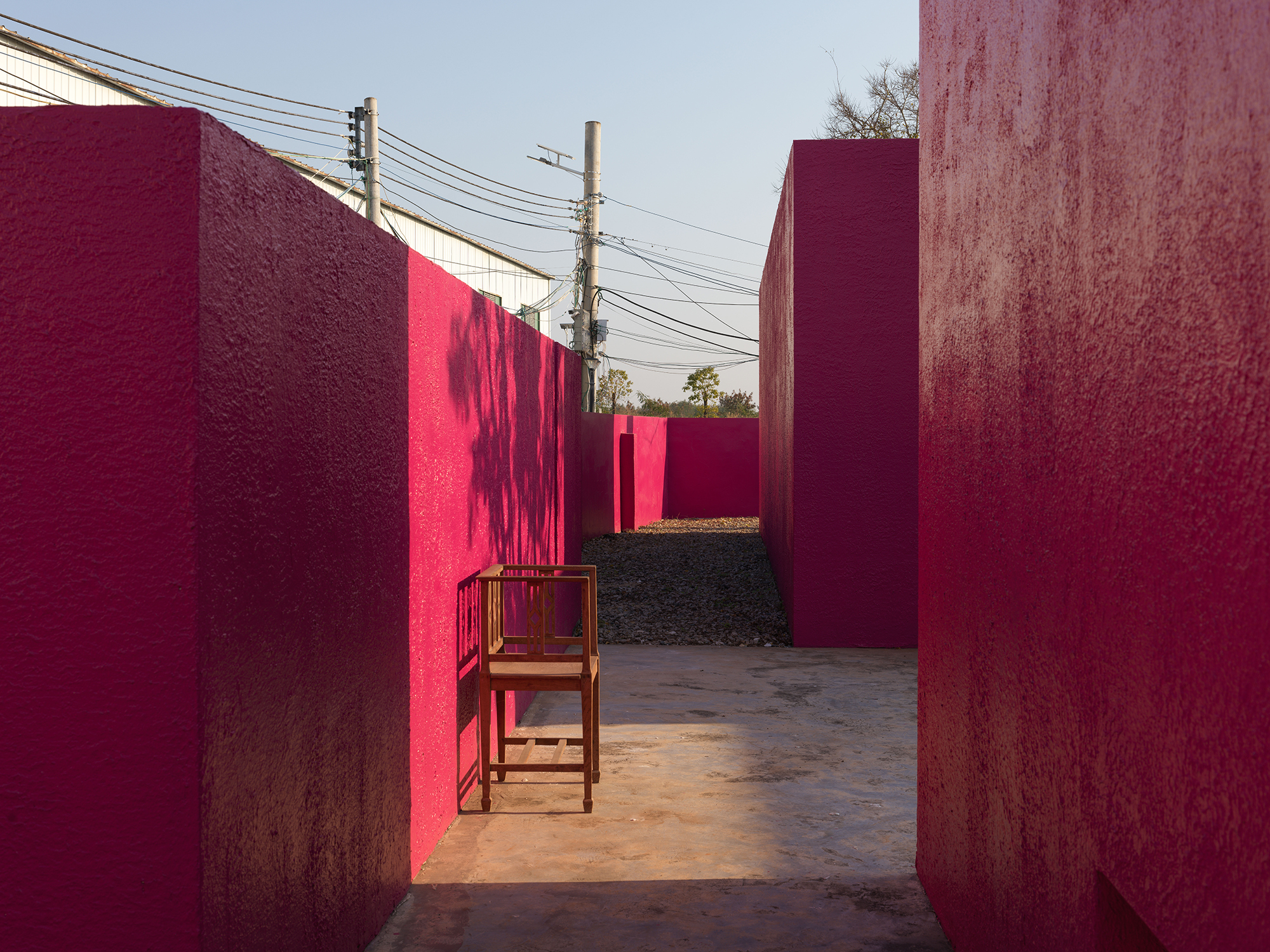
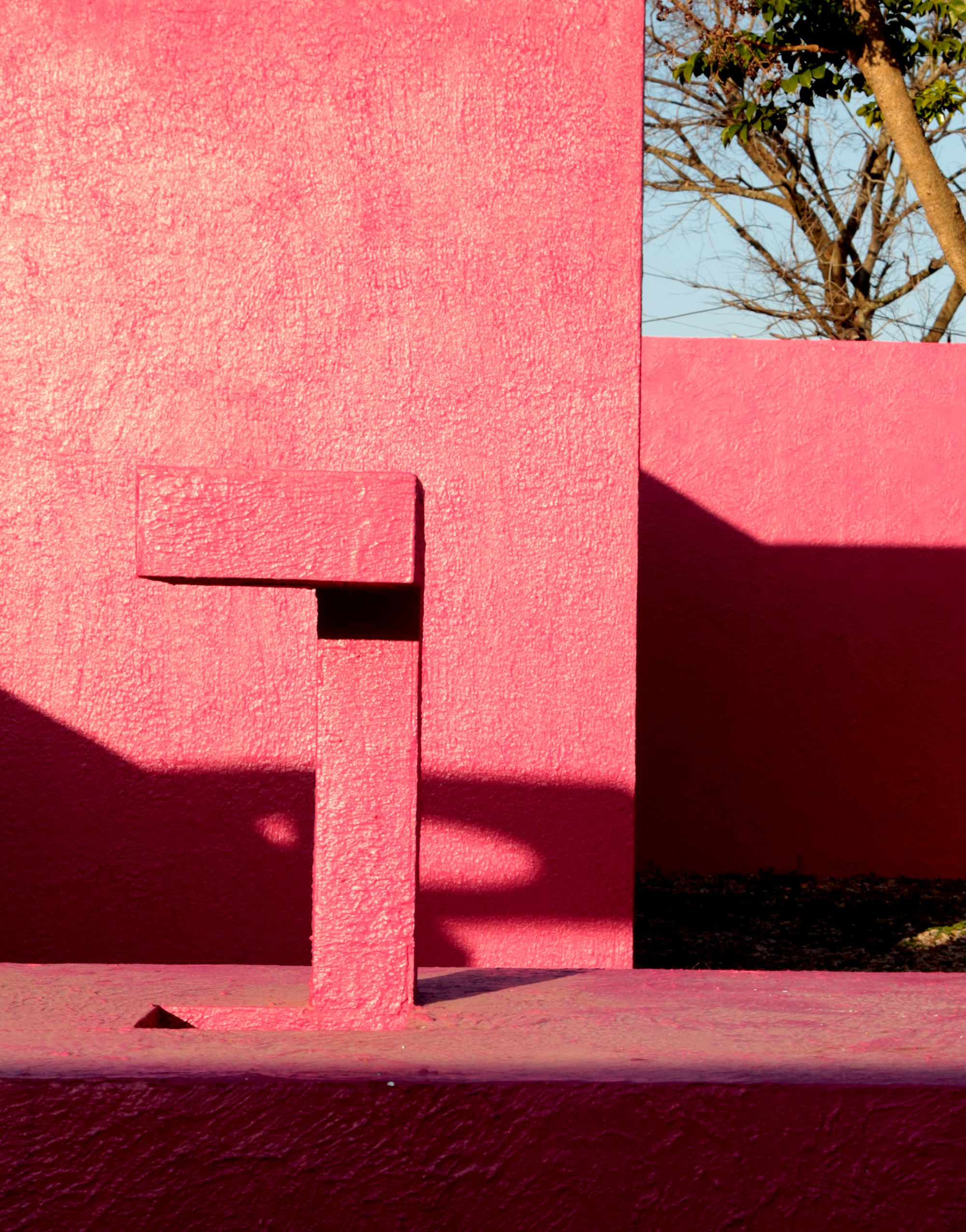
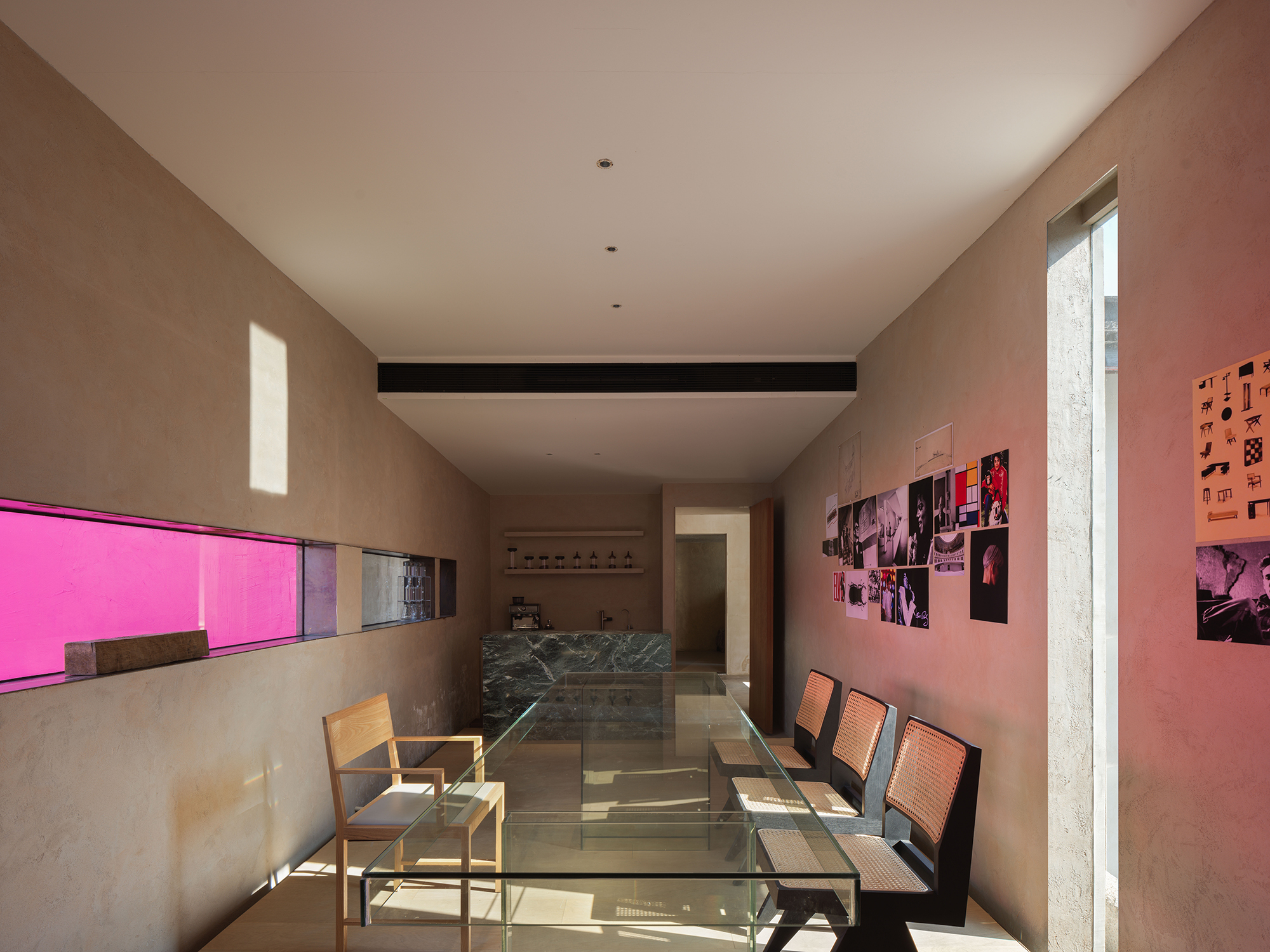
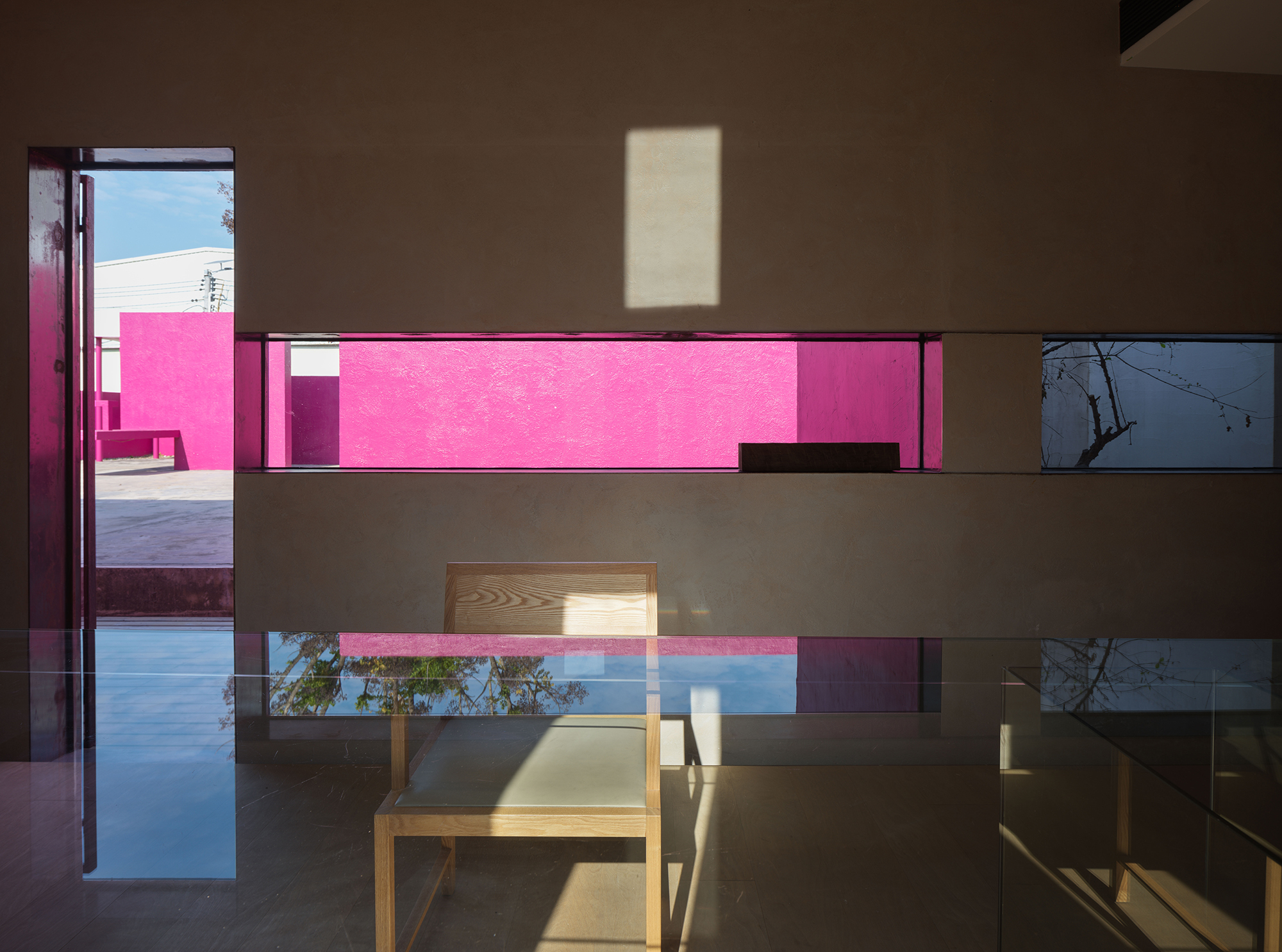
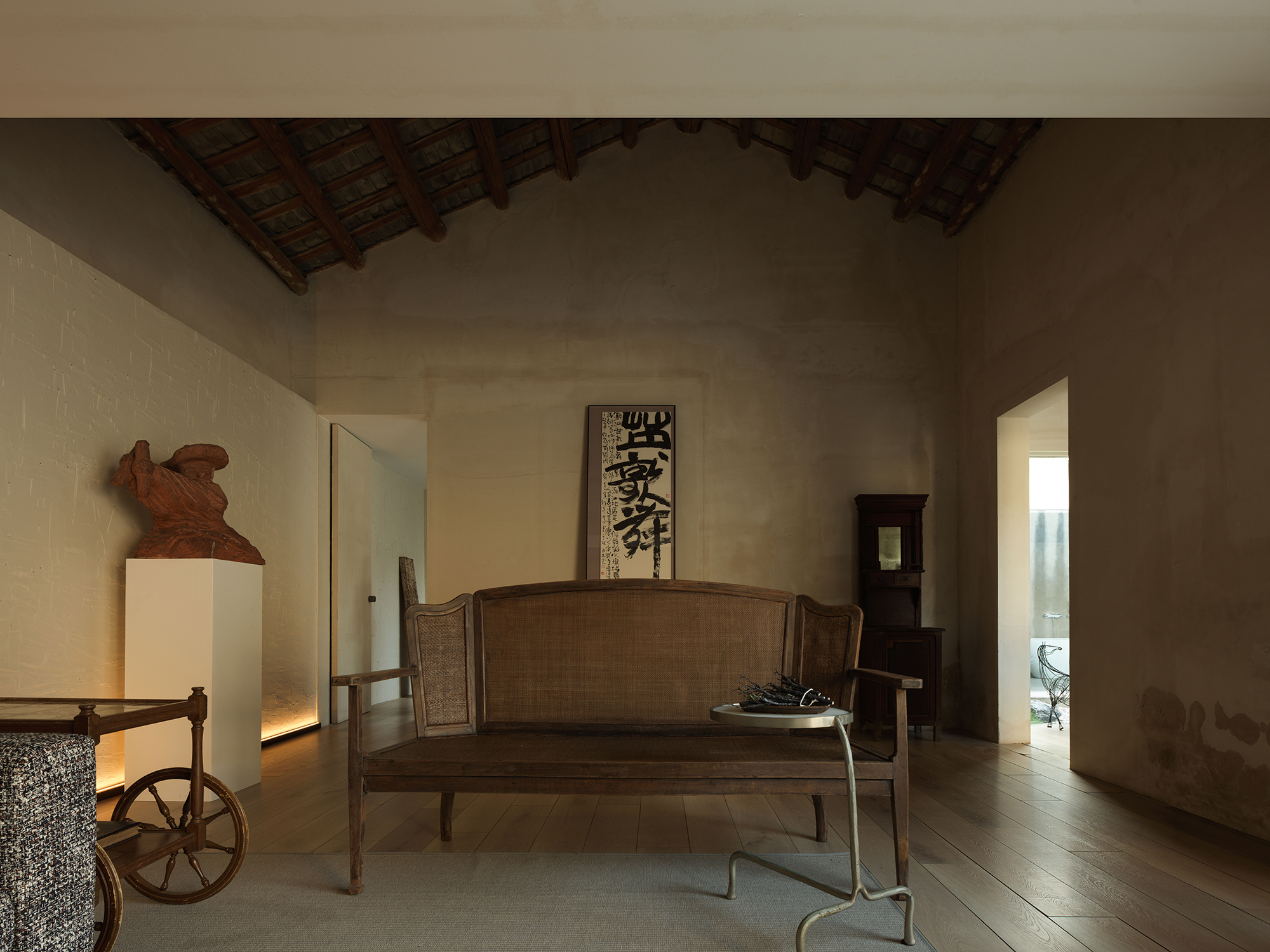
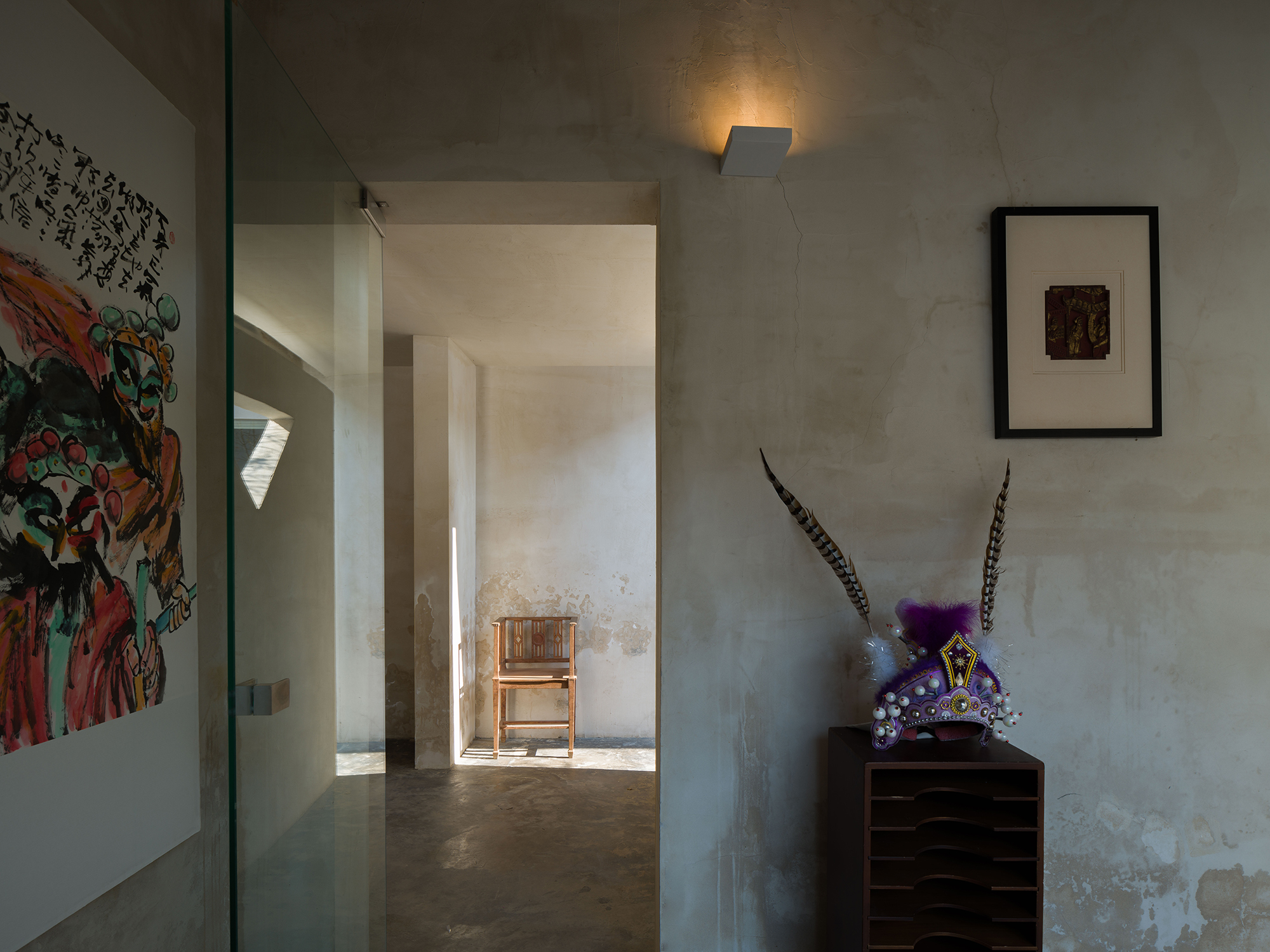
Furnishings and art weave a narrative across eras and cultures. Chaoshan artist Zheng Shaowen’s Yingge dance–inspired artworks and contemporary oil portraits by young local painter Zhu Hui resonate powerfully with the architecture.
A curated mix of modern fabric sofas, vintage rattan chairs from the era of Chinese migration to Southeast Asia, British ceramic carts, and Republican-era furniture further conveys a narrative of temporal and spatial evolution.