
Tan Wei Ming, the founder of Aureole with a typography major from the United Kingdom, merges the elements of graphic design and furniture design to create products that draw inspiration and showcase features from two distinct worlds. Asia Designers Directory speaks to Wei Ming to know more about her products and career path.
You went from being a graphic designer to a furniture designer. Can you tell us about this journey and how is your background in typography applicable to your work today?
After practising as a graphic designer for a couple of years, I had the opportunity to explore a completely different field with a local design firm. They were gathering a team of multi-disciplinary designers to design and produce custom home accessories and interior pieces tailored to specific needs, covering fields like hospitality, fashion and culture.
This was where I extended my skills to furniture and lighting design. The manufacturers were supportive and patient in advising on the production techniques. This experience gave me the platform I needed to extend my skills further and would pave the way to forming my independent brand, Aureole, in 2013.
I continue to draw influences from my graphic design background as I shape and develop Aureole, working with geometry forms, proportions, and balance. The approach to designing the object has some similarities to designing a page layout, right down to the selection of type point sizes—differentiating headlines, text, and footnotes. These applications relate to the details and accents of the piece or work.
How would you describe your design and what is your source of inspiration?
Aureole approaches design within the context of simplicity—be it in the purity of lines or the unadorned elegance of a material. Within this, the richness of Asian culture inspires the process before being translated into a form which allows its design and materials to accent the finished product.
Nature is my best inspiration. It is both simple and complex in its form. From trees to plants to seashells, each has a well-calculated designed structure that forms its shape—its DNA pattern. They are aesthetically pleasing in form and balance. Naturally, we tend to be drawn to the warmest parts of nature. In adapting to design, it would be drawing from these aesthetics: harmony and proportions, or simply as a choice of material as well.
And the “makers” that use these natural materials to “weave” them into everyday objects or wearables, I have much admiration for their craftsmanship and dedication.
Can you tell us about your latest collection and collaboration with Tanoti Crafts?
It has been my hope to have the opportunity to collaborate and incorporate Malaysia’s heritage craft techniques into the development of Aureole’s product collection, exploring the multi-diversity of Malaysia’s past “treasures” and representing them in the present context of contemporary design. The project collaboration with Tanoti, a Sarawak-based social enterprise team, is one such opportunity. Rattan craft development is one of Tanoti’s community initiatives to introduce sustainable income-generating opportunities to Sarawak’s remote forest communities. This collaboration explores adapting traditional crafts into new variations of home products.
The research journey began at the end of 2018, when I had the opportunity to visit the indigenous Penan tribe in the interiors of Borneo, Sarawak—this is one of the most educational and memorable experiences I have had. The trip is absolutely inspiring—seeing the village way of life and understanding the techniques of craft weaving among the Penans is absolutely thrilling. This is just one of the many tribes of indigenous people in Sarawak. There are a total of 26 different ethnic groups in Sarawak, and 42 in Sabah, and it’s still growing.
Rattan grows wild in the rainforests of Borneo. The people living in these environments have been using this vine for generations, for construction as well as to weave items to support their ways of life—bags to travel in, hunt and forage with, mats to lie on. Today, they continue to practise the same techniques learned from their ancestors: hand harvesting, processing by hand, dyeing colours using plants they collect from their surroundings, and plaiting by hand. The Penans of this village use blades which are sharpened car suspension plates for the splitting and peeling of rattan vines. The dyeing of black rattan splits involves boiling them with a species of leaves (“daun kemawah”) and then burying them in mud. The Penans, who are known as Borneo’s last nomads, learn to exist with rattan. As they know that the fibre is generated constantly, they also learn to harvest only when the fibres are required, for instance, for projects like this—leaving the rest of the rattan in the jungle to grow until it is next required.
This collection that I have collaborated on with Tanoti is called the “Ketupat” series. The “Ketupat” idea came about as I would like to incorporate local and Asian elements into the design context. The “Ketupat” in Malaysia is a type of rice dumpling wrapped in a pouch of woven palm leaves. Aureole’s’ Ketupat “pouf” series draws inspiration from these hand-woven palm leaves and adapts them to rattan. This series is a collection of low seating – which is very much an Asian “floor culture” seating and is expandable into bespoke dimensions based on requirements.
-
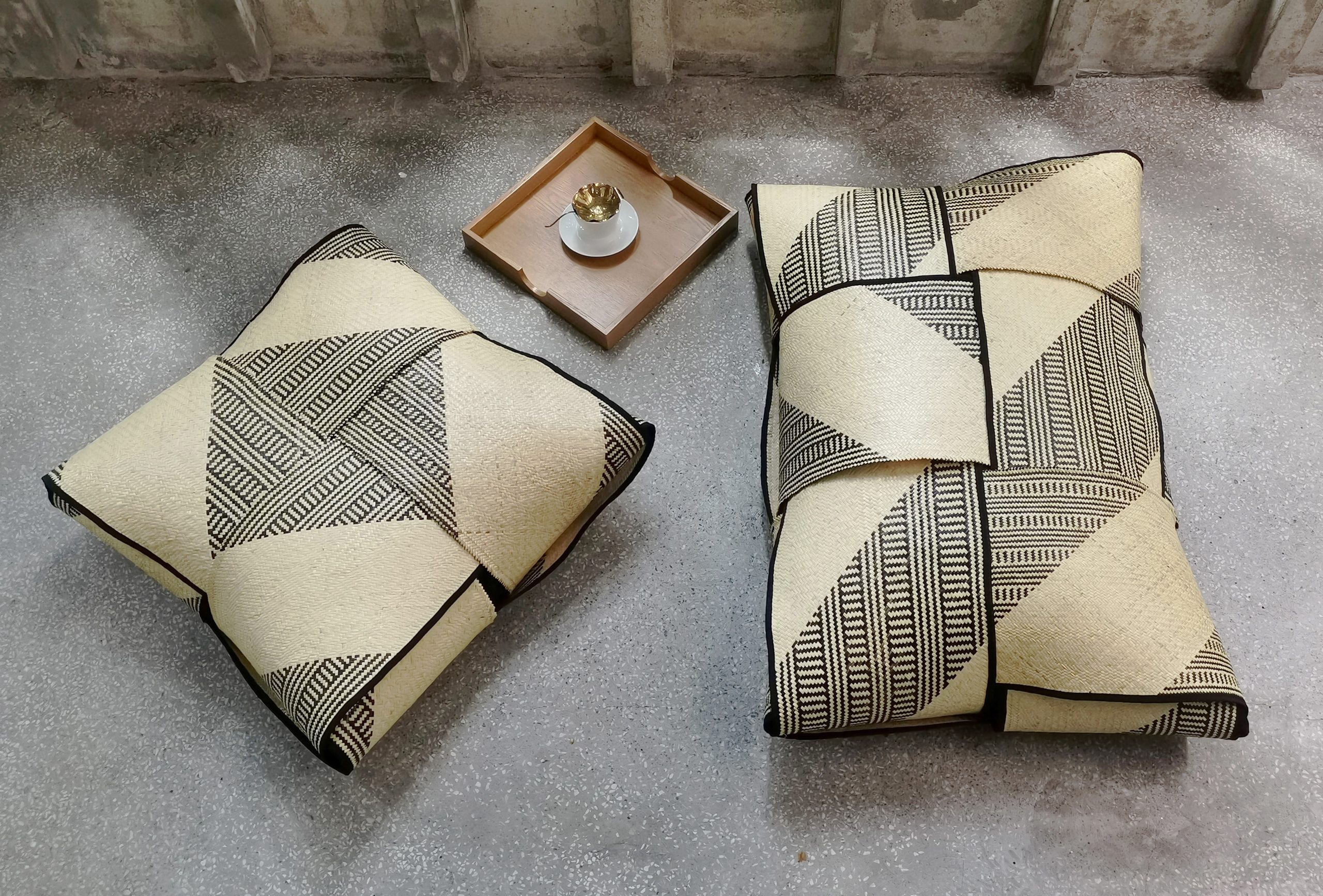
- Aureole Ketupat Series (Photo Credit: Aureole)
-
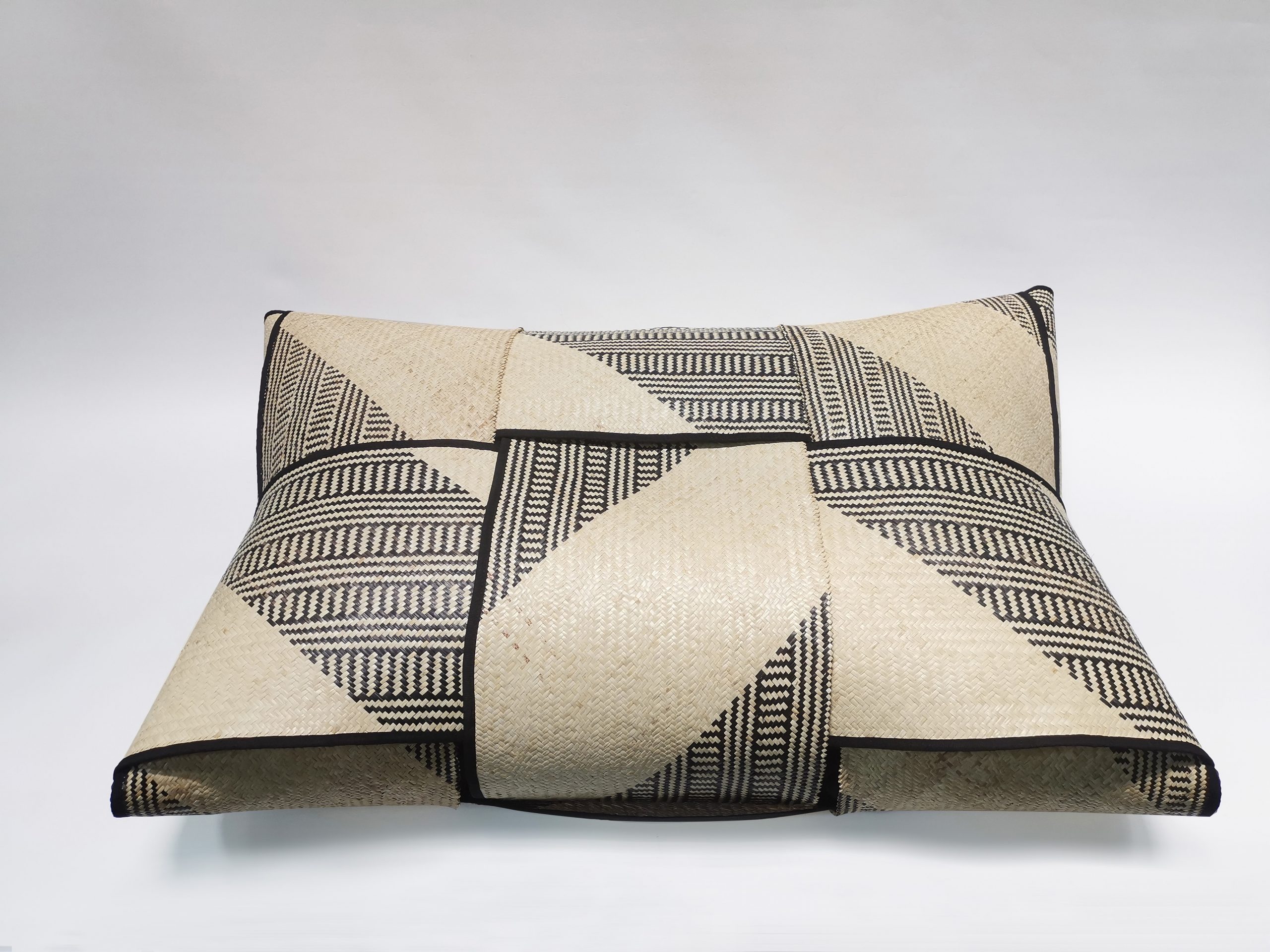
- Aureole Ketupat Series (Photo Credit: Aureole)
The other recent collection is a series of table lamps that is very much art deco inspired. Malaysia has some notable art deco architecture in Southeast Asia. Many are found in the heart of KL city, including the iconic Central Market in Chinatown. And I fondly remember my grandparents’ “art deco” house in Georgetown, Penang Island, where they stayed after the Second World War, in 1946, up until the 1980s.
This column series explores the spirit of art deco in the form of polished terrazzo stones. In simple, repetitive steps, the design adapts art deco geometric lines to form a column that extends as a sculptural pedestal, elevating the light source.
For this collection, I worked closely with my terrazzo manufacturer. I will be exploring a lot more using the terrazzo technique as long as the maker is willing to make time and develop my designs. He shares the possibilities of terrazzo production, which is very much a passion for him as well. With this information and the accessibility of the production, it makes terrazzo a natural choice for me to explore my design. It’s an old technique, but it’s a good method—capable of forming different finishes with a variety of materials as well as encouraging the use of off-cuts or salvaged materials from construction.
For the recent showcase at EMERGE @ FIND, Singapore, I have incorporated used coloured glass bottles, hand-crushing them into glass aggregates—a simple way of reusing waste without impacting the environment too much in the production process.
-
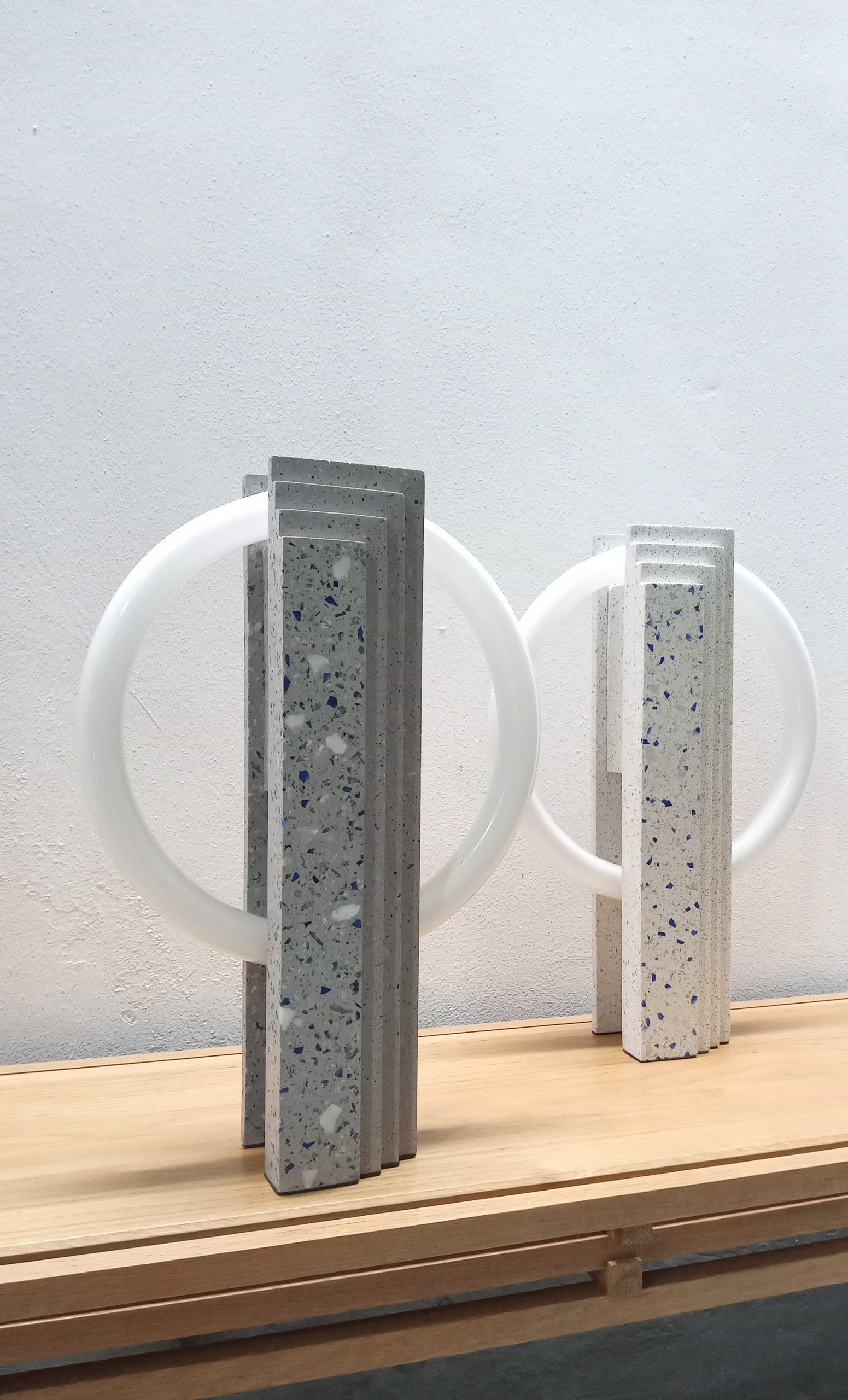
- Column Light (Photo Credit: Aureole)
-
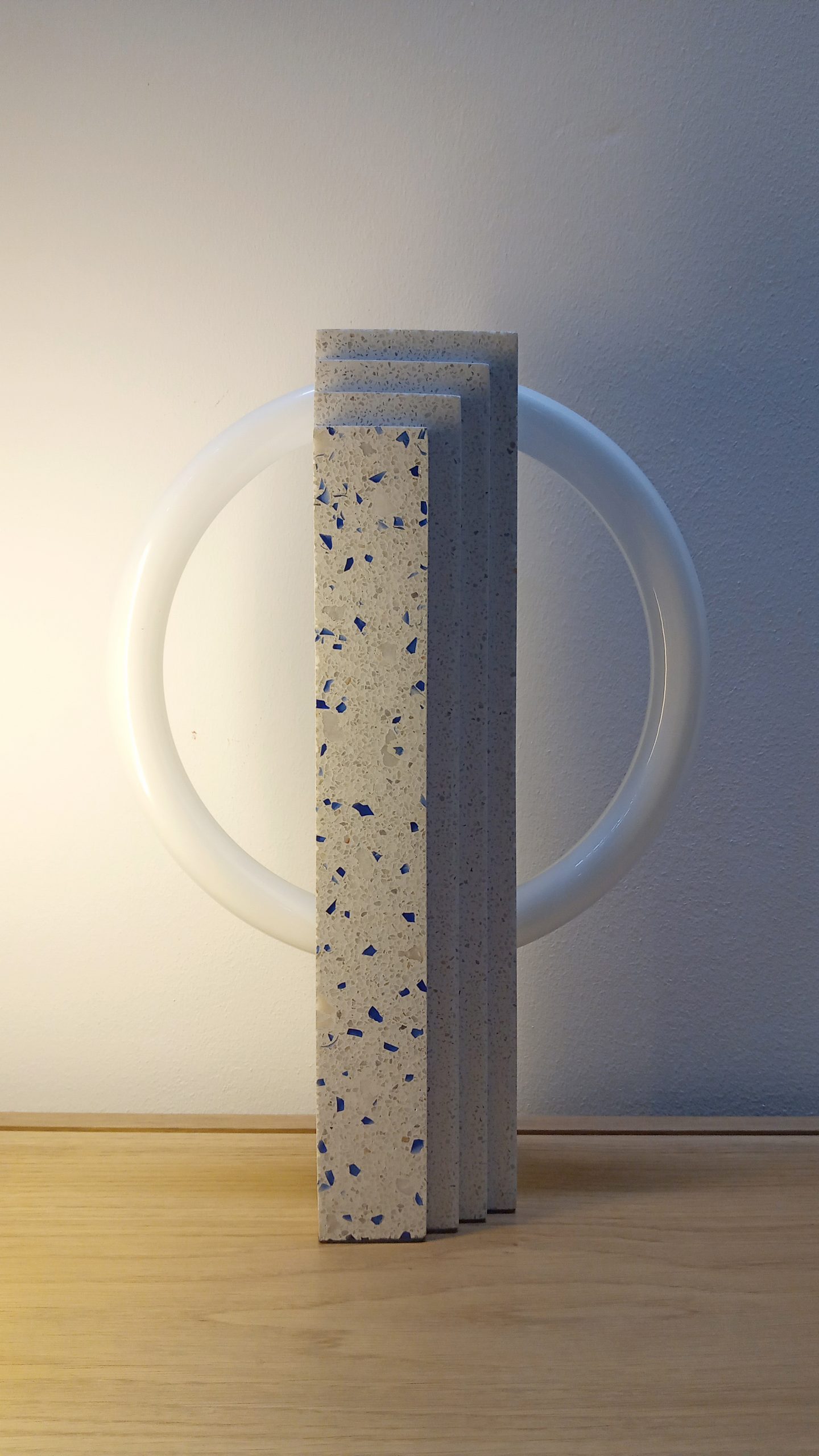
- Column Light (Photo Credit: Aureole)
-
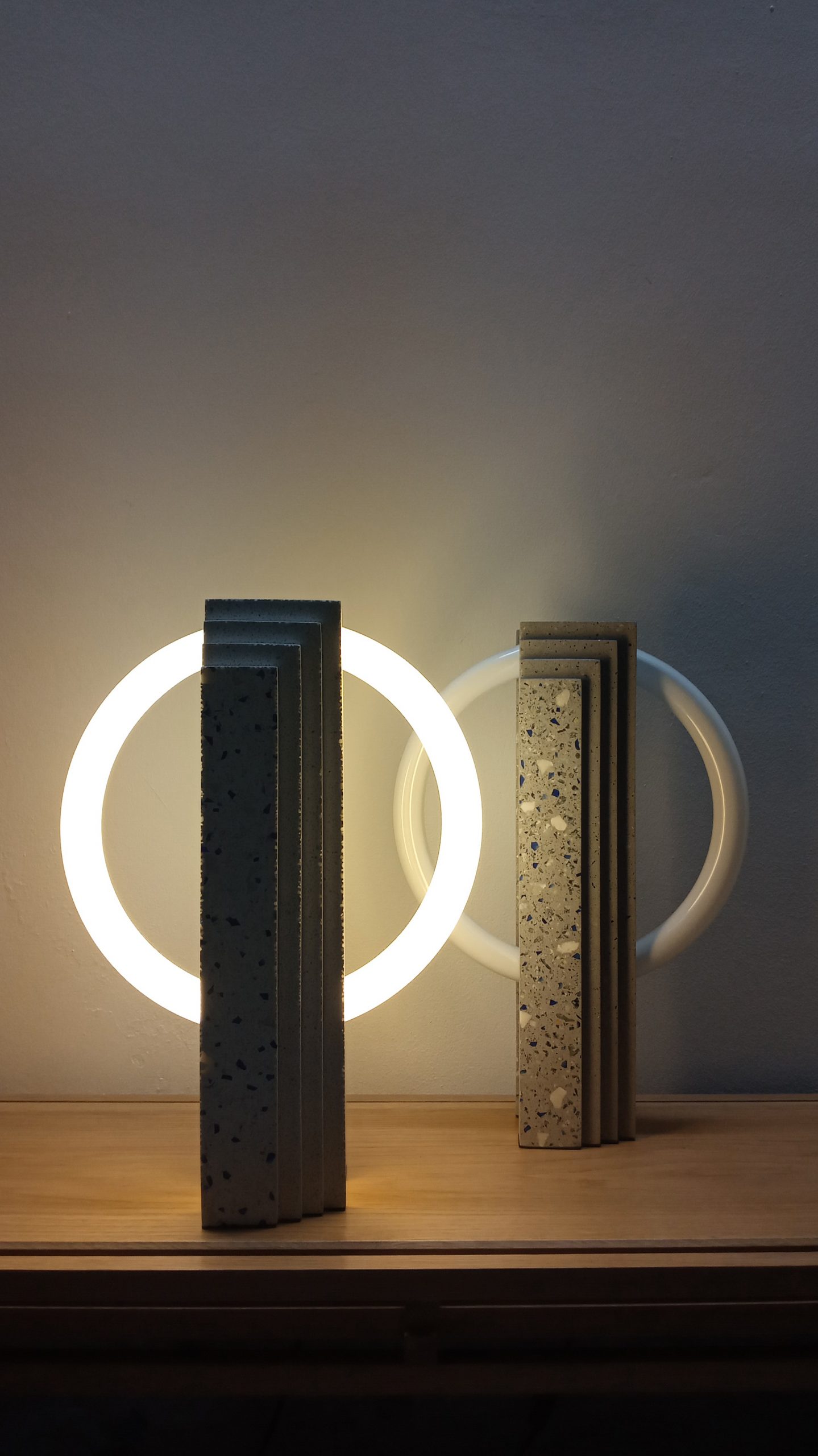
- Column Light (Photo Credit: Aureole)
Incepted in 2013, Aureole is almost a decade old. How has the brand grown and what advice do you have for young designers starting out?
Aureole was incorporated towards the last quarter of 2013. For the first couple of years, I took time off to focus on design explorations to research and develop my understanding of materials and production techniques. During this period, I enrolled in available short courses such as ceramics and woodworking classes. These short courses gave me some basic knowledge of the materials and techniques, as well as an understanding of material characteristics contributes to an important aspect of my design process. The brand has grown gradually through recommendations from designers, makers and people whom I have crossed paths within the industry, and I am very thankful for that.
As an independent design outfit, there will be different challenges. Having said that, it is the passion that keeps you going. At least that is so for me. And this reminds me of my favourite quote from one of the most iconic and highly-respected designers of the twentieth century, Charles and Ray Eames: “The most important thing is that you love what you are doing, and the second is that you are not afraid of where your next idea will lead.”


